

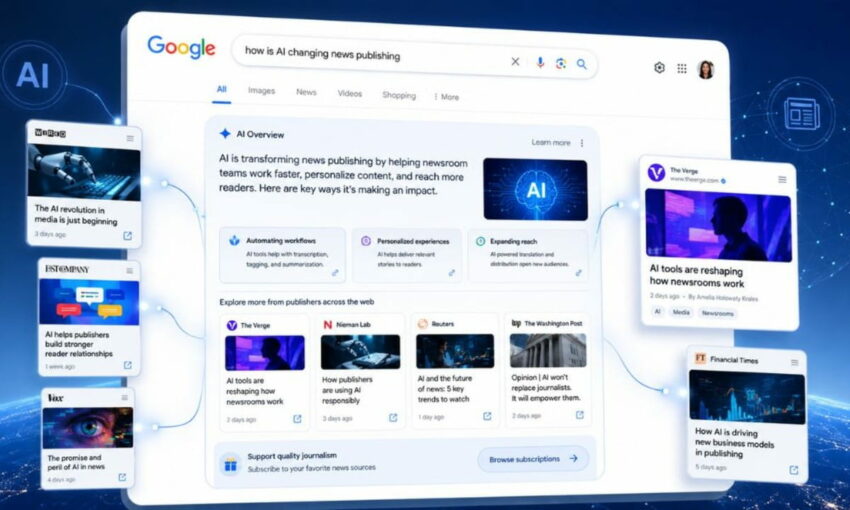
Google fired back at months of publisher frustration on May 6, announcing five new link features inside its artificial intelligence search tools that could change how websites get discovered online.
The updates target AI Mode and AI Overviews, two of Google’s most visible AI-powered search experiences. Together, they push more source links into the actual body of AI-generated responses — not buried below them — and give publishers a foothold they have been demanding since AI summaries began reshaping web traffic.
What Google actually changed?
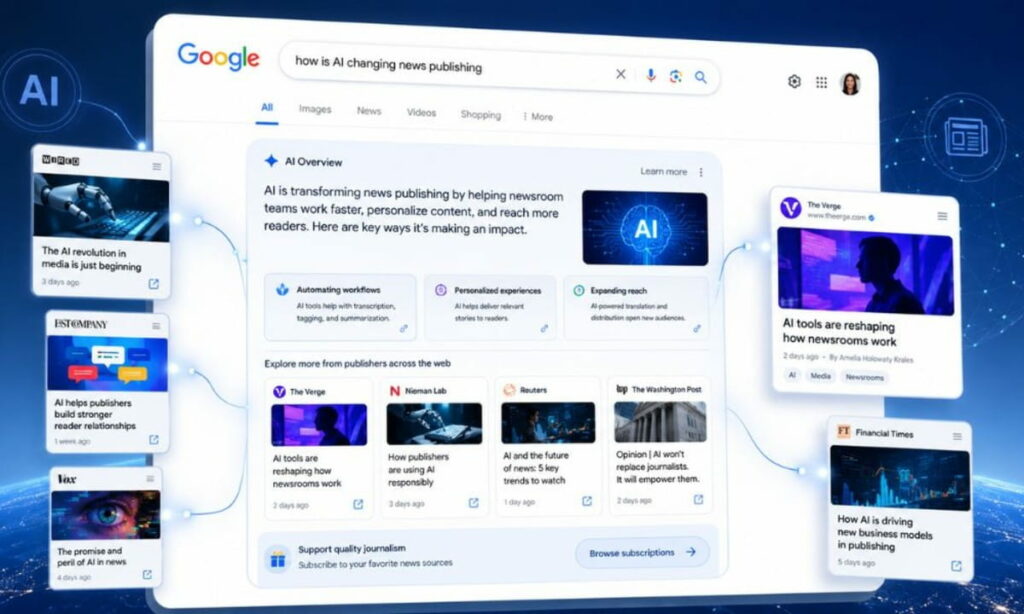
Google announced five changes to how links and citations appear within AI Mode and AI Overviews. The company says they aim to make it easier for users to “connect with authentic voices and explore useful information across the web.”
Here is what rolled out.
First, a new “explore more” section now appears at the end of AI responses. It highlights different angles of a topic and links to in-depth articles, case studies, or reports so users can go deeper past the original answer.
Second, Google will team up with publishers to flag article links in AI responses with a “subscribed” label when readers hold an active subscription. Google confirmed that in early testing, people were “significantly more likely to click links that were labeled as their subscriptions.”
Third, AI responses from Google will now surface perspectives from public online discussions, social media, and other firsthand sources. When this happens, users see the creator’s name, handle, or community name alongside the link.
Fourth, more links now appear directly within AI responses, right next to the relevant text. For example, a search about a California bike trip might show a link to a Pacific coast touring guide next to a bullet point about terrain — and a separate link to a training blog next to a mileage tip.
Fifth, desktop users can now hover over an inline link to see the name of the website or page title before clicking. Google says people sometimes hesitate to click a link if they are not sure exactly where it leads.
Why do publishers pay close attention?
The timing of these updates is no coincidence.
Publishers and SEO professionals have spent months raising alarms about shrinking referral traffic. Ahrefs data from earlier this year showed that AI Overviews correlated with a 58% lower click-through rate for top-ranking search pages — up from a 34.5% drop measured in April 2025.
Pew Research Center backed those findings with separate numbers. Its study found users clicked a traditional search result in 8% of visits when an AI summary appeared, compared to 15% of visits without one. Clicks on a link inside the AI summary itself landed at just 1%.
Those figures explain the pressure Google faced. Publishers do not just want attribution. They want traffic. They want readers to leave the search results page and visit the original work.
Google makes its strongest move yet

The changes represent Google’s most aggressive attempt to prove that AI Search can still drive meaningful traffic to third-party websites. Links now appear right next to the relevant generated text in AI responses, replacing the earlier model of stacking citations at the bottom.
That shift matters. A link placed beside a relevant sentence gets noticed far more easily than a footnote buried below a 400-word summary.
However, Google has not released full click-through data for all five features. The subscription label showed stronger early results, but broader performance numbers remain unavailable. So publishers should treat this as progress — not a solution.
First-hand content takes on new weight
Beyond the link mechanics, these updates hint at a broader direction for Google’s artificial intelligence search strategy.
Google intends to make it easy for users to “connect with authentic voices and explore useful information across the web.” Surfacing creator names, forum communities, and social media handles alongside source links suggests the company wants AI Search to reward real experience — not just keyword-optimized pages.
That signals a shift that independent publishers, reporters, and niche experts should notice. Original research, named authorship, direct testing, and firsthand commentary could carry more weight in AI Mode and AI Overviews than thin, search-optimized content.
For newsrooms and content businesses, that changes the calculus. Articles built around fresh reporting and clear sourcing may now stand a stronger chance of appearing inside Google’s artificial intelligence results.
The bigger question still hangs
None of this ends the conflict between Google and the publishing world.
AI Mode and AI Overviews still generate answers before users reach the source. That fundamental tension does not disappear with five new link placements. Some readers will still feel satisfied with the summary. Some publishers will still lose the visit.
But the update expands the surface area websites hold inside Google’s AI products. Inline links put sources beside key claims. Subscription labels pull paying readers back to trusted brands. Community previews lift creators with real-world knowledge.
Search Engine Land contributor Barry Schwartz noted that “these changes, in my opinion, should increase the chances of searchers clicking from the AI experiences to the cited page” and that Google “is making changes to try to improve the overall ecosystem.” He also raised the core question: “The big question is, will these changes be enough?”
That question now falls to real-world data. If readers click more often, publishers may begin to view artificial intelligence search as a channel rather than a threat. If clicks stay flat, the five-feature update will look like another small patch on a much larger problem.
Google understands the stakes. Fewer publisher clicks means less publisher revenue. Less revenue means less original content. Less original content weakens the very material that powers AI Search. That cycle now defines the relationship between Google and the web it indexes.
Do these five updates give publishers a real shot at recovering lost traffic, or will AI Overviews still keep most readers inside Google? Please drop your comments below.