

The fight over AI regulation has moved out of Capitol Hill hearing rooms and onto the campaign trail. AI super PACs have raised more than $200 million for the 2026 midterm cycle and have already spent at least $44 million on 40 House and Senate races through the end of June, according to a CNBC analysis of Federal Election Commission filings published Thursday.
The early spending by AI super PACs reveals a simple strategy. Tech executives and AI firms want friendly lawmakers seated before Congress drafts the first national rulebook covering powerful models, consumer safeguards, child safety, data centers, and chip exports.
Washington has not passed a broad AI law. States have moved much faster. The two dominant AI super PACs disagree on plenty of details, yet both sense the same opening. They want influence locked in before Congress decides who holds the pen.
Two networks, two visions
Leading the Future sits at the front of the pack among AI super PACs. The network spent more than $24 million on primary races through the end of June, per FEC filings cited by CNBC, and it said it raised $125 million by the close of 2025. Its donor roster includes Andreessen Horowitz, OpenAI co-founder Greg Brockman, Palantir co-founder Joe Lonsdale, SV Angel founder Ron Conway, and the AI search firm Perplexity.
Public First Action anchors the other camp. The group, launched last year, has spent about $20 million so far and announced in June that it had raised $80 million. Anthropic contributed $20 million, though a spokesman said that money can only fund public education on AI policy, not campaign activity. Brad Carson, who leads the group, told CNBC it has also received donations from employees at OpenAI, Google, DeepMind, and X.
A striking win record
Early results explain why AI super PACs feel emboldened. Leading the Future backed 28 candidates. Twenty-five won their primaries, two still await elections, and only one, Jesse Jackson Jr., lost. The network also spent roughly $8 million opposing Alex Bores in New York’s 12th Congressional District. Bores, who championed a tougher early version of the state’s RAISE Act, lost the Democratic primary.
Public First Action backed candidates in 11 races. Every one of them won, except Bores. Carson said the group plans to spend in 50 to 60 races before the midterms wrap up.
Why is the money flowing now?
The urgency driving AI super PACs tracks the rise of advanced systems, such as Mythos and Claude Fable. Those models pushed concerns about security, jobs, misinformation, and child safety into the national spotlight.
Carson argued that lawmakers cannot look away.
“They have a lot of benefits. They have a lot of dangers. And you can’t just release them into the wild with no government concern,” he told CNBC. “Everybody from the right to the left, from pro-Trump to anti-Trump recognizes that.”
Josh Vlasto, co-leader of Leading the Future, wants Congress to move quickly.
“It is so important that we do this now and urgently, because it is still the early innings of the technology, but it is being adopted quickly, at scale,” he told CNBC.
One federal rulebook or 50 state laws
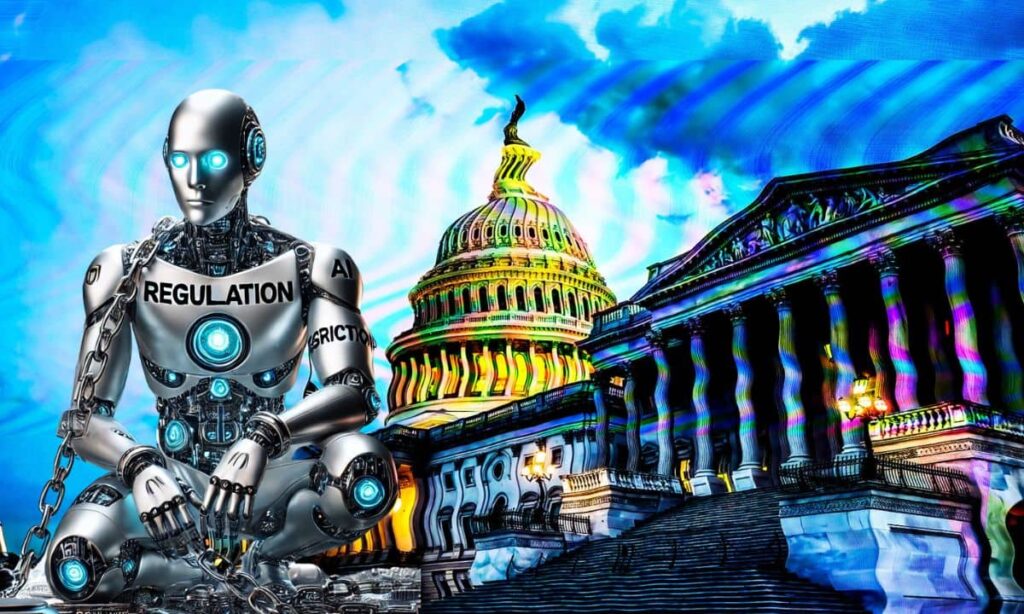
The sharpest split among AI super PACs centers on state power. Vlasto said his network backs a “broad, national, consistent framework for regulation governing AI.” He added that the group does not oppose every state law and pointed to its support for the final version of New York’s RAISE Act.
That New York saga shows how tangled the debate has become. Leading the Future fought Bores, an original champion of the bill, while Gov. Kathy Hochul pressed lawmakers to soften reporting rules and shrink penalties before she signed it. The network then embraced the weakened law.
Public First Action leans toward the states. It has resisted attempts to erase state AI laws before Congress delivers a complete federal plan. Still, Carson allowed that if Washington builds a “comprehensive federal approach to these problems, then preemption is a natural part of our constitutional order.”
Republican leaders want to go further. House Majority Leader Steve Scalise, R-La., told CNBC that state laws are “hurting innovation” and that overriding them is “going to be the foundation of anything we do.” Rep. Ted Lieu, D-Calif., countered that there is “definitely bipartisan disapproval of preempting with nothing.”
The crypto playbook returns
AI super PACs appear to have copied the crypto industry’s blueprint. In 2024, the crypto-backed Fairshake network spent about $200 million on candidates from both parties. A major stablecoin bill later became law, and broader digital asset legislation gained momentum.
The formula looks familiar. Win elections first, then shape the legislation. Few observers expect a sweeping AI bill this year because the congressional calendar remains tight. Even so, both parties have signaled that AI policy will dominate the agenda after November.
The stakes stretch far beyond Silicon Valley. Rules shaped by AI super PACs could touch schools, hospitals, newsrooms, banks, defense contractors, and families worried about kids online. The outcome may hinge on how many races these networks win between now and Election Day.
Should tech companies help write national AI rules because they know the technology best, or should lawmakers keep their distance from an industry bankrolling its own future? Please drop your views in the comments below.