

Beijing wants its financial markets to bankroll the next stage of the technology race.
China’s AI funding now flows through a stock and bond market worth roughly $28 trillion, Bloomberg reported Monday.
For years, the government leaned on subsidies, tax breaks, and direct state investment. Now officials want private capital to shoulder far more of the load.
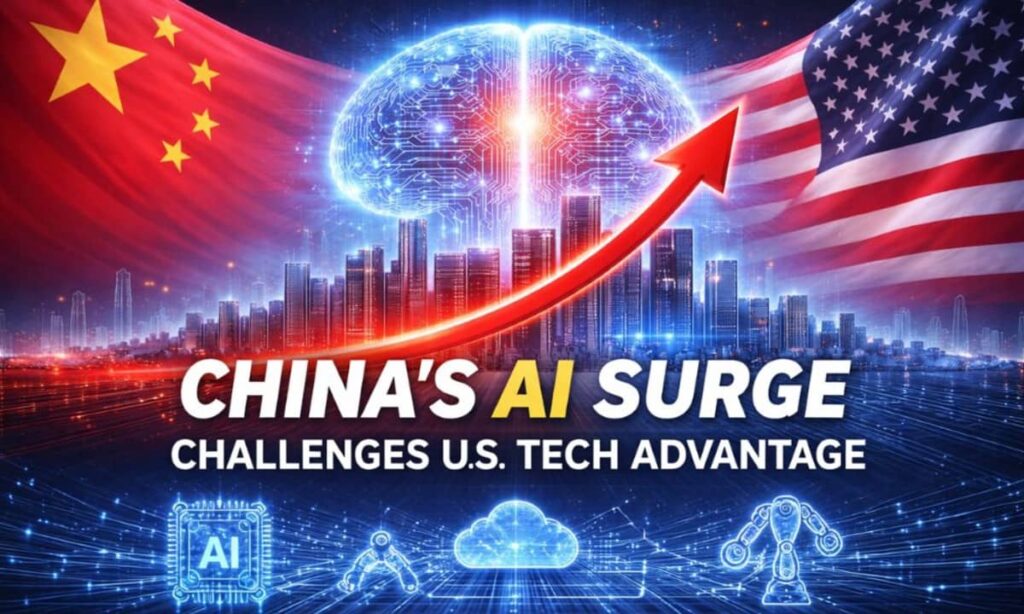
The goal? Well, China’s AI funding must close a wide gap with the United States.
Over the past two years, Chinese technology firms raised about $217 billion through share sales and bonds. American rivals pulled in roughly $1.4 trillion across the same stretch, according to Bloomberg data.
That distance matters, because advanced chips, sprawling data centers, and frontier models all demand staggering sums of money.
CXMT sets the template for a new playbook
Memory chip maker CXMT offered the clearest proof in July.
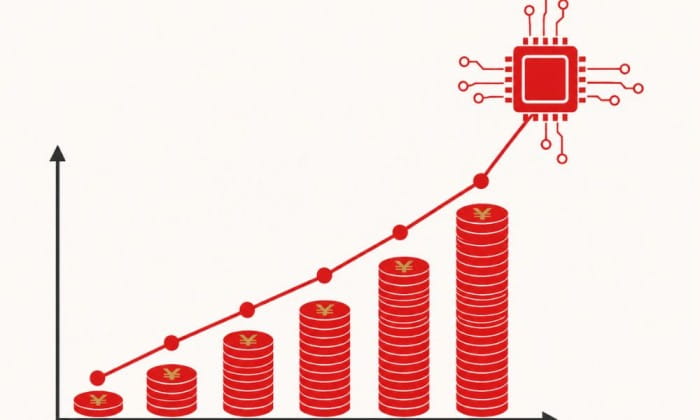
The company debuted on Shanghai’s STAR Market on July 27. Shares closed at 49 yuan, a jump of 466% from the 8.66-yuan offer price.
That leap lifted CXMT’s value to about 3.3 trillion yuan, or nearly $488 billion. For a moment, it ranked as mainland China’s most valuable listed company.
CXMT first raised 57.92 billion yuan, worth roughly $8.6 billion. That total marked the largest mainland semiconductor IPO on record.
Regulators also moved quickly. CXMT cleared a preliminary review system that lets a company settle key questions before the formal listing begins. So the deal showed how China’s AI funding strategy now rewards speed.
One detail stood out. Only 6.73% of CXMT’s enlarged shares could trade at launch, and that thin float fueled the wild swings.
The state can prop up the market when it falls
Here China’s approach splits sharply from the American model.
State-linked funds can buy shares and exchange-traded funds whenever officials want to steady sentiment. That lever sits at the heart of China’s AI funding push.
It showed up clearly before CXMT arrived. After technology stocks tumbled in July, China Reform Holdings and China Chengtong Holdings committed about 60 billion yuan to the market. Reuters reported that the STAR Market had slid roughly 25% from its July 1 peak.
China Reform said one unit deployed more than 50 billion yuan through special relending tools and its own cash. China Chengtong disclosed purchases near 10 billion yuan across state firms, technology shares, and ETFs.
Money rushed into technology funds as well. Wind data showed two ETFs tracking the STAR 50 and ChiNext indexes drew 73.7 billion yuan in net buying over the latest month.
So China’s AI funding gains a weapon Washington cannot match. Beijing can spur fundraising while state institutions steady the tape at the same time.
Cheap bonds sharpen the edge
Stocks tell only part of the story.
Chinese technology companies have sold about $38 billion in domestic and offshore bonds this year, the strongest haul since 2016, per Bloomberg data cited by Seoul Economic Daily. So debt has become another pillar of China’s AI funding.
Chinese borrowers also pay far less. Big technology firms locked in average bond coupons near 1.9% this year, more than 3 percentage points below comparable U.S. costs.
Tencent showed the appetite in June. The company raised $4.66 billion through dollar and offshore yuan bonds, and investors placed more than $17 billion in orders.
Cheaper capital carries real weight. China may not spend dollar for dollar with America, yet China’s AI funding can stretch each yuan further.
Unitree becomes the next big test
The next trial already began.
Robotics maker Unitree opened subscriptions Monday for its STAR Market IPO. The company priced about 40.45 million shares at 150.80 yuan each, aiming to raise roughly 6.1 billion yuan. That deal values the humanoid-robot builder at nearly 61 billion yuan.
Unitree plans to steer the cash toward robot models, hardware research, fresh products, and a bigger factory base. Notably, AI developer DeepSeek joined as a strategic investor, which ties China’s AI funding directly to the physical-AI wave.
Meanwhile, GPU designer Moore Threads said it will pursue a Hong Kong listing when the time is right. The firm already trades in Shanghai, and its shares have climbed hard since that debut.
Together, these deals reveal how China’s AI funding leans on public investors to bankroll strategic technology.
Concentration brings a fresh danger
Yet the plan carries an obvious risk.
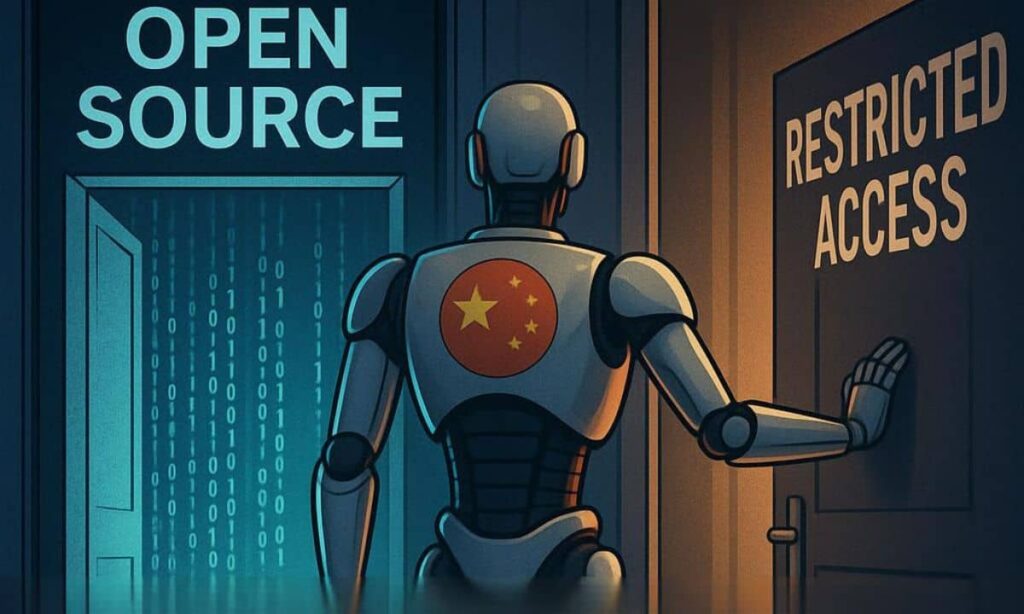
Heavy flows into a small cluster of chip, robotics, and computing names could push valuations well past real business results.
Hiroya Yamauchi, a China and Asia markets expert at Amova Asset Management, warned, “If there are no viable investment alternatives outside the tech sector, there is a very high chance that concentration in specific companies will heighten market volatility.”
So the tension is clear. Beijing wants markets to pour money into strategic firms, yet officials must keep excitement from tipping into chaos.
America still holds a huge lead in total technology financing. Even so, China’s AI funding now answers that strength with cheaper debt, faster listings, and unusually direct state support.
The race, therefore, may hinge on more than chips and models. Increasingly, it hinges on who can keep paying for them.
What do you think? Can China’s capital-market playbook truly close the technology funding gap with the United States, or does it risk inflating a costly tech bubble? Please share your views below.