

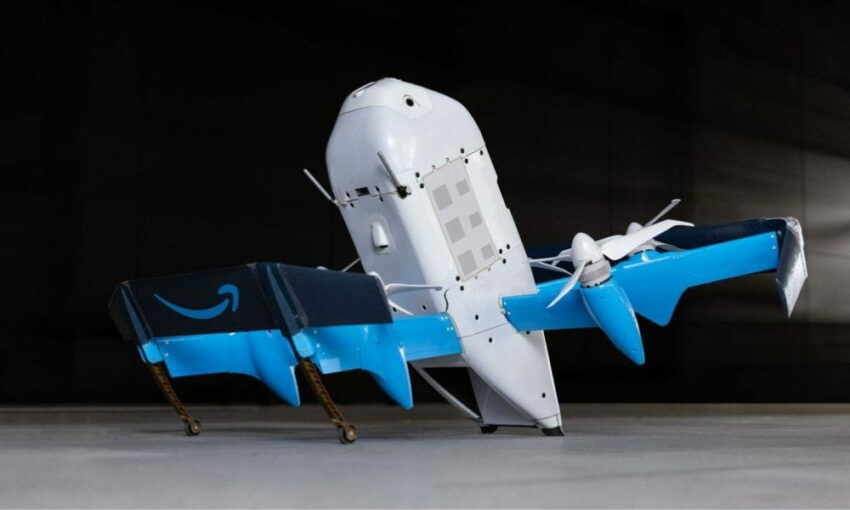
Amazon wants to push drone shipping past the pilot stage and into the heart of its U.S. delivery machine.
The retailer plans to grow Amazon drone delivery to nearly 500 cities and towns nationwide by the end of 2026. That goal marks a sixfold leap from Prime Air’s current reach, and it puts the service in front of communities holding tens of millions of shoppers.
Amazon now operates Prime Air from 11 sites across 10 metro areas in 7 states. Executives say self-flying software, not a room full of remote pilots, will make the buildout possible.
Autonomous flight carries the buildout
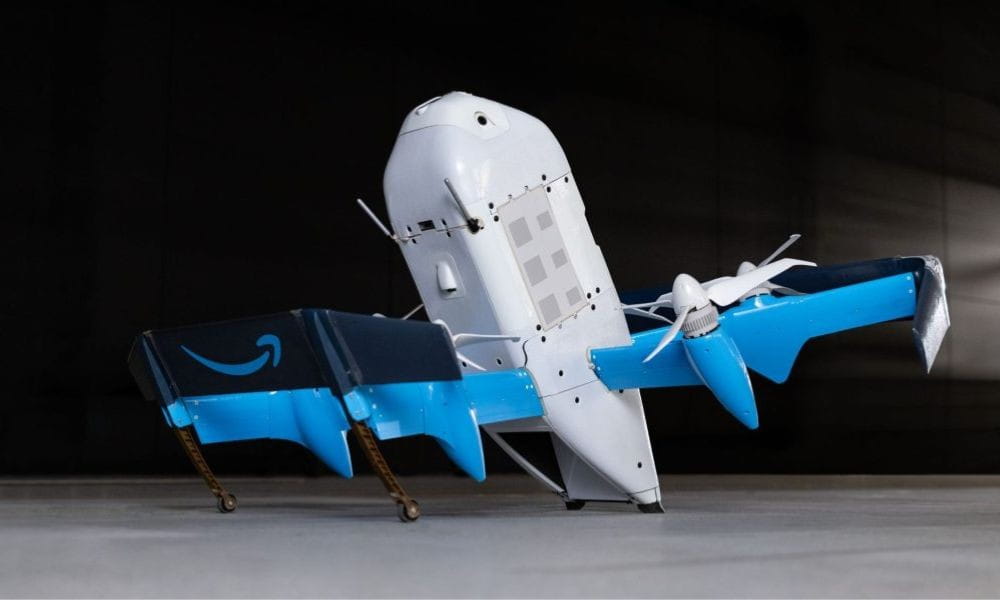
Amazon drone delivery leans on onboard smarts rather than steady human control. Each aircraft carries cameras, sensors, and a Detect-and-Avoid system that sweeps the surrounding airspace. The software picks out planes and other hazards, then chooses its flight path on the spot.
Amazon says the cameras guide navigation, spot obstacles, and handle the drop. They do not track people or log their movements, the company adds. Workers also skip live video, because each drone crunches its camera data in the air.
That independence matters as the fleet pushes into hundreds of fresh communities. A one-pilot-per-flight rule would choke staffing fast. So Amazon leans on software, computer vision, and sensors to make routine calls.
Prime Air flies under Federal Aviation Administration Part 135 certification, the tier used for commercial air carriers. Amazon says that status keeps its Amazon drone delivery operation under strict oversight and clears the path into new metro areas without a separate waiver for each stop. Local approvals can still snag the plan, though, and some towns have flagged worries over privacy, noise, and safety.
Prime Air targets small, everyday orders
Amazon built the service around light, frequently bought goods. Eligible packages weigh 5 pounds (2.27 kilograms) or less and must fit inside a container about the size of a large shoebox. Even so, Amazon says that cap still covers more than 60% of the items shoppers grab most often.
The catalog runs deep. Shopping becomes seamless. Customers can order groceries, cosmetics, medications, and electronics through Amazon drone delivery, and the list includes iPhones, Samsung Galaxy phones, AirTags, AirPods, and Ring doorbells. The MK30 drone handles the flight.
Speed is the pitch. The fastest drops land in 30 minutes, while Amazon pegs the typical wait near an hour. Prime members pay nothing on orders of $50 or more. Smaller Prime orders carry a $2.99 fee, and non-members pay $4.99.
Each active site covers roughly 175 square miles. Amazon plans to switch on Amazon drone delivery soon around Chicago; Syracuse, New York; Cleveland; Atlanta; and Boise, Idaho, with more towns to follow. Coverage can still shift by ZIP code and address.
David Carbon, vice president of Amazon Prime Air, says the program has cleared its test phase.
“Customers already turn to Amazon for fast Same- and Next-Day Delivery, and Prime Air provides them an even speedier option when they need it, with deliveries in as fast as 30 minutes,” Carbon said.
“We’ve already delivered hundreds of thousands of packages to customers by drone this year, and by the end of 2026 we plan to reach customers in nearly 500 cities and towns. We’re pairing the convenience of ultrafast drone delivery with the low prices and selection customers love about Amazon.”
A pool drop exposes the messy reality
Scaling autonomy also drags flaws into the open. A recent clip from Richmond, Texas, showed an Amazon drone hovering over Lindsey Austen’s swimming pool, then dropping her package straight into the water during her first delivery. Sky News aired the footage this week.
Amazon says its drones scan each drop zone for people, pets, and vehicles before they let go of a package. Still, the pool mishap shows why Amazon drone delivery must read tricky backyards correctly as flight volume climbs.
Amazon also points to its record on hard landings. The company says its systems can guide a drone down safely in rough weather or during a surprise event, aiming to shield people, pets, and property below. The fully electric aircraft fly in light rain and across a range of temperatures, and they give off no exhaust. Noise gets a mention, too. Amazon says a drop-off runs quieter than an idling delivery truck and lasts about 30 seconds.
Walmart and rivals crowd the skies
Amazon does not fly alone. Walmart said in May that its drone program had topped 1 million deliveries from 66 stores across four states, with an average trip of 23 minutes. Walmart leans on outside specialists Wing and Zipline, and it aims to reach 40 million customers by next year. DoorDash and Uber are chasing the same airspace.
Amazon, by contrast, has poured money into its own aircraft, flight software, and network. That gap raises the stakes on its 500-community goal for Amazon drone delivery. The fleet must prove it can run at scale, across mixed neighborhoods, shifting weather, and varied local rules.
Safety questions still trail the effort. In October 2025, two Amazon drones struck a crane boom in Tolleson, Arizona, and earlier incidents included a clipped internet cable and a crash into a garden. The company now returns to Tolleson as it restarts and grows Amazon drone delivery there.
The expansion reaches past U.S. borders as well. Amazon says it began customer drone drops from its Darlington site in the United Kingdom this year, handing Prime Air a fresh market under a different regulator.
The bigger test now stretches beyond a 30-minute drop. Amazon must show that Amazon drone delivery can stay reliable, win over neighborhoods, and pay off across hundreds of markets. For an audience tracking automation, computer vision, and machine autonomy, Amazon drone delivery offers a live case study in how far self-guided systems can go in daily life.
Would you let an autonomous drone drop a package at your door, or do privacy and safety worries still win out? Please feel free to share your views in the comments.