


Artificial intelligence is no longer a distant threat to American workers. It has invaded the U.S. job market, and the numbers tell a stark story.
New research from Goldman Sachs shows that AI erased roughly 16,000 net jobs per month across the United States over the past year. The figures come from economist Elsie Peng, whose analysis separates two competing forces at work — substitution, in which AI directly replaces workers, and augmentation, in which it makes existing employees more productive.
Goldman’s breakdown shows AI substitution wiped out roughly 25,000 positions per month, while augmentation added back around 9,000. The net result is a labor market quietly shrinking in ways that monthly employment reports do not fully capture.
AI revolution in the U.S. job market could leave lasting scars on young workers

Unemployment among 20- to 30-year-olds in tech-exposed occupations has climbed by nearly 3 percentage points since early 2025 — significantly higher than for their peers in other fields.
Goldman Sachs data shows that among 22–25-year-olds in AI-exposed roles, employment fell 16% from late 2022 to mid-2025, while experienced workers in the same fields remained largely stable. Among young software developers specifically, the decline was nearly 20%.
Gen Z workers sit disproportionately in the exact types of routine, white-collar, and administrative roles — data entry, customer service, legal support, billing — that AI handles most efficiently. Without the accumulated experience and specialized judgment that protect senior workers, they have little buffer against displacement.
AI impact on the U.S. job market raises fears of long-term income loss
Beyond immediate job loss, Goldman Sachs economists Pierfrancesco Mei and Jessica Rindels examined four decades of individual-level labor data to measure what they call “scarring” — the long-term damage that technology-driven displacement inflicts on workers.
In the U.S. job market, workers displaced from technology-disrupted occupations take approximately one month longer to find new work and suffer real earnings losses of more than 3% upon reemployment, compared with workers laid off from more stable fields.
The long-term picture grows even darker. Ten years after a job loss, the real earnings of such displaced workers sit 10 percentage points below those of non-displaced workers. They also face slower wealth accumulation, delayed homeownership, and delayed household formation.
Workers displaced early in their careers — between ages 25 and 35 — accumulate less wealth over time, largely because they delay buying homes. They are also less likely to be married at any given age compared with never-displaced peers, suggesting the economic shock ripples into their personal lives.
Recessions make everything worse. The effects of technology-related displacement are amplified by three weeks of additional unemployment and a 5-percentage-point likelihood of subsequent joblessness when they coincide with an economic downturn.
“Overall, these patterns suggest that AI-driven displacement could impose lasting costs on affected workers, with substantially larger effects when job losses coincide with a recession,” Mei and Rindels wrote.
U.S. job market at turning point as AI reshapes careers and pay

The disruption is already visible in everyday work. A recent survey found that 20% of full-time U.S. workers say AI has taken over parts of their job.
Yet the picture is not purely one of replacement. Around 15% of workers report picking up new tasks directly because of AI, pointing to a workforce that is simultaneously shrinking in some areas and expanding in others. Adoption has spread fast.
Half of all American adults used AI tools in the past week, with many relying on personal subscriptions rather than employer-provided platforms. That gap signals something significant. Workers are not waiting for companies to hand them AI access — they are seeking it out themselves. Experts say this reflects a deeper structural shift. Fixed job roles are giving way to flexible, task-based work where employees share responsibilities with software capable of writing, analyzing, and automating routine output.
The damage extends well beyond job losses. Boston Consulting Group projects that artificial intelligence will reshape 50% to 55% of all jobs in the U.S. job market within three years — not by eliminating them outright, but by fundamentally changing what people do within those roles.
“What people do in these jobs will be different, even if the job is still there,” BCG managing director and senior partner Matthew Kropp told CBS News.
BCG projects that 10% to 15% of jobs could disappear entirely within five years. But it warns that the more damaging response would be companies cutting workers indiscriminately.
“There’s almost a knee-jerk reaction — we’ll cut jobs and have layoffs. It’s indiscriminate, and that’s harmful for society because we need people to have jobs, but also harmful for companies themselves,” Kropp said. “Yes, some will go away, but many jobs you’ll be re-skilling, getting people to work differently, and you have to expend effort to do that.”
Retraining offers the clearest path forward
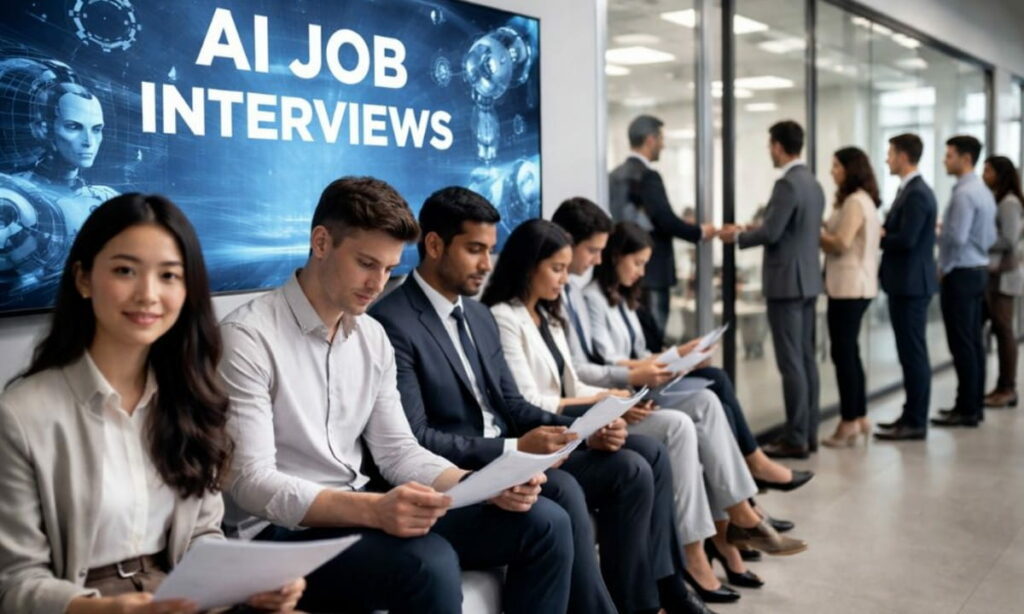
Goldman’s economists identified retraining as the most reliable protection against lasting harm. Retrained workers tend to move up the occupational ladder into roles with higher abstract content — positions requiring advanced skills and greater compatibility with information and communication technology — thereby reducing their exposure to future automation, Mei and Rindels wrote.
Among organizations experiencing AI-driven productivity gains, only 17% reduced headcount as a result, according to EY research. Far more reinvested those gains in growth, new hiring, or training.
Goldman Sachs expects the big labor story of 2026 to center on AI. If job losses accelerate faster than forecast, that could set the stage for economic underperformance and may prompt the Federal Reserve to cut interest rates.
Some roles remain insulated. Jobs requiring physical presence, deep human judgment, or interpersonal connection — plumbers, therapists, skilled tradespeople — show limited exposure to automation. New positions will also emerge in the U.S. job market, though their exact shape remains unclear.
“When social media came out, did anyone ever anticipate that social media influencer would be a job?” Kropp said.
The pace of change leaves little time to adapt. For workers and policymakers alike, the window to shape outcomes may already be narrowing. Will AI create more jobs than it destroys in the U.S. job market— or are we heading for a workforce crisis? Please share your view below.