


A Princeton University professor is challenging how the public frames the growing rivalry between machine intelligence and human cognition, arguing that the two forms of thinking are fundamentally different rather than simply unequal.
Tom Griffiths, a professor of psychology and computer science at Princeton, made the case in a recent essay published by The Guardian. He argued that machine intelligence and human cognition evolved under entirely different constraints and therefore cannot be ranked on a single scale.
“Intelligence does not work like height, where one side simply grows taller than the other,” Griffiths wrote.
His argument arrives as machine intelligence systems continue to expand into fields once considered exclusively human. Automated systems now defeat world-class game players, pass professional licensing exams, draft legal briefs, and assist researchers in analyzing vast bodies of scientific literature.
Limits that built human strengths

Griffiths and other researchers contend that the biological constraints humans face — short lifespans, limited memory, physical bodies — are not weaknesses but the very forces that shaped how human cognition works.
Children acquire language from minimal exposure. Adults read emotion from a glance. Communities pass knowledge through trust, mentorship, and shared experience. People also adapt when facts change or when a situation feels wrong.
Machine intelligence systems operate without those biological limits. They train on data volumes no single human could absorb in a lifetime. They scale processing power on demand and transfer information across systems in fractions of a second.
Researchers say that the advantage in speed and volume does not translate directly into the kind of judgment humans apply in unpredictable, real-world situations.
Systems still make basic errors
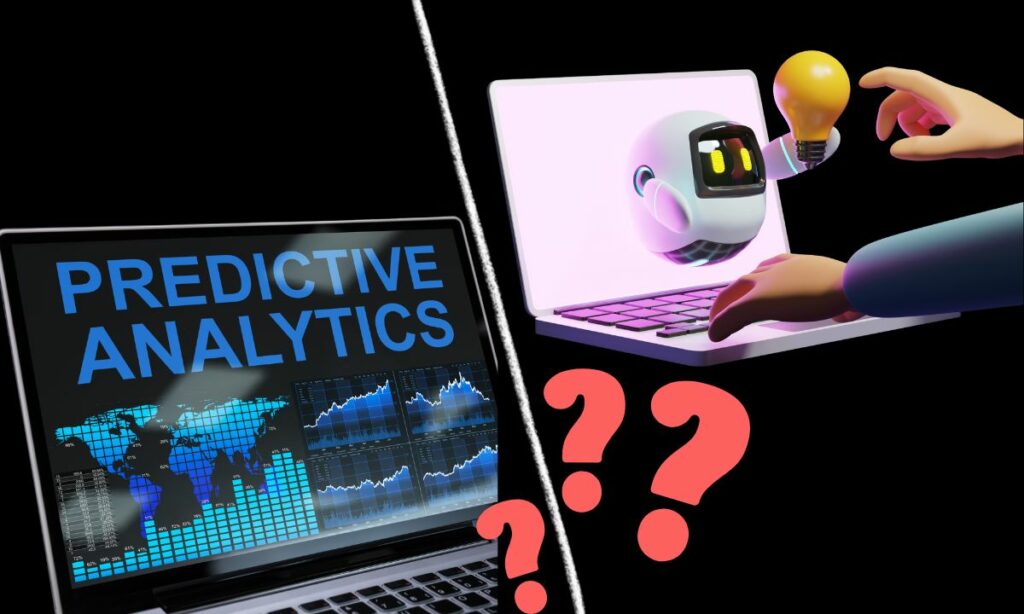
Despite high-profile gains, machine intelligence systems continue to fail at tasks humans handle without difficulty.
Griffiths pointed to two examples in his essay. When counting repeated letters in a word, a person scans character by character. Many machine systems process language as tokens rather than individual letters and can stumble on that task.
A similar gap appears with numerical reasoning. A person choosing a drug concentration closest to 785 parts per million would select 791 ppm over 685 ppm, because 791 sits closer in value. Some leading machine intelligence systems reportedly select 685 because the digit patterns look visually similar — a distinction that could carry serious consequences in a clinical setting.
A 2025 Pew Research Center survey of 5,023 U.S. adults found that more than half rated the societal risks of machine intelligence as high. Fifty-three percent said they believed these systems would worsen human creative thinking, and 50% said they expected machine intelligence to damage people’s ability to form meaningful relationships.
Game victories seen as incomplete evidence
The 2016 defeat of elite Go players by the AlphaGo system prompted widespread claims that machine intelligence was approaching or surpassing human cognition across all domains. Researchers dispute that conclusion.
Games provide fixed rules, clear boundaries, and unambiguous outcomes. Real-world decisions require managing shifting goals, incomplete information, emotional context, and moral pressure at the same time — conditions that machine intelligence systems are not designed to navigate.
A 2025 analysis published by market research firm Market Xcel found that machine intelligence excels at signal detection but cannot interpret cultural nuance, emotional undertones, or the motivations shaping human behavior.
A separate study conducted in 2024 and cited in the Stanford 2025 AI Index tested whether physicians produced more accurate diagnoses when assisted by GPT-4. They did not. The machine intelligence system outperformed both the unassisted physicians and the human-AI teams working together.
Researchers said the result illustrates both the capability of machine intelligence in narrow tasks and the complexity of integrating it into human decision-making workflows.
Researchers point toward a partnership model
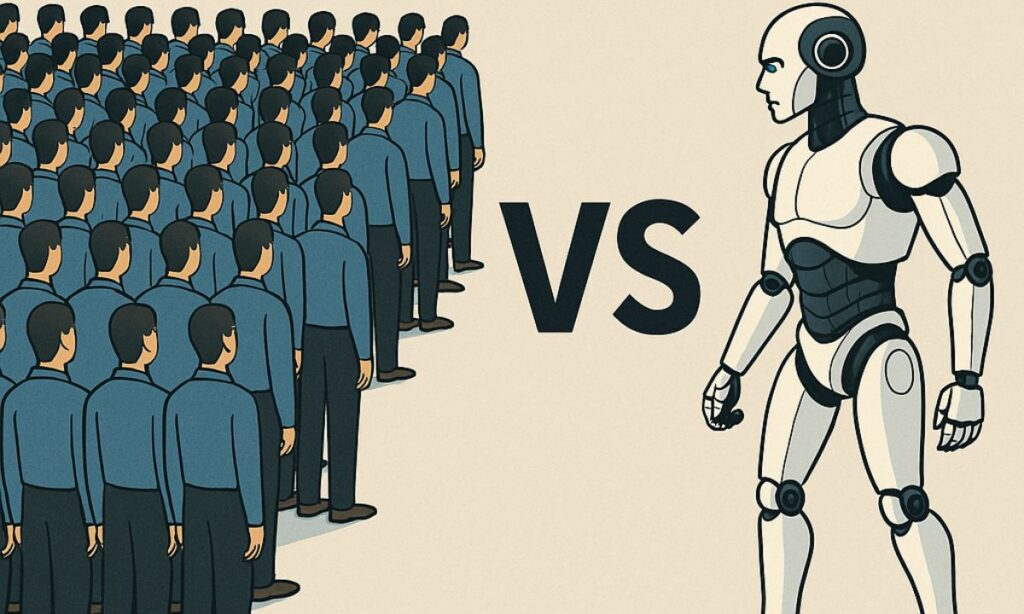
Several researchers and institutions now argue that the machine intelligence vs. human cognition framing creates a false choice.
Cambridge Judge Business School published findings in late 2025 stating that companies retaining human judgment and ethical oversight while deploying machine intelligence for data processing and pattern recognition gain a measurable competitive advantage over those relying on either approach alone.
Machine intelligence systems currently assist oncologists searching medical literature, engineers testing structural designs, and educators personalizing learning programs for students with different needs.
Human cognition, researchers argue, remains essential for setting goals, weighing consequences, applying ethical standards, and taking accountability for outcomes.
Griffiths said the more productive question is not whether machines will become smarter than people, but what kind of intelligence each brings to a given problem — and how well society learns to tell the difference.
What are your views on the machine intelligence versus human perception debate? Please share your views below.