

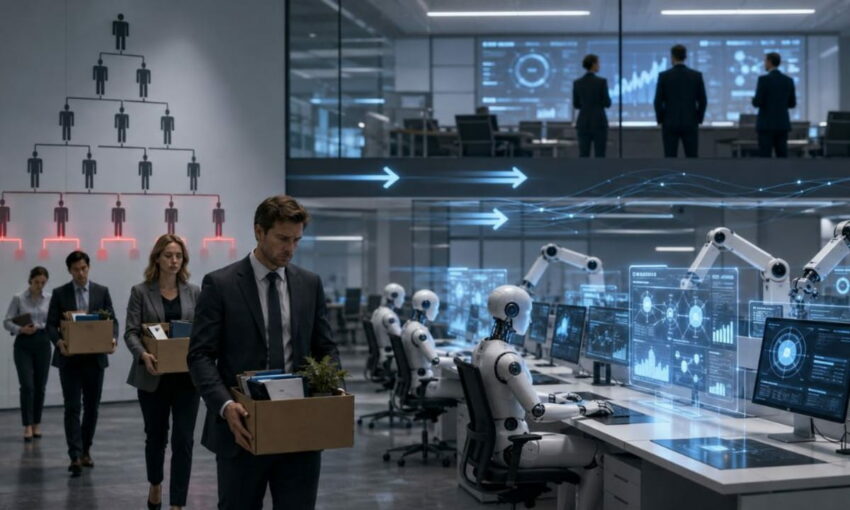
Corporate America is running out of patience with middle management. And this time, the pressure is coming from more than just spreadsheets. For middle managers, that shift has turned a once-secure rung of the corporate ladder into the most precarious seat in the building.
Companies from tech to finance are cutting headcount, flattening org charts, and pointing to leaner, faster operating models as their new north star. At the center of it all sits one uncomfortable reality: automation tools now do much of the work that mid-level managers once owned.
“Middle managers are getting squashed,” career coach Neil Danzger warned.
That assessment hit harder this week as several major companies announced significant workforce reductions — all within a 24-hour window.
Companies cut deep and explain why
Cloudflare told investors on May 7 that it will reduce its global workforce by roughly 20%. The network infrastructure company expects to incur between $140 million and $150 million in related charges and plans to finish most of that work before the third quarter ends. It described its new direction as an “agentic AI-first operating model.” Cloudflare’s own internal use of automation tools grew more than sixfold in just three months before the announcement.
Upwork followed suit the same day. The freelance platform said it would cut about 24% of its staff. It cited a shifting definition of work and a push toward a more efficient operating structure.
BILL also moved on May 7, announcing cuts of up to 30% of its workforce, including middle managers. The company said the reduction would help improve profitability. It also revealed a $1 billion share repurchase authorization on the same day.
Coinbase, meanwhile, delivered perhaps the most direct statement of intent. CEO Brian Armstrong said the crypto exchange would cut about 14% of its employees and rebuild around a faster, flatter structure. He set a firm ceiling of no more than five layers between the CEO and the people doing the work.
“Layers slow things down and create coordination tax,” Armstrong wrote in a company post.
That phrase captures exactly why middle managers now sit in a difficult spot. Organizations no longer want people whose primary job is relaying information. They want leaders who can produce, coach, sell, and execute — often all at once.
Why does the pressure keep building?
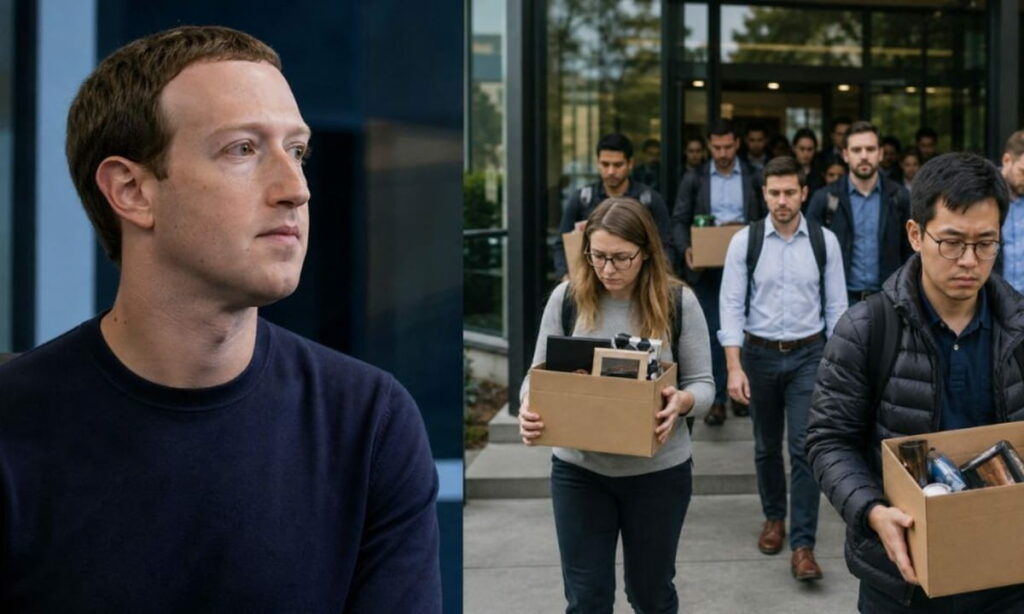
Middle managers built their careers on a real and necessary function. They translated the strategy from the top. They tracked deliverables. They ran reviews and filtered information for senior leadership. For decades, that role kept organizations from falling apart.
But much of that work now runs on software. Scheduling, reporting, performance tracking, and status updates no longer require a dedicated person. Meanwhile, tools like Slack and Microsoft Teams let executives reach front-line employees directly, without anyone in the middle.
Research firm Gartner has projected that through 2026, roughly one in five organizations will use automation to flatten their structures and eliminate more than half of current middle-management roles. The firm also said companies may redirect automated systems toward tasks, including performance monitoring and daily scheduling.
That does not mean every manager faces elimination. The risk concentrates most among managers whose value rests on coordination rather than judgment. A manager who only facilitates meetings stands on shaky ground. A manager who improves team output, develops talent, identifies process failures, and understands the tools their team uses stands on much firmer footing.
Not all industries are moving at the same pace
The layoff headlines do not tell a universal story.
Job market data from Indeed shows that middle-management postings have held steady in health care and ticked upward in fields like construction and medical information. Retail saw only modest declines.
That divergence matters. Office work faces the sharpest threat because software excels at absorbing documents, summaries, and data analysis. Industries that depend on physical presence, regulated judgment, or hands-on leadership still need people who can operate in the real world, not just on a screen.
Gartner also cautioned against reading every layoff as an automation story. In February, the firm said half of the companies that cut customer-service positions due to automation could end up rehiring people in similar roles by 2027, just under different titles. The firm noted that many recent cuts reflect broad economic pressure as much as any technological shift.
What can middle managers do right now?
The managers most likely to survive this wave will stop acting like traffic directors. They will become what some workplace experts call “player-coaches” — leaders who still guide their teams but also do real work alongside them.
That shift requires three concrete moves.
First, learn the tools. Middle managers should not treat automation platforms as someone else’s concern. They should use them to draft reports, analyze data, speed up routine decisions, and understand their limitations firsthand.
Second, develop skills that software still handles poorly. Judgment, trust-building, negotiation, mentorship, conflict resolution, and client relationships remain difficult to replicate. Michelle Gonzalez, recruitment director at Experis, put it plainly: the edge will come from “That human touch, that human eye, that big-picture thinking.”
Third, make the impact visible. In flatter organizations, senior leaders see fewer managers but more raw performance data. Managers who cannot connect their work to revenue, efficiency, speed, or retention will struggle to justify their seat at the table.
Younger professionals also face a changed path. Fewer management layers may make the climb to seniority longer. However, it may also bring strong performers into direct contact with senior leadership far earlier than before.
Automation has not ended the need for managers. It has redefined what a good manager looks like. The ones who only pass messages up and down will find fewer places to land. The ones who drive results, build people, and work fluently alongside modern tools will remain indispensable.
What do you think? Will automation make workplaces more efficient, or will it strip away too many middle managers and human decision-makers? Please share your thoughts in the comments below.