

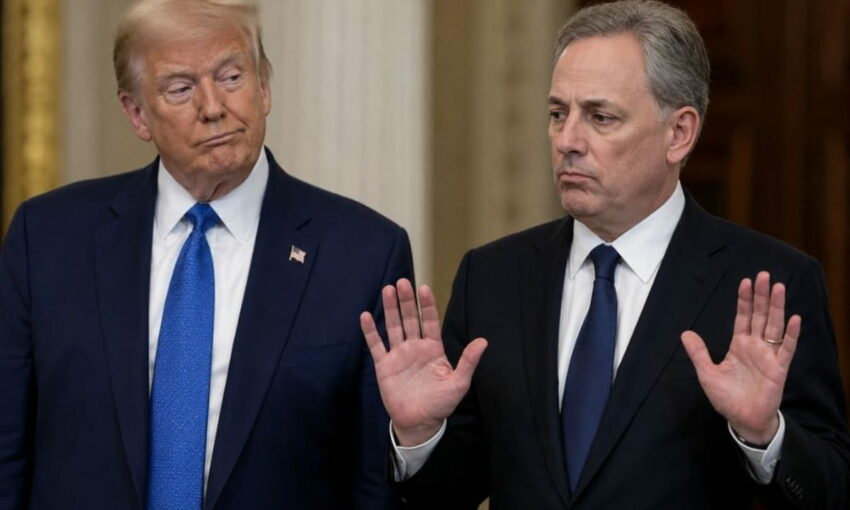
President Donald Trump scrapped plans to sign an AI executive order on Thursday after his own technology adviser warned that the measure could hurt American companies and weaken the country’s edge over China in the global technology race.
The White House had scheduled a signing ceremony for Thursday afternoon. The proposed AI executive order would have set up a voluntary review system for developers of powerful new models before public release. Under the plan, federal agencies would have examined certain systems for cybersecurity risks and national security threats.
Then David Sacks stepped in.
Sacks, who served as Trump’s AI and crypto adviser, called Trump directly Thursday morning and raised objections to the proposal. The move caught White House officials off guard. A senior White House official told Politico that Sacks had been briefed on the order earlier in the week and appeared to support it.
“Then, he called POTUS this morning unbeknownst to anybody, his own staff included, and derailed it,” the official told Politico.
Trump addressed the delay briefly with reporters, offering a straightforward explanation.
“I didn’t like certain aspects of it,” Trump said Thursday morning. “I think it gets in the way of — we’re leading China. We’re leading everybody, and I don’t want to do anything that’s going to get in the way of that.”
Industry voices shaped the outcome
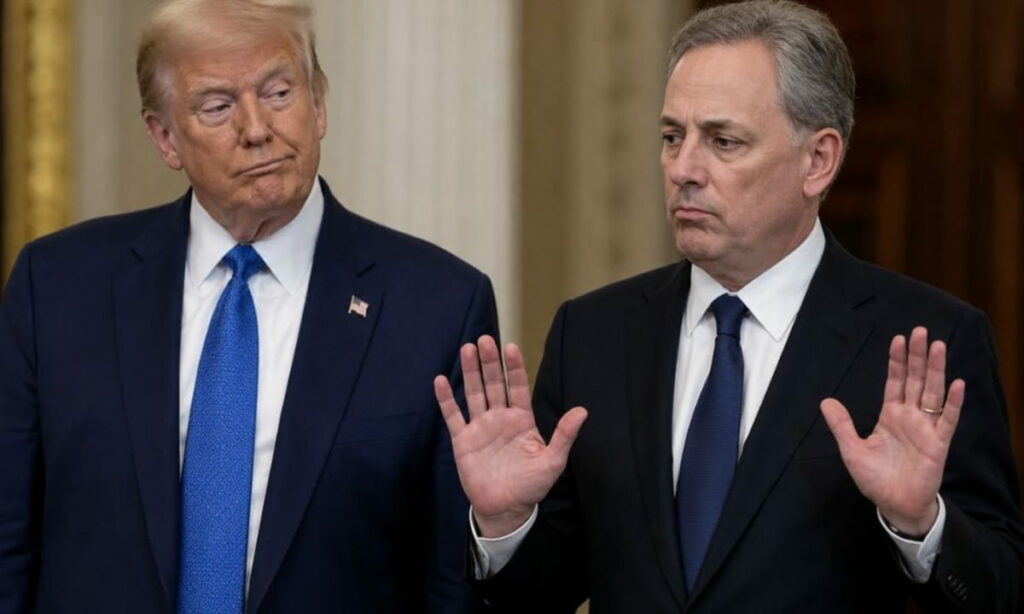
The delay did not happen in isolation. Tech industry leaders also pushed back hard against the proposed AI executive order in the days before the ceremony.
Several Silicon Valley executives had been invited to attend the signing. However, multiple expected chief executives could not make it on short notice. OpenAI, Anthropic, and Meta all planned to send lower-level representatives instead of their top leaders, according to people familiar with the planning cited in Politico’s reporting.
Beyond the scheduling complications, the substance of the order drew sharp criticism from parts of the industry. Some technology officials worried that the voluntary review process could quietly evolve into a mandatory approval system over time. Companies also pushed to reduce the window for sharing models with the government from 90 days down to 14 days, according to people familiar with the talks.
Axios reported that the order also drew what it described as “anti-doomer” pushback from companies and investors who felt Washington could overreact to speculative risks and slow the pace of product development. The outlet said the delay exposed the tension between safety concerns and the administration’s stated goal of keeping American firms moving fast.
The draft order itself included explicit language to address licensing fears. A version reviewed by Politico stated that nothing in the proposal “shall be construed to authorize the creation of a mandatory governmental licensing, preclearance, or permitting requirement for the development, publication, release, or distribution of new AI models, including frontier models.”
That language did not fully satisfy critics. Some remained convinced the system could function as a de facto checkpoint regardless of what the text said.
OpenAI backed the proposal’s direction
Not every company stood against the AI executive order. OpenAI expressed support for the broad framework of government cooperation on safety and model deployment.
Chris Lehane, OpenAI’s top lobbyist, told reporters last week that the company focused on “the ability to innovate, but doing it in concert with the government in a way that actually really prioritizes that safe deployment.”
The Information also reported that the order grew partly from concerns around Anthropic’s unreleased Mythos model. According to that report, Anthropic considered the model too powerful for wide public release because of its capacity to identify cybersecurity vulnerabilities. The company gave select banks, businesses, and government agencies early access specifically so they could identify and patch security gaps before any broader rollout.
Under the proposed AI executive order, the National Security Agency would have held authority to determine which systems qualified as “covered frontier models” subject to review. Agencies would have participated in classified benchmarking and evaluation under that framework.
Washington Post confirms last-minute lobbying
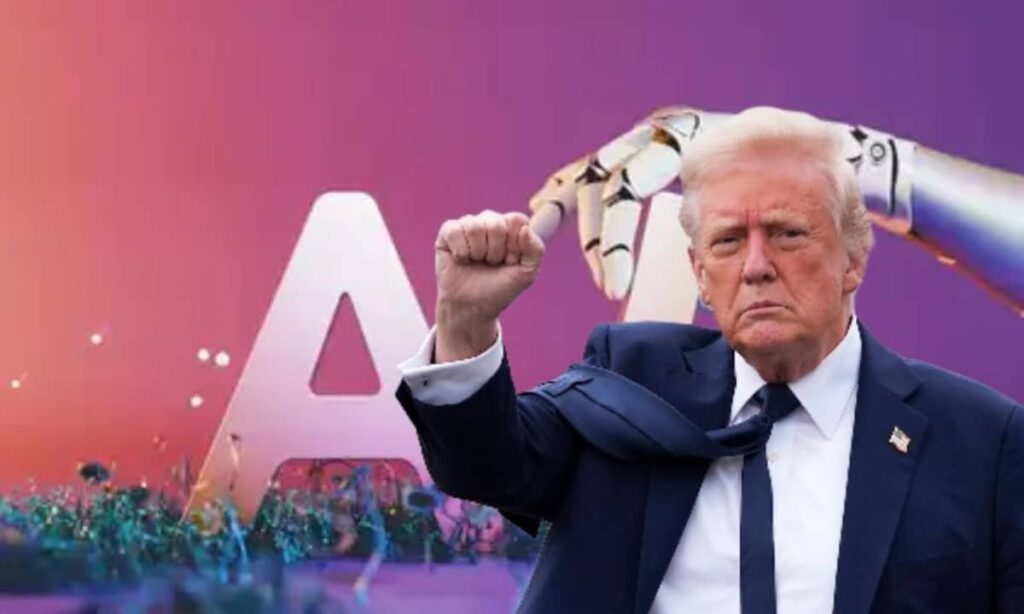
The Washington Post also reported that last-minute contact from technology industry officials contributed to the order’s collapse. According to that report, industry representatives warned the White House that even a voluntary review process could create regulatory friction and potentially benefit Chinese competitors if American companies faced slower development timelines.
That argument aligned directly with the reason Trump offered publicly for the delay. He has consistently framed U.S. dominance over China as the central goal of his technology policy.
The White House has not set a new date for any revised version of the AI executive order. Officials could still bring a modified proposal forward, but the episode showed exactly how much leverage Silicon Valley continues to exercise over federal technology decisions.
The next round of negotiations will force the administration to choose between two competing priorities: giving national security agencies more visibility into powerful new systems before public release or giving companies the speed and flexibility they need to stay ahead globally. Trump’s final decision will shape how the United States manages the tension between AI safety and AI dominance for years to come.
Do you think the White House should review advanced AI models before companies release them, or would that give China a dangerous head start? Please drop your view about the latest move on AI executive order in the comments below.