

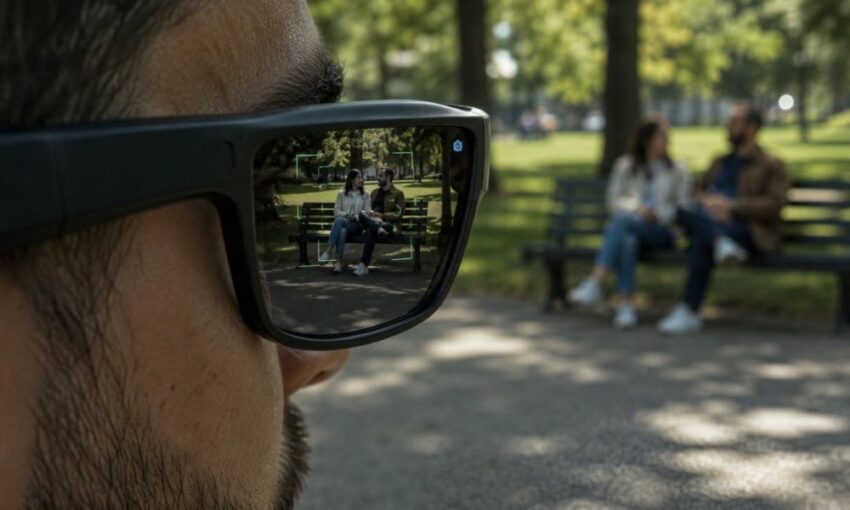
A new class of AI hardware is moving the smartphone’s core jobs onto recording glasses, pins, and wristbands, and Samsung’s entry into the wearables market this month has sharpened a contest that privacy experts warn is eroding consent.
The devices photograph what a wearer sees, capture nearby conversations, and study daily routines. Their makers pitch them as personal assistants that act without a typed command. Ethicists say the same AI hardware also drops always-on cameras and microphones into spaces that once stayed private.
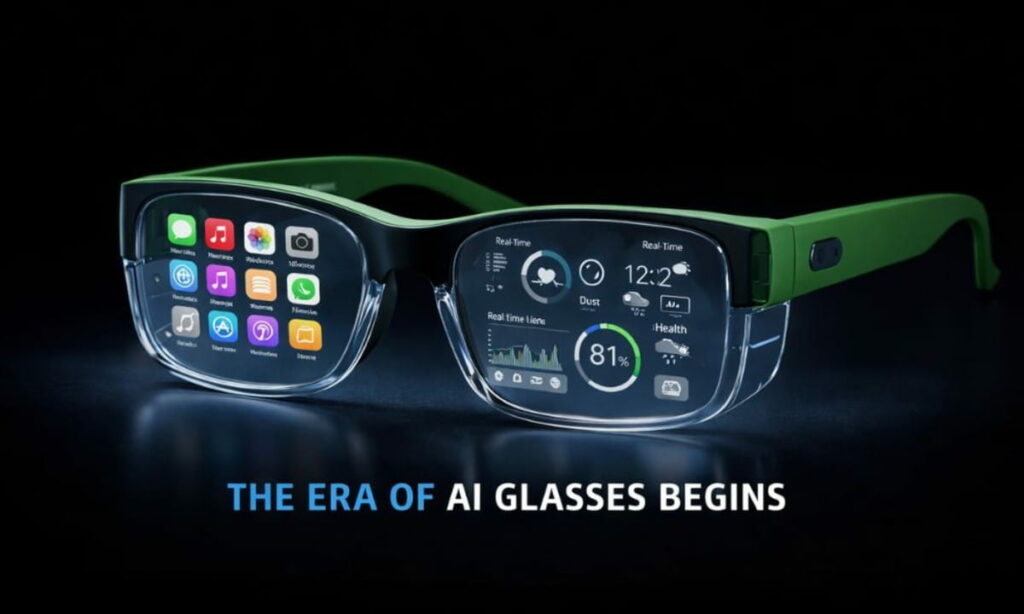
Samsung unveiled its first smart glasses July 22 at Galaxy Unpacked in London. The eyewear runs Google’s Gemini assistant on Android XR, skips a display, and relies on a camera, speakers, and voice. Samsung built two designs with Gentle Monster and Warby Parker, promised up to nine hours of battery, and set a fall 2026 launch. The company did not announce a price.
Meta still leads the category. Research firm IDC put its share of the screenless smart glasses market at 69.2% in the first quarter of 2026, while Counterpoint Research pegs it near 80%. Shipments across the segment rose 167% in that quarter, IDC found. CEO Mark Zuckerberg told investors on an April earnings call that daily use of the glasses tripled year over year.
Other companies want a share of the AI hardware push. Amazon sells Bee, a recorder worn on the wrist. Plaud markets the NotePin S, a clip-on device that records conversations for hours. OpenAI merged with former Apple design chief Jony Ive’s io team to build a family of gadgets.
A shift away from the screen
Phones require a set of steps. A user stops, unlocks the screen, and opens an app. AI hardware removes those steps. That convenience is the pitch behind every piece of AI hardware now reaching the market.
The appeal surfaced during testing by CNN, which reported on the devices this month. Meta’s Ray-Ban glasses identified Lisbon’s Jerónimos Monastery from a single photo. Bee and Plaud flagged contacts to follow up with after networking events. Still, the reporter often left the gadgets in a drawer, because recording friends or coworkers felt awkward.
When advice turns into assumption
The tools can also misread a moment. Bee once heard a passing mention of an apartment move, then concluded the move signaled anxiety about “stability” and a “sense of home.” The wearer reported no such feeling.
Amazon said early suggestions can lack precision when Bee has limited context, and users can flag wrong conclusions.
“We’re constantly refining how Grow works, and the experience will continue to improve,” an Amazon spokesperson told CNN.
The episode points to a weakness in AI hardware that listens all day. A device can capture every word and still misjudge what a person means.
The consent problem
Privacy concerns reach past the person wearing the gadget, experts say. People can see a raised phone. They often cannot spot a camera set into a frame or a recorder pinned to a collar.
“So the whole notion of consent is kind of disintegrating,” said Irina Raicu, director of the internet ethics program at Santa Clara University’s Markkula Center for Applied Ethics.
Meta equips its glasses with a capture light that blinks white during recording. Spokesperson Dina El-Kassaby said the light has no off switch, and covering the lens disables the camera. Bee and Plaud add their own indicators. Even so, few people study another person’s wrist or collar during a conversation.
The backlash has grown. Women have reported that men filmed them through Meta’s glasses without permission, and the company now removes those clips.
Pop singer Lorde criticized the eyewear on stage: “Can I just say for the record: Fk the glasses.”
Researchers point to sharper risks. AI hardware can slip into dressing rooms, clinics, and other guarded spaces, said Calli Schroeder of the Electronic Privacy Information Center.
“There are some real concerns with how this could be misused in dangerous ways,” Schroeder said.
The next interface

Industry leaders keep pushing past the touchscreen. OpenAI President Greg Brockman argued that conversation will replace clicking.
“Clicking things and typing things, it was a phase,” he said. “It was never what we wanted to be.”
Amazon treats Bee as a way to extend Alexa beyond the home. Plaud CEO Nathan Xu said recorded work context could cut the hours employees spend on busywork. Zuckerberg went further, warning that people without smart glasses could face “a pretty significant cognitive disadvantage compared to other people who you’re working with, or competing against.”
The shift may not arrive with one dramatic swap, analysts say. Instead, AI hardware could take over phone tasks one at a time. Glasses handle the camera. Pins record meetings. Wristbands manage reminders. The phone stays in a pocket as a hub but draws less attention.
The trade offers convenience. It also asks everyone nearby to accept always-on AI hardware as part of daily life. Consumer demand will determine how fast AI hardware reshapes the market, and how much of that AI hardware these companies sell.
Would you wear a device that records and analyzes your day, or does the privacy cost outweigh the payoff? Please share your view in the comments.