

A suspected Chinese bot farm tried to turn American social media users against AI infrastructure as the political fight over data centers spreads across the United States.
X said its safety team flagged about 200,000 inauthentic Chinese accounts “involved in influence operations.” The Chinese bot farm sat inside that wider group, and roughly 200 accounts posted content that could distort the U.S. debate over AI development, electricity costs, and energy policy.
The disclosure adds a foreign-influence angle to a fight already dividing voters, technology companies, and political leaders. It also lands as Washington treats AI infrastructure as a central piece of its economic and strategic contest with China.
Chinese bot farm targets a live U.S. fault line
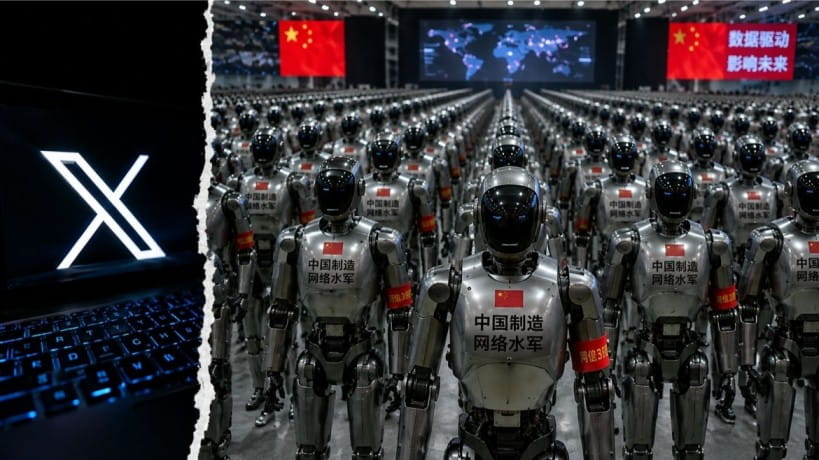
According to X, the Chinese bot farm pushed claims that AI data centers were raising household electricity prices and straining the power grid.
Some accounts also shared AI-generated cartoons that cast data center developers as getting rich while ordinary Americans paid the price.
One image carried the caption, “Data centers get subsidized while we foot the bill!” Another read, “the AI industry is booming, but the costs are being borne by ordinary people.”
X said the accounts were posting “in a manner that could manipulate a legitimate debate about American AI and energy policy.”
That framing matters. The concerns the campaign hit already exist among U.S. voters.
Critics of large data centers point to electricity demand, water use, environmental damage, local tax breaks, and falling property values. Supporters counter that the facilities bring investment, jobs, tax revenue, and the computing power the country needs to stay competitive in AI.
The Chinese bot farm, then, seized on an existing pressure point rather than inventing one.
OpenAI flagged a similar China-linked effort
The X disclosure follows an earlier finding from OpenAI.
OpenAI said this summer that it banned a “cluster of ChatGPT accounts that likely originated in China” after concluding the accounts were generating material for a “covert influence operation” aimed mainly at U.S. audiences.
Those accounts produced short comments and images echoing themes now flagged on X, including claims that AI data centers were driving electricity demand and higher consumer costs.
The overlap raises a question: whether the Chinese bot farm on X and the ChatGPT cluster reflect foreign operators testing repeated narratives across platforms to exploit anxiety about AI’s rapid buildout.
Neither disclosure proves that such activity caused the wider American backlash against data centers. That gap matters as leaders debate how much opposition reflects genuine local concern and how much outside actors are amplifying.
Trump says the AI industry needs PR help
President Donald Trump has continued to urge communities to welcome data center projects.
Speaking at the White House, Trump said the AI industry needs “a little public relations help” as opposition grows. He pointed to a May Gallup poll showing a majority of Americans oppose data centers in their communities.
He argued that states and towns stand to gain because “the jobs are enormous, and the money paid, the taxes paid are just enormous.”
“And if you don’t take it, you’re going to be left behind because there are plenty of places that want it,” Trump added.
The fight crosses party lines. Sen. John Fetterman, D-Pa., has warned that China benefits from “overreaction” to “AI doomsdaying” as the two countries compete for the lead.
Fetterman wrote that “AI supremacy and energy dominance underpins our national security.”
A Chinese bot farm raises the stakes for policymakers
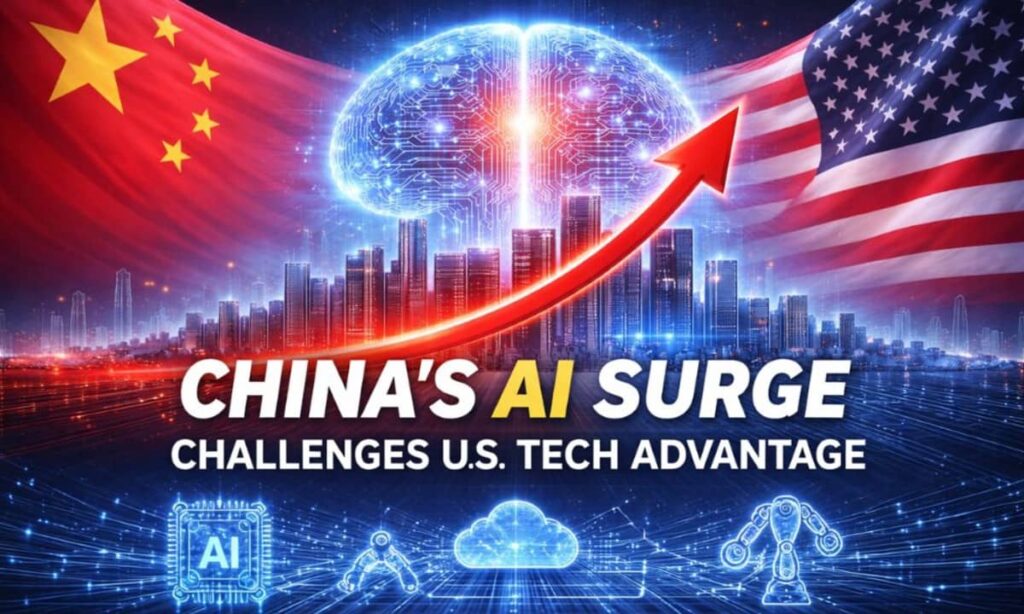
The Chinese bot farm gives policymakers one more factor to weigh as the U.S. scales up its AI infrastructure.
Data centers demand huge amounts of electricity, land, and cooling. That puts them at the center of both the AI boom and the fight over who pays for it.
At the same time, foreign operators posing as Americans make it harder to separate real public criticism from coordinated efforts to deepen division.
X said it stays “committed to maintaining an open and authentic platform where people debate topics of public interest.” The company added, “we take seriously any attempts to undermine the integrity of the global town square and suspend accounts that violate our Authenticity policy.”
The discovery of the Chinese bot farm will not settle the data center argument. It adds a layer to it.
Americans can hold real concerns about electricity bills, water use, environmental effects, and local development while foreign operators try to exploit those concerns for strategic ends.
That leaves technology companies and policymakers with two jobs at once: answer real community objections, and stop a Chinese bot farm — or any coordinated foreign campaign — from distorting the debate.
Do you think foreign influence campaigns are meaningfully shaping U.S. opposition to AI data centers, or are domestic concerns driving the backlash? Please share in comments.