

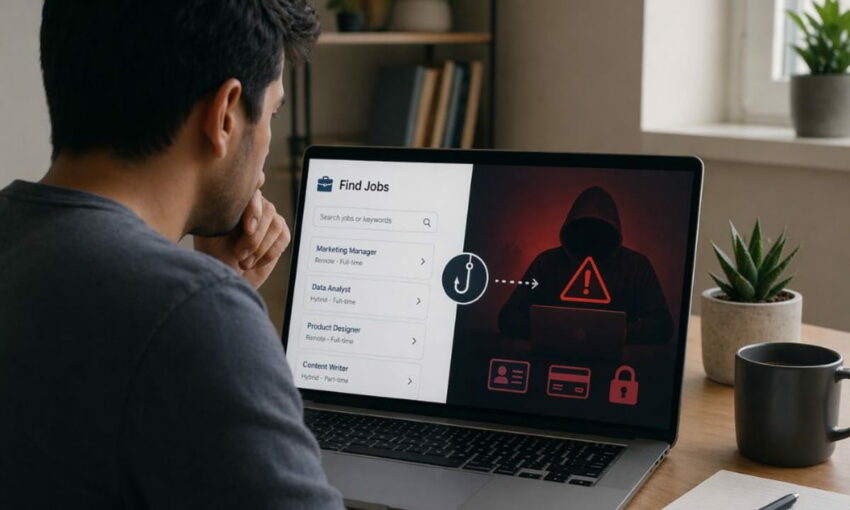
Job hunting just got a lot more dangerous. It’s AI job scams now!
Criminals use artificial intelligence to run recruitment scams so convincingly that even sharp-eyed professionals fall for them. These aren’t the clumsy, typo-ridden emails of years past. Today, fraudsters craft pitch-perfect outreach that mirrors your career history, skill set, and professional ambitions.
One journalist described receiving a recruiter message that felt eerily accurate. The sender cited her specific beats and professional focus with alarming precision.
The pitch read: “Your focus on the real-world impacts of AI, digital culture, and the gig economy aligns perfectly with an internal, high-priority mandate I’m managing.”
That level of detail wasn’t a coincidence. It was a calculated move powered by machine learning.
Enter the era of AI job scams
The numbers tell a disturbing story. Recruitment fraud has more than doubled in recent years. One major bank recorded a 237% surge in AI job scam victims within a few months. Digital banks flagged thousands of compromised accounts in a single year.
Experts say accessibility drives the explosion. Automated tools let criminals run massive fraud operations from anywhere on earth.
As one industry observer put it: “You can sit nowadays anywhere in the world and run a large job scam against people in the UK.”
Gone are the broken sentences and suspicious grammar that once tipped off alert readers. Machine-generated text now matches the tone and style of real corporate communication. That shift erases one of the few reliable warning signs candidates once relied on.
Common tactics criminals use in AI job scams

Fraudsters run several playbooks, each built around urgency and manufactured trust.
Fake recruiter profiles remain the most common entry point. Scammers clone real hiring managers on LinkedIn and replicate company branding to look legitimate.
They lure victims with promises of easy income. Applicants receive instructions to complete small online tasks — clicking, reviewing, rating — through messaging apps. Those tasks often lead to payment requests or data collection.
Some schemes push candidates toward upfront fees. In one documented case, a fake recruiter told a job seeker that their resume needed work and referred them to a “specialist” for paid editing. That referral exposed the fraud’s real goal: extracting money.
Others go further. Victims unknowingly hand over bank details or identity documents, exposing themselves to identity theft and financial fraud.
Why people fall for it
These AI job scams work because they target something real: the desire to feel wanted.
One expert described the psychological hook clearly: “A lot of people feel as if they’ve been found, almost — ‘Somebody wants me!'”
That emotional response lowers defenses. Candidates overlook red flags — vague job descriptions, unusually high salaries, pressure to respond fast. The urgency feels justified because the opportunity feels personal.
Labor market stress amplifies the effect. When jobs feel scarce, applicants take more risks. Fraudsters know that and time their outreach accordingly.
The fallout extends beyond money. Victims report shame, self-blame, and lingering frustration long after the scam ends. Research consistently shows that emotional damage rivals financial loss in severity.
Red flags worth knowing

Awareness doesn’t guarantee protection, but certain patterns appear repeatedly in fraudulent outreach.
Watch for recruiters who contact you through generic email addresses rather than official company domains. Question any job that arrives fully formed, unsolicited, and tailored just a little too perfectly to your background.
Be cautious when someone requests payment at any stage of the hiring process. Legitimate employers don’t charge candidates. Also, verify contact details — mismatched phone codes, inconsistent locations, and generic messaging platforms all signal trouble.
One documented scammer claimed a European base while using a U.S. number and a free email account. That combination revealed fraud — but only after the victim looked closely.
Technology outpaces detection
Here’s the hard truth: current platform safeguards can’t keep up.
A consumer protection expert framed the problem directly: “They can produce these scams much faster. They can make them more relevant, and there’s a much higher level of sophistication.”
Job platforms face mounting pressure to redesign verification systems. Experts call for standardized identity checks, real-time fraud detection, and tighter coordination between hiring platforms and financial institutions.
Until those systems improve, job seekers carry most of the risk of AI job scams.
Steps that reduce exposure
No single precaution eliminates the threat. However, a few habits make a meaningful difference.
Always verify recruiter identities through a company’s official website. Never share financial or identity documents early in any application process. Cross-reference every listing directly on the employer’s careers page. Slow down whenever a recruiter applies pressure to move fast.
And if you are a victim of AI job scams, remember what one expert made clear: “These are criminals, and you are a victim of a crime.”
The bigger picture
Artificial intelligence reshapes industries every year. It also hands criminals sharper tools to exploit trust at an unprecedented scale. Job seekers now navigate a market where opportunity and deception wear the same face.
Vigilance matters, so does demanding better accountability from the platforms that profit from connecting employers and candidates.
Have you spotted a suspicious job offer or been a victim of AI job scams? Please share your experience in the comments below. Your story could protect someone else.