

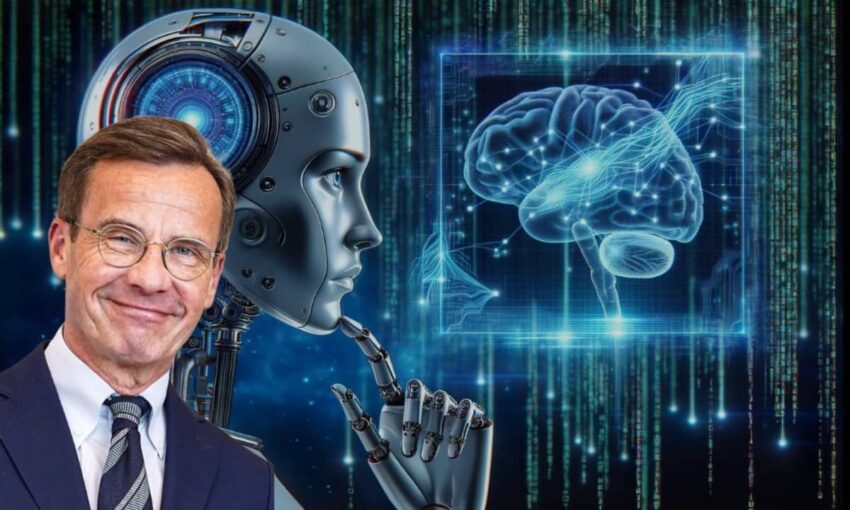
Swedish Prime Minister Ulf Kristersson is facing intense political backlash after revealing he regularly uses artificial intelligence in government decisions. This includes using ChatGPT and France’s LeChat when making government decisions. His candid admission in the business daily Dagens Industri has sparked a fierce debate about the appropriate role of AI in democratic governance.
“I use it myself quite often. If for nothing else than for a second opinion. What have others done? And should we think the complete opposite?” Kristersson told the newspaper.
The prime minister and several senior advisers reportedly integrate AI consultation into their daily policymaking routines, though officials insist no classified materials are shared with these platforms.
Opposition voices blast AI dependence
Media outlets and academic experts launched sharp criticism following the revelation. Sweden’s Aftonbladet editorial board accused Kristersson of succumbing to “oligarchs’ AI psychosis,” arguing that algorithmic dependence undermines democratic deliberation and expert human judgment.
Computer science professor Simone Fischer-Hübner from Karlstad University highlighted significant risks. She warned that large language models frequently generate false information or flawed reasoning, creating potential threats to sound decision-making and sensitive data protection.
Expressen columnist Signe Krantz delivered particularly harsh criticism, calling the practice “bananas” for any head of government. She emphasized that probability-based AI systems cannot replace human expertise in complex policy matters.
Technology researcher Daniel Swedin echoed these concerns, noting that artificial intelligence lacks a genuine independent perspective.
“It cannot provide the intellectual challenge of a human expert,” he stated, questioning whether AI tools offer meaningful policy insights.
Supporters defend modern approach
However, not all reactions proved negative. Mathias Sundin, who serves on Sweden’s governmental AI commission, praised Kristersson’s innovative approach. He argued that AI consultation helps combat political tunnel vision by presenting alternative perspectives before formal meetings begin.
Dagens Nyheter published a commentary supporting technological engagement by political leaders. The analysis suggested that tech-savvy politicians are better positioned to craft effective AI regulations than those who avoid emerging technologies entirely.
Government spokespeople characterized the AI usage as brainstorming assistance rather than primary policymaking guidance. They stressed that human officials maintain final authority over all governmental decisions.
European AI regulation context
This controversy emerges during a pivotal period for European artificial intelligence governance. Last June, Kristersson publicly advocated for suspending the EU’s comprehensive Artificial Intelligence Act, claiming its technical complexity makes enforcement impossible without standardized implementation guidelines.
The Swedish leader warned that premature regulatory implementation risks hampering innovation and positioning Europe behind technological powerhouses like the United States and China. Some policy analysts share concerns that excessive regulation could transform the continent into a “technological museum” rather than fostering AI leadership.
Virginia Dignum, an AI ethics researcher at Umeå University, strongly disagreed with regulatory delays. She maintains that clear legal frameworks encourage sustainable innovation while protecting democratic institutions. Weakening current rules, she argues, would damage public trust in AI systems and enable potential misuse.
Democratic governance implications

This incident illuminates fundamental challenges surrounding artificial intelligence integration into government operations. Central issues include transparency requirements, cybersecurity protocols, and whether algorithmic systems can adequately substitute for human deliberation in democratic decision-making processes.
Kristersson’s supporters view AI as a valuable tool for accessing diverse viewpoints when traditional advisers might engage in groupthink. Critics see dangerous shortcuts that could erode public confidence and concentrate power within big tech-controlled systems.
Given that AI models train on proprietary datasets with limited transparency, even non-critical governmental usage raises concerns about embedded biases, misinformation risks, and democratic accountability loss.
Future developments
Several key developments are expected in the coming months. The Swedish government will likely review internal AI usage policies, particularly regarding strategic discussions and public policy development processes.
EU negotiations surrounding the Artificial Intelligence Act will continue in Brussels throughout the remainder of 2025. Kristersson’s regulatory stance may significantly influence implementation timelines across member states.
Broader international discussions about responsible AI governance will shape how political institutions worldwide integrate machine-generated insights while preserving human oversight and democratic integrity.
The Swedish controversy represents a watershed moment for AI in government. As artificial intelligence capabilities rapidly advance, political leaders globally must balance innovation benefits against transparency requirements and democratic accountability standards.
Public trust in governmental decision-making processes depends on clear boundaries around AI usage. Citizens deserve to know when and how algorithmic systems influence policies affecting their lives.
This debate extends beyond Sweden’s borders. Democratic nations worldwide are grappling with similar questions about artificial intelligence’s role in governance, regulation, and public service delivery.
The outcome of Sweden’s internal review could establish important precedents for responsible AI adoption in democratic institutions internationally.
What are your thoughts on political leaders using AI for policy guidance? Share your perspective on balancing innovation with democratic accountability in the comments below.