


A prominent Wall Street economist is raising serious concerns about AI investment amid the current AI boom. The warning comes as artificial intelligence stock valuations reach dangerous levels while machine learning companies continue their meteoric rise.
Torsten Sløk, chief economist at Apollo Global Management, recently warned that AI valuations have become unsustainable.
“Yes, AI will do incredible things for all of us,” Sløk said on Yahoo Finance’s Opening Bid. “But does that mean I should be buying tech companies at any valuation?”
The answer, according to Sløk, is no.
Bubble metrics exceed historic levels

Sløk’s research shows the price-to-earnings ratios of the 10 largest S&P 500 companies have surpassed levels seen during the dot-com bubble peak in 1999. Many of these firms are AI-focused stocks like Meta and Nvidia.
The concentration risk worries experts. “Almost 40% of the S&P 500 is made up of the 10 largest companies,” Sløk explained. “So if I take $100 as an investor and buy the S&P 500, I think I have exposure to 500 different stocks, but I’m really just betting on the Nvidia and the AI story continuing.”
Warning signs flash red
BTIG analysts have flagged similar concerns this week. They described market sentiment as “frothy” and highlighted the BUZZ NextGen AI Sentiment Index. The benchmark tracks AI-related stocks popular with retail investors. The index surged 45% over 16 weeks and trades 29% above its 200-day moving average. Both metrics have hit their highest levels since early 2021, when speculative tech stocks peaked.
“Can it get more so like it did in ’20-’21? Of course,” BTIG analyst Jonathan Krinsky wrote. “But tactically, this feels a bit extreme to us.”
BTIG warned that top index holdings show concerning patterns. Companies like Rocket Lab, Coinbase, and Unity Software display “vertical” chart patterns. They face increasing vulnerability to “short-term shakeouts.”
Market concentration creates risks

The current market structure amplifies potential dangers. Tech giants dominate index performance through sheer size rather than broad-based growth.
Wall Street prices these companies “as if they are invincible,” creating fragility in the rally. The market bets heavily on perfect AI adoption without acknowledging substantial risks.
These risks include regulatory intervention, massive computing costs, and slower-than-expected technology adoption rates.
Investment implications
BTIG suggests investors consider rotating into defensive sectors like utilities or Chinese technology stocks, which have consolidated for months.
The warnings highlight a growing market divide. Long-term optimism about AI’s potential clashes with near-term concerns about excessive valuations and dangerous concentration.
Historical context matters
Previous technology bubbles offer important lessons. The late 1990s internet revolution created similar enthusiasm and spectacular crashes.
Between March 2000 and October 2002, an estimated $5 trillion in market value vanished when the dot-com bubble burst.
The underlying technology survived and thrived. However, companies with inflated valuations faced severe corrections.
Current market dynamics
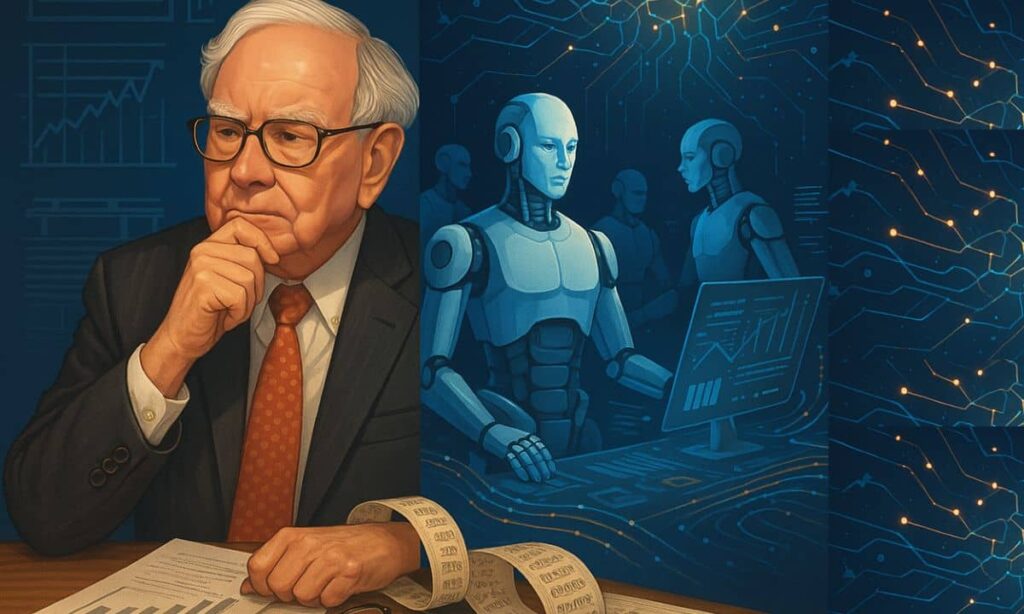
Major technology companies plan to spend a combined $320 billion on AI infrastructure in 2025. Microsoft, Meta, Alphabet, and Amazon lead this massive investment push as competition intensifies.
These spending levels reflect a genuine belief in AI’s transformative potential. Yet they also demonstrate the enormous capital requirements that may not generate immediate returns.
Expert perspectives
Technology officer Xun Wang of marketing automation company Bloomreach explains the disconnect.
“The expectations of AI are far beyond what the technology can deliver,” Wang told Built In. “There’s a whole bunch of people who think that they can deploy this technology to solve everything and replace everything. But that’s just not going to happen.”
The artificial intelligence revolution continues attracting massive investment and attention. However, some industry cooling suggests potential bubble deflation ahead.
Market reality check
Historical analysis shows businesses leading next-generation innovations typically peak at 30 to 40 times trailing sales. Amazon and Cisco Systems reached these levels before the dot-com collapse. In 2024, Nvidia topped a price-to-sales ratio above 40, while Palantir Technologies approached 69 times sales.
Although it is not easy to time investor sentiment shifts, history demonstrates that extreme valuations prove unsustainable in the long run. Even companies with strong competitive advantages cannot maintain such aggressive pricing indefinitely.
Looking forward
The artificial intelligence industry will likely transform business operations and consumer experiences. The technology’s long-term impact appears substantial and lasting.
However, current stock valuations may reflect unrealistic expectations about implementation speed and profit generation timelines.
Together, warnings from Apollo and BTIG point to growing market tension between AI’s genuine potential and immediate financial reality.
Investors face critical decisions about technology exposure while navigating increasingly concentrated market risks.
The comparison to 1999’s dot-com bubble serves as both a warning and a historical guide for understanding current market dynamics.
What’s your take on the current AI stock surge? Do you believe the AI boom is another tech bubble?
Please share your thoughts below.