

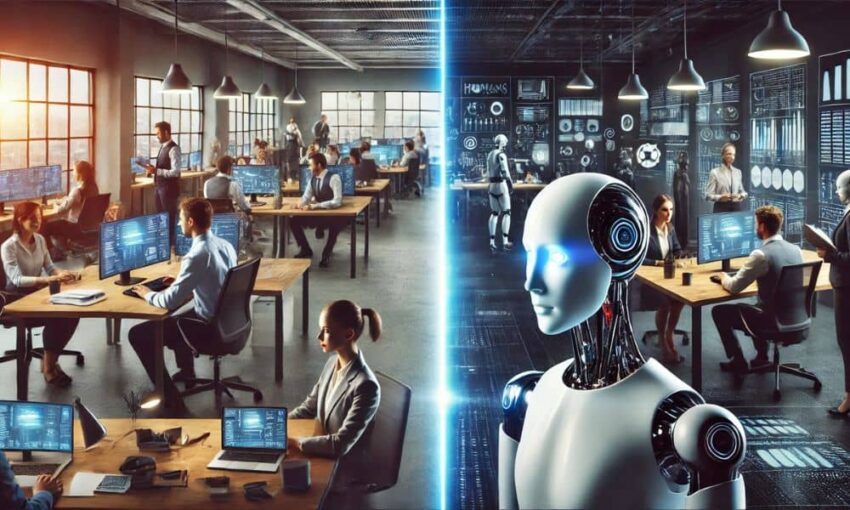
The AI-driven workplace revolution is fundamentally transforming how we work, creating unexpected shifts in skills that employers value most. While machine learning and automation excel at data-driven tasks, a comprehensive Stanford University study reveals that interpersonal abilities and emotional intelligence are becoming the new currency of professional success.
Traditional high-paying skills face disruption
The Stanford Institute for Human-Centered AI, alongside the Digital Economy Lab, conducted groundbreaking research released on July 7. Their comprehensive analysis involved 1,500 working professionals and 52 AI specialists, uncovering a fascinating paradox in today’s job market.
Artificial intelligence systems demonstrate remarkable proficiency in analytical work, statistical processing, and routine monitoring functions. However, roles requiring human creativity, instructional design, and strategic coordination are experiencing unprecedented growth in demand.
“Current high-wage capabilities, including data processing and systematic monitoring may experience reduced market value,” researchers concluded in their published findings.
This technological shift suggests that purely technical approaches to AI implementation miss critical insights about workforce dynamics and employee engagement preferences.
Employee resistance to complete automation
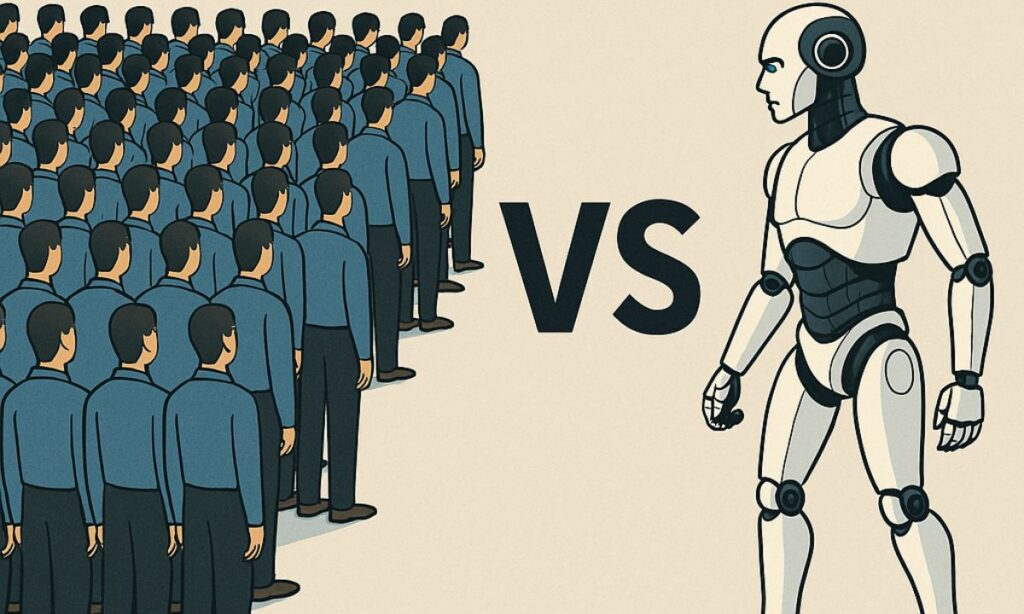
Professional workers demonstrate measured skepticism toward AI integration across their daily responsibilities. Survey data indicates that 41% of participants actively opposed automating creative content development and meeting preparation workflows.
Certain operational areas, particularly financial planning and scheduling coordination, show promise for human-AI collaboration. However, these functions currently lack the technological infrastructure needed for seamless integration.
“While AI technologies advance rapidly, workplace deployment decisions often prioritize technical feasibility over human impact considerations,” explained Yijia Shao, the Stanford doctoral researcher spearheading this investigation.
Interpersonal competencies gain prominence
The disconnect between AI capabilities and worker acceptance may significantly impact adoption timelines. Human resources professionals at Deloitte recommend strategic implementation approaches that strike a balance between organizational goals and employee values.
Supporting evidence comes from TestGorilla’s June analysis of 1,000 hiring executives across the United States and the United Kingdom. Their findings reveal compelling trends:
- 60% identify soft skills as more crucial today than five years previously
- Over 70% report enhanced recruitment outcomes when assessing both technical and interpersonal competencies
“Organizations seek individuals capable of critical thinking, adaptation, and effective teamwork,” noted TestGorilla’s chief executive.
AI enhancement versus replacement strategies
Erik Brynjolfsson, Stanford economist and Digital Economy Lab director, advocates for AI augmentation rather than workforce substitution approaches.
His 2022 analysis warned against the “Turing Trap,” where automation potentially increases economic inequality. Brynjolfsson highlighted successful AI applications like DeepMind’s AlphaFold, which amplifies human scientific capabilities rather than replacing researchers.
This philosophy aligns with TestGorilla’s research, which shows that employers utilize AI tools for resume screening (59%) and job description creation (66%), while maintaining human oversight for final hiring decisions.
Skills-focused recruitment and technological integration
A fundamental shift toward competency-based hiring is reshaping talent acquisition. More than half of companies have eliminated degree requirements, with 85% now implementing skills assessments—an increase from 81% the previous year.
AI-powered recruiting tools are transforming the hiring landscape. TestGorilla reports that 65% of employers integrate AI into recruitment processes, with 94% experiencing improved hiring quality.
Business Insider and LinkedIn research indicates companies increasingly deploy aptitude testing and personality evaluations to manage AI-generated application volumes. Over 75% view these assessments as improving fairness and accuracy in candidate selection.
Implications for workforce development
Continuous learning becomes essential. Employers prioritize adaptability, digital fluency, empathy, and analytical reasoning.
AI integration requires human guidance. Organizations must identify appropriate AI applications while preserving essential human leadership roles.
Collaborative approaches succeed. Industry forecasts suggest AI will complement rather than eliminate human contributions.
Companies achieving sustainable success will focus AI deployment on areas like content creation, strategic planning, and professional coaching—functions that combine technical complexity with high employee engagement.
The path forward
Today’s AI transformation transcends simple automation. It represents a fundamental rebalancing of human and machine capabilities. Workers demand AI empowerment rather than replacement, recognizing the irreplaceable value of human connection, instruction, and strategic communication.
Organizations must synchronize AI utilization with employee preferences while recruiting for both technical proficiency and emotional intelligence. This balanced approach transforms AI from a disruptive force into a genuine productivity multiplier that serves both business objectives and human potential.
How has AI changed your workplace experience? What skills do you believe will become most valuable in the coming years? Please share your insights in the comments below.