

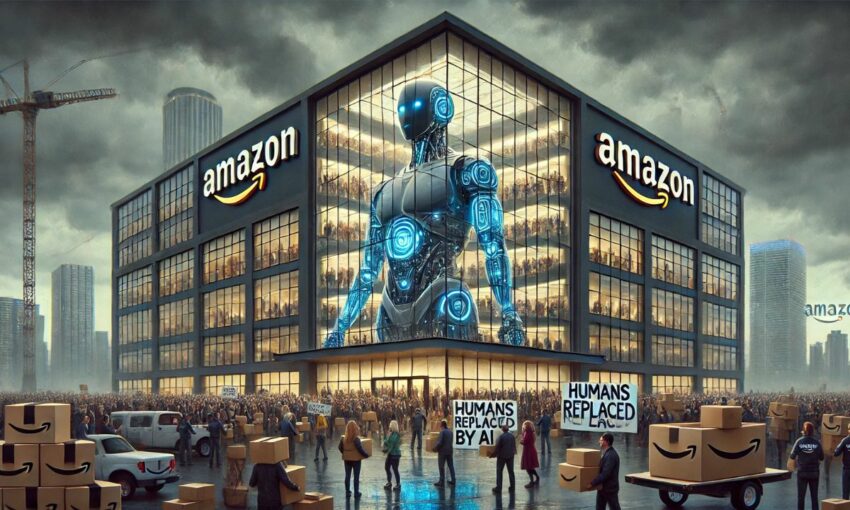
Amazon is preparing for sweeping changes to its corporate structure as artificial intelligence fundamentally alters business operations. Chief Executive Andy Jassy revealed plans to integrate generative AI systems throughout the company, signaling significant workforce reductions ahead.
The e-commerce giant’s strategy reflects broader technology sector trends. Companies worldwide are discovering AI capabilities that can handle tasks previously requiring human workers. This technological shift promises efficiency gains while raising serious questions about employment stability.
“Future workforce needs will look dramatically different,” Jassy explained in company communications. “Some positions will become obsolete while new roles emerge. Corporate headcount will likely shrink in the coming years as AI automation expands.”
Amazon has already eliminated over 27,000 positions since 2022. Recent cuts included 200 jobs in North American retail operations during January, plus 100 additional roles in devices and services by May. These reductions represent early indicators of larger transformations ahead.
Jassy’s vision extends beyond simple cost-cutting. The strategy emphasizes cultural change toward leaner operations powered by intelligent automation. Employees must master AI collaboration to remain competitive in evolving workplace dynamics.
Amazon continues investing heavily in AI infrastructure development. The company operates multiple proprietary generative AI platforms while expanding data center capacity to support machine learning workloads. Current employment stands at approximately 1.56 million workers globally, with warehouse and logistics staff comprising the majority.
However, Amazon isn’t alone in pursuing AI-driven workforce optimization. Technology leaders across industries are implementing similar strategies.
Shopify CEO Tobi Lütke announced policies requiring employees to demonstrate why AI cannot complete assigned tasks before requesting additional personnel or resources. This approach forces workers to prove human necessity in an increasingly automated environment.
Klarna reduced total headcount by 40% through AI integration and natural workforce attrition. CEO Sebastian Siemiatkowski credited artificial intelligence deployment for enabling these reductions without compromising operational capacity.
Corporate America’s AI adoption acceleration concerns industry experts, including artificial intelligence research pioneers.
AI pioneer issues stark employment warning

Geoffrey Hinton, recognized worldwide as artificial intelligence’s founding father, delivered sobering predictions about employment futures during recent media appearances.
“Artificial intelligence will eliminate most intellectual work performed by humans,” Hinton stated on the Diary of a CEO podcast.
The Nobel Prize winner emphasized particular risks facing white-collar professions, including legal services, customer support, and financial analysis.
According to Hinton’s assessment, AI assistants will enable individual workers to accomplish tasks currently requiring teams of ten people. This productivity multiplication threatens traditional employment models across knowledge-based industries.
Blue-collar trades offer better protection against AI displacement, at least temporarily. “Physical manipulation remains challenging for artificial intelligence systems,” Hinton explained. “Plumbing represents a safer career choice compared to office work.”
The AI pioneer challenged optimistic forecasts suggesting technology creates equivalent job opportunities to those eliminated.
“Workers need exceptional skills to perform tasks AI cannot handle,” he warned, highlighting concerns about entry-level and mid-tier employment prospects.
Employment market disruption visible
Current data supports these dire predictions. SignalFire’s 2025 research documented significant hiring reductions among major technology companies. Meta and Google decreased new graduate recruitment by 25% between 2023 and 2024, with entry-level positions dropping to just 7% of total hiring.
The financial services sector experiences similar pressures. Morgan Stanley eliminated 2,000 positions in March, replacing human workers with automated systems. Bloomberg Intelligence projects 200,000 banking job losses over five years across 93 major global institutions, affecting industry giants like Citigroup and JPMorgan.
Investment community sentiment reflects growing pessimism. During a recent technology conference, one executive bluntly predicted 60% of attendees would lose employment within twelve months.
Technological revolution or economic catastrophe?
Despite employment concerns, Jassy maintains optimism about AI’s transformative potential. His shareholder communications describe generative artificial intelligence as “unprecedented technological reinvention” capable of revolutionizing software development, e-commerce, finance, and logistics.
“AI advancement exceeds historical technology adoption rates,” Jassy wrote. “Companies achieve substantial cost savings through intelligent automation.”
Amazon deploys AI across diverse business operations. Machine learning optimizes warehouse logistics, enhances customer service automation, improves inventory forecasting, streamlines robotic systems, and accelerates product development cycles.
These applications demonstrate practical AI implementation beyond theoretical possibilities. Real business value drives corporate adoption rather than speculative investment.
Workforce evolution demands a strategic response
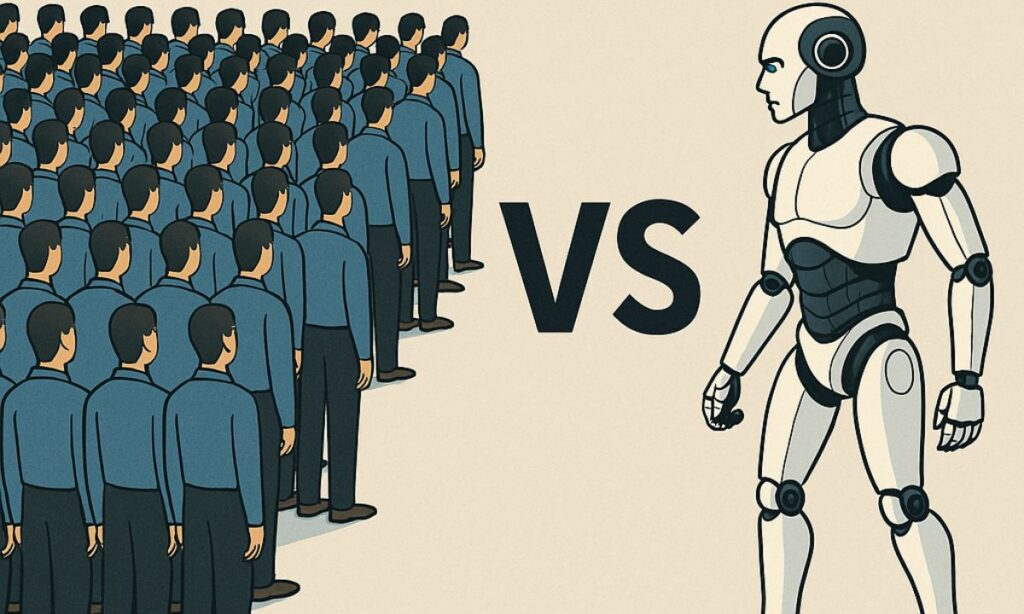
Global labor markets face unprecedented disruption as artificial intelligence capabilities mature. Workers, employers, and policymakers must navigate complex challenges, balancing technological progress with employment stability.
Amazon’s AI integration strategy represents industry-wide trends rather than isolated corporate decisions. Similar transformations will affect virtually every business sector as automation costs decrease and capabilities expand.
Traditional career planning assumptions no longer apply in AI-dominated environments. Workers must develop technological literacy and adaptive skills to remain employable. Companies need strategies that balance efficiency gains with social responsibility.
Geoffrey Hinton’s warning resonates across professional communities: “Artificial intelligence automation threatens intellectual work at unprecedented scale. Human job opportunities will contract significantly.”
The message for today’s workforce remains clear: embrace AI collaboration or face career obsolescence. Passive resistance to technological change guarantees professional irrelevance.
Organizations investing in employee AI training today position themselves for competitive advantage tomorrow. Those ignoring transformation signals risk losing talented workers to more progressive employers.
Economic implications extend beyond individual companies or industries. Society must address fundamental questions about work, value creation, and wealth distribution in AI-dominated economies.
Technology evolution continues regardless of comfort levels or resistance. Successful adaptation requires proactive engagement rather than reactive responses to change.
How is artificial intelligence impacting your workplace or industry? Share your experiences with AI integration, job displacement concerns, or successful adaptation strategies.