


This week, the artificial intelligence landscape witnessed seismic shifts as industry titans Meta and OpenAI executed strategic maneuvers that could fundamentally alter superintelligent systems development. Meta’s massive $14 billion investment in Scale AI represents a bold commitment to artificial general intelligence research. Meanwhile, OpenAI’s surprising partnership with Google Cloud significantly departs from its Microsoft-exclusive relationship.
Meta’s strategic bet on Scale AI

Mark Zuckerberg is making his most ambitious play yet in artificial intelligence. The Meta founder has grown increasingly frustrated with the market reception of the company’s Llama 4 models launched earlier this year. This disappointment prompted Zuckerberg to pursue a dramatically different approach by partnering with Scale AI and its visionary founder Alexandr Wang.
The partnership extends beyond financial investment. Meta plans to establish a dedicated artificial intelligence laboratory focused exclusively on developing superintelligent systems. These advanced models will transcend current artificial general intelligence capabilities and potentially surpass human cognitive performance.
Scale AI earned its reputation by providing premium data infrastructure services to technology leaders, including OpenAI, Microsoft, and Google. The company expanded into national security applications, collaborating with Meta on a specialized Llama version designed for U.S. defense purposes, dubbed “Defense Llama.“
Wang brings exceptional value to Meta’s leadership team at just 28 years old. His deep understanding of competitor operations makes him an unusually high-profile external recruiter.
“Meta is essentially purchasing institutional knowledge and competitive intelligence,” explained Vahan Petrosyan, CEO of data annotation competitor SuperAnnotate.
Wang’s self-described “wartime CEO” mentality aligns perfectly with Zuckerberg’s accelerated timeline for artificial intelligence dominance.
His declaration that “America must win the AI war” appeared in a full-page Washington Post advertisement, demonstrating a commitment to maintaining U.S. technological superiority.
OpenAI’s surprising alliance with Google Cloud
OpenAI shocked the technology sector by forging an unprecedented cloud computing partnership with Alphabet’s Google division. This collaboration represents a dramatic shift from OpenAI’s previous exclusive relationship with Microsoft Azure infrastructure.
The agreement, finalized during May negotiations, enables OpenAI to leverage Google Cloud’s computational resources alongside existing Microsoft infrastructure. This diversification strategy addresses OpenAI’s rapidly expanding infrastructure requirements as the company pursues its ambitious $10 billion annual revenue target.
Microsoft’s substantial $13 billion investment in OpenAI previously secured exclusive cloud computing rights, powering ChatGPT and other foundational models. However, OpenAI’s computational demands have exceeded even Microsoft’s vast infrastructure capacity, necessitating alternative solutions.
Scotiabank analysts characterized the partnership as “somewhat surprising” given the intense rivalry between Google and OpenAI in consumer artificial intelligence applications. However, urgent computational scalability needs appear to override competitive concerns.
Google Cloud generated $43 billion in revenue last year and expects significant growth from artificial intelligence-driven client demand. The collaboration provides OpenAI access to Google’s proprietary Tensor Processing Units, specialized artificial intelligence chips designed for machine learning workloads.
Race toward superintelligence accelerates
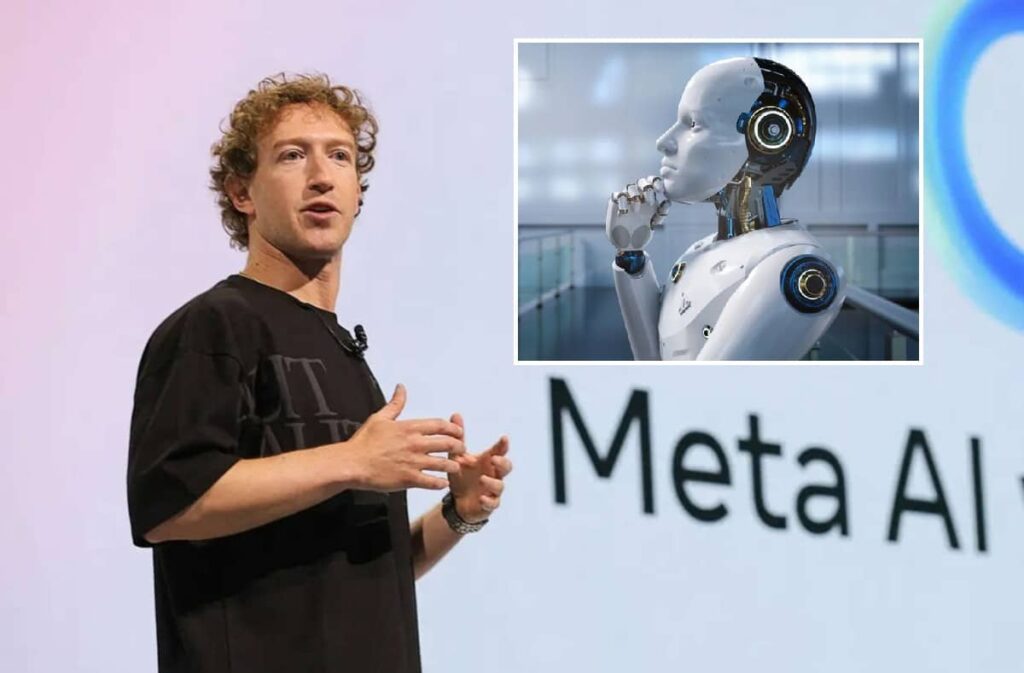
These developments intensify global competition toward achieving artificial general intelligence and superintelligent systems. Meta has transformed from an artificial intelligence laggard into a serious contender through strategic restructuring and aggressive talent acquisition.
Zuckerberg reportedly lost confidence in previous internal leadership, including Ahmad Al-Dahle, prompting comprehensive organizational changes. The company appointed a collaborative leadership team featuring Amir Frenkel to direct its AGI Foundations initiative.
Meta’s reorganization emphasizes aggressive, product-focused development, replacing previous fragmented artificial intelligence efforts. The company maintains its commitment to open-source artificial intelligence development. Llama models and Meta AI chatbot remain freely accessible across Facebook, Instagram, WhatsApp, and Meta’s smart glasses platform.
Critics have questioned Meta’s model performance benchmarks and evaluation transparency. External developers discovered discrepancies between Meta’s internal assessments and real-world Llama 4 performance, creating credibility challenges that Zuckerberg is personally addressing.
Cloud infrastructure becomes the battleground
OpenAI’s infrastructure diversification strategy reduces dependency on any single cloud provider while ensuring computational scalability. The company’s Stargate project, combined with partnerships across Oracle, CoreWeave, and Google, creates a robust, distributed computing network supporting next-generation model development.
This decentralized approach provides insurance against provider limitations, policy changes, or capacity constraints. The strategy reflects broader industry recognition that computational infrastructure has become equally important as algorithmic innovation.
A turning point in the AI war
Contemporary artificial intelligence competition transcends software development to encompass integrated ecosystems combining computational resources, human talent, and geopolitical considerations. Meta’s billion-dollar Scale AI investment and OpenAI’s unexpected Google partnership demonstrate industry willingness to forge unconventional alliances for competitive advantage.
These strategic moves position 2025 as a pivotal year when artificial intelligence competition evolved from rapid development sprints into sustained superintelligent system marathons. The convergence of massive financial investments, strategic partnerships, and technological breakthroughs suggests the landscape will continue evolving at an unprecedented pace.
How do you think these major AI partnerships will reshape the technology landscape? Will Meta’s superintelligence lab succeed in surpassing current AI capabilities? Please share your thoughts on these groundbreaking developments.