

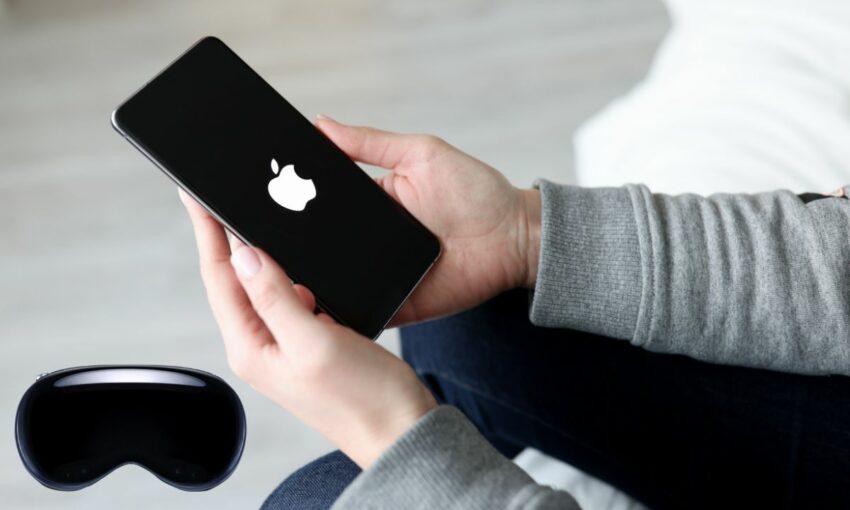
In a landmark development for spatial computing, Apple seeks to revolutionize its Vision Pro headset with the integration of its sophisticated Apple Intelligence system. The upcoming visionOS 2.4 update, slated for release in April 2025, promises to transform the $3,500 mixed-reality device into an AI-powered powerhouse, marking a significant evolution in immersive technology.
Apple intelligence: A new era for mixed reality
Developers will get their first glimpse of these groundbreaking features this week through beta access, setting the stage for a comprehensive public release.
This strategic move extends Apple’s artificial intelligence capabilities beyond its traditional device ecosystem, leveraging the Vision Pro’s powerful M2 chip and 16GB RAM to enable sophisticated on-device AI processing.
Revolutionary AI features reshape user experience
The integration of Apple Intelligence brings several transformative capabilities to the Vision Pro platform:
The Writing Tools Interface emerges as a sophisticated text processing system, elevating productivity through predictive typing, context-aware corrections, and intelligent content suggestions. This advanced interface adapts to individual writing styles, creating a more personalized and efficient workflow.
Genmojis introduces a new dimension of personal expression, utilizing artificial intelligence to create custom emoji reactions based on user interactions and emotional responses. This feature transforms how users communicate in virtual spaces, making digital interactions more nuanced and engaging.
The Image Playground App represents a breakthrough in creative computing, enabling users to generate and manipulate digital artwork within the Vision Pro’s immersive environment. This tool pushes the boundaries of spatial creativity, offering unprecedented control over visual content creation.
Strategic timing in a competitive landscape
Apple’s AI integration arrives at a crucial moment, as Google prepares to launch Android XR, its competing mixed-reality operating system featuring integrated Gemini AI. The timing suggests a strategic move to establish dominance in the AI-powered mixed reality space before the arrival of competing platforms, including Samsung’s anticipated Vision Pro competitor.
While Apple maintains its characteristic silence regarding the update, industry analysts note that this development aligns with Bloomberg’s earlier reporting about Apple Intelligence development for Vision Pro. The integration of ChatGPT into Writing Tools particularly stands out, even as broader Siri AI improvements face temporary delays due to technical complexities.
Enhancing Vision Pro appeal: Content and accessibility
To boost adoption of the Vision Pro, Apple is introducing several key features aimed at enriching the user experience.
Spatial content revolution
A new spatial content application maximizes the headset’s immersive capabilities, supporting sophisticated 3D imagery and panoramic content from various sources. This addition addresses the platform’s content ecosystem limitations, providing users with richer media experiences.
The platform’s media offerings expand further with an enhanced TV app experience, launching February 21, 2025. A groundbreaking immersive documentary about Arctic surfing showcases the Vision Pro’s potential beyond traditional applications, highlighting its capacity for transformative virtual experiences.
Revolutionary guest mode experience
Apple’s reimagined Guest Mode transforms the Vision Pro into a more social device. This innovative feature enables seamless device sharing while maintaining privacy and personal settings. The introduction of iPhone-controlled setup streamlines the guest experience, potentially catalyzing new sales through direct exposure to the technology.
Leading the AI-powered mixed reality revolution
Apple’s integration of artificial intelligence into mixed reality represents a broader industry shift, with competitors like Meta, Microsoft, and Google making similar advances. The Vision Pro’s unique advantage lies in its powerful on-device processing capabilities, enabling AI features without cloud dependence—a significant differentiator in terms of privacy and performance.
Strategic vision and market impact
Apple’s latest update reflects a refined focus on mixed-reality innovation. The company’s decision to prioritize Vision Pro development over AR glasses demonstrates its commitment to pushing the boundaries of what’s possible in spatial computing.
As the mixed-reality landscape evolves, questions remain about consumer adoption of AI-enhanced experiences and whether these updates can overcome the Vision Pro’s initial adoption challenges. However, with visionOS 2.4, Apple positions the Vision Pro as a pioneering AI-integrated spatial computing platform, potentially redefining the future of immersive technology.
Apple sets off AI revolution
This revolutionary approach to content marks a significant shift in how we consume media. While traditional screens have kept us as outside observers, spatial content in the Vision Pro transforms us into active participants in every scene. Whether you’re exploring vacation memories that feel startlingly real, attending virtual events where you can mingle with other participants, or experiencing documentaries from within the action, spatial content bridges the gap between watching and experiencing.
It’s not just an upgrade to existing technology – it’s a fundamental reimagining of how we interact with digital content, turning passive viewing into dynamic, immersive experiences that engage all our senses. As developers and content creators begin to harness these capabilities, we’re likely seeing just the beginning of what spatial computing can offer in transforming our digital interactions from mere observation to genuine presence.
What do you think? Leave your comment below.