

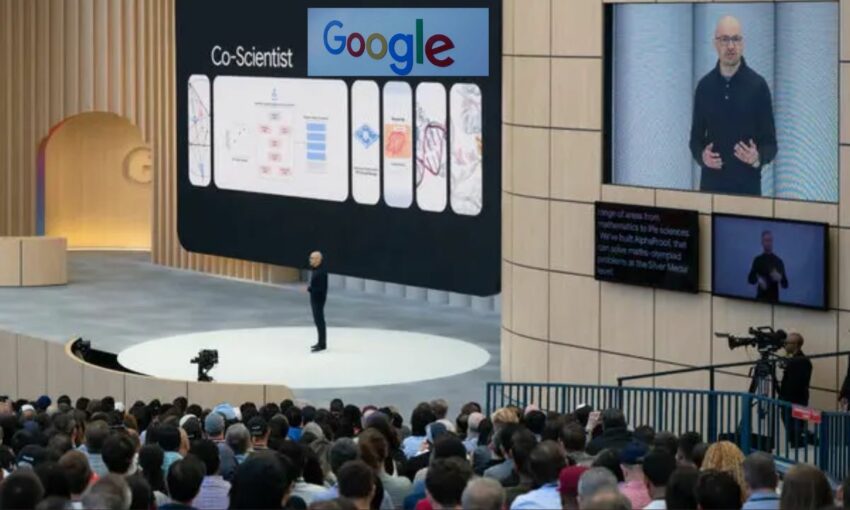
Google aggressively expanded its artificial intelligence monetization strategy Tuesday with the debut of Google AI Ultra, a high-end subscription package priced at $249.99 monthly. The premium service, unveiled during the company’s annual I/O developer conference, delivers exclusive access to its most sophisticated AI technologies. Early adopters receive a 50% discount for their first three months, significantly lowering the barrier to entry for the premium service.
Google AI Ultra: VIP pass to deep research and creativity
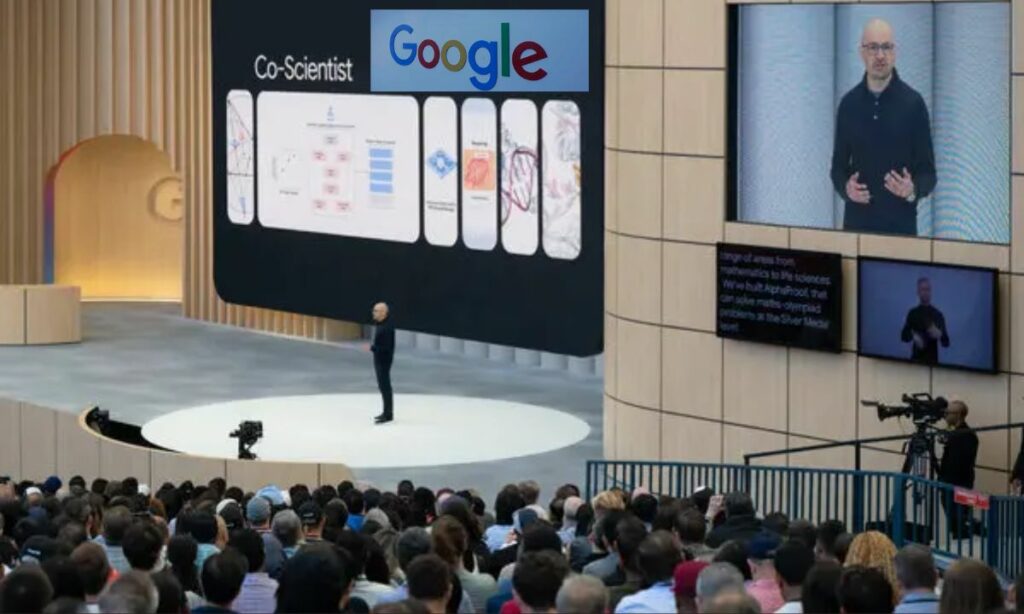
The new Ultra tier targets professional creators, academic researchers, and enterprise power users seeking enhanced capabilities and generous usage allowances. Subscribers gain immediate access to several cutting-edge tools.
Gemini 2.5 Pro’s Deep Think reasoning mode handles complex research questions with unprecedented depth. The new Flow application transforms text descriptions into polished 1080p video clips, complete with advanced camera controls and early access to the Veo 3 generation model.
Additional benefits include Whisk Animate for converting static images into eight-second video clips through generative AI. NotebookLM receives substantial usage upgrades for academic and professional documentation needs. Project Mariner, still in prototype phase, manages up to 10 simultaneous tasks through a centralized dashboard.
The package also bundles YouTube Premium individual membership and a massive 30 terabytes of cloud storage across Drive, Photos, and Gmail services, far exceeding typical consumer plans.
Enhanced benefits for all AI subscribers
Alongside Ultra’s launch, Google rebranded its existing AI Premium subscription as Google AI Pro, maintaining its $19.99 monthly price point. Pro subscribers now receive Flow access with the previous-generation Veo 2 video technology and early Chrome integration for Gemini services.
Google AI Pro members retain their 2 terabytes of storage capacity and receive prioritized feature rollouts before free-tier users. This restructuring creates a clear three-tiered approach to Google’s AI offerings.
Developers and innovators get new tools

During the I/O keynote, Google DeepMind CEO Demis Hassabis highlighted significant improvements to Gemini’s reasoning and world-modeling capabilities. These advancements represent concrete steps toward developing artificial general intelligence, according to company representatives.
The conference showcased Mariner’s automated task handling within Chrome browsers and introduced Astra, an experimental virtual assistant prototype. Google emphasized that AI Ultra’s toolset will power innovative web applications and accelerate development across multiple industries.
AI mode: Chatbot revolution transforms search experience
Google’s most significant announcement came with the launch of AI Mode in U.S. Search, embedding a sophisticated chatbot directly into its flagship search engine. This conversational AI interface allows users to pose natural questions, maintain context across multiple exchanges, and receive comprehensive answers without navigating traditional link listings.
“It’s a total reimagining of search,” said Sundar Pichai, Alphabet’s chief executive officer, during the presentation.
The chatbot-driven experience, powered by Gemini 2.5 Pro, handles complex, multi-part queries with unprecedented comprehension. Early testing shows users crafting detailed requests and refining results through natural conversation, mirroring human dialogue rather than keyword-based searches.
This evolution marks a dramatic departure from Google’s decades-old approach of serving pages of blue links. The company first introduced AI Overviews in May 2023 to generate summaries above search results, but AI Mode represents a complete transformation toward conversational search experiences.
A self-disruption before the disruptors arrive
Google declared an internal “code red” in late 2022 following ChatGPT’s public release. The company now moves to transform its core search business, which generated approximately $350 billion last year, before external innovators can capture market share.
The chatbot integration responds directly to changing user expectations for conversational AI interactions. Safari searches on iPhones reportedly declined for the first time in 22 years, contributing to a $150 billion reduction in Alphabet’s market value as users increasingly turn to AI chatbots instead of traditional search engines.
AI systems remain prone to significant errors, as evidenced when a Google prototype that notoriously suggested people consume rocks as food. To preserve user trust, Google plans clear labeling for AI-generated responses and will introduce advertising into AI Mode only after extensive accuracy testing.
“They hesitated on this for a long time because didn’t think the quality was good or know how to monetize it,” said Pete Meyers, the principal innovation architect at Moz, a software company focused on search engine optimization that tracks changes to Google Search. “Now they’re doing what they think they have to do to compete, and it’s uncomfortable.”
Generative AI spreads across Google’s ecosystem

Beyond search enhancements, Google demonstrated new AI capabilities throughout its product lineup. Gmail users will benefit from intelligent replies that analyze previous communications and calendar events to match the user’s unique writing style.
A sophisticated shopping assistant locates products matching specific criteria, applies various filters, and can automatically complete purchases when items reach desired price points. Google also previewed “Search Live,” an innovative camera-based function that provides real-time object recognition and information.
These integrations reflect Google’s vision of seamlessly incorporating conversational AI into everyday digital experiences, moving beyond text-based chatbots toward multimodal interaction systems.
Regulatory and industry headwinds
Google’s ambitious AI strategy unfolds amid intensifying regulatory scrutiny. Recent court documents revealed that Safari search volume decreased for the first time in 22 years as users increasingly turn to conversational AI platforms instead of traditional search engines.
Lawmakers and content publishers express concern that AI chatbots could significantly reduce web traffic and advertising revenue. Google counters that tools like AI Overviews drive increased queries and website visits. The Department of Justice and state regulators continue evaluating potential remedies that could fundamentally alter search engine competition.
As Google transitions toward an AI-first approach across its search and productivity platforms, the tech giant bets heavily that its subscription-based strategy will diversify revenue streams while cementing its leadership in artificial intelligence innovation.
How might Google’s chatbot-driven AI Mode change your daily search habits? Are you excited about conversational search, or do you prefer traditional results? Share your perspective in the comments below.