

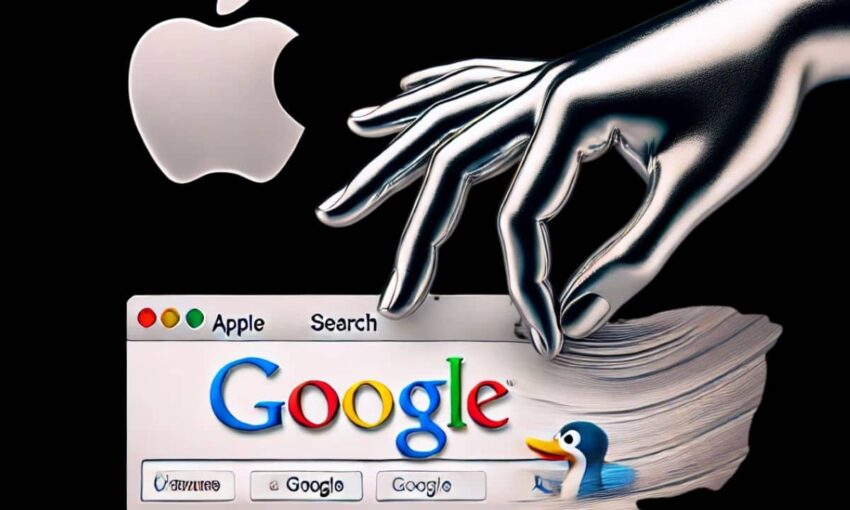
Apple is quietly preparing a fundamental transformation of web browsing on its devices. The technology giant aims to prioritize artificial intelligence search engines within Safari. This strategic shift could eventually terminate the long-standing partnership with Google that has defined web search on Apple products for nearly two decades.
This revelation emerged during testimony by Eddy Cue, Apple’s senior vice president of services, at the Department of Justice’s antitrust trial against Alphabet. Federal prosecutors are investigating Google’s alleged monopolistic practices, including its $20 billion annual payment to Apple. This massive deal has maintained Google’s position as Safari’s default search engine across over two billion active Apple devices worldwide.
The winds of change are now blowing strongly through Silicon Valley.
AI tools challenge traditional search dominance
Safari’s search volume declined last month for the first time, according to Cue’s testimony. He attributed this unprecedented drop to users increasingly turning to AI-powered alternatives.
“People are using AI,” Cue stated during his court appearance. He specifically mentioned companies like OpenAI, Perplexity AI, and Anthropic as emerging challengers to conventional search engines.
“We will add them to the list — they probably won’t be the default,” Cue explained. He indicated these AI search options show promise but require further development. Apple has actively evaluated offerings from numerous AI companies, including Perplexity, Anthropic, China’s DeepSeek, and Elon Musk’s xAI with its Grok system.
This signals Apple’s intent to diversify Safari’s search ecosystem significantly. While Google may temporarily retain its default status, Cue emphasized a shifting landscape. “There is much greater potential because new entrants are attacking the problem in a different way,” he testified.
Wall Street reacts with concern
Financial markets responded swiftly to Cue’s revelations. Alphabet stock tumbled 7.3% on Wednesday, marking its steepest single-day decline since February. Apple shares also dipped 1.1%, reflecting investor anxiety about the potential dissolution of a highly profitable revenue-sharing arrangement.
The financial stakes are substantial. Apple’s services division, which Cue oversees, recently reported record revenue of $26.6 billion for the March quarter. This unit manages iCloud, Apple Music, Apple TV+, and other subscription offerings. Ending the Google partnership would impact one of the division’s most lucrative revenue streams, particularly as hardware sales growth plateaus.
“I’ve lost sleep over this,” Cue admitted candidly. “The current agreement [with Google] has the most favorable financial terms.”
Beyond search: AI reshapes device interaction
Cue suggests AI represents more than just an alternative search method. He described it as a technological turning point that could fundamentally alter how consumers interact with devices.
“You may not need an iPhone 10 years from now, as crazy as it sounds,” he stated, highlighting how technological disruptions create opportunities for industry newcomers.
He emphasized that generative AI systems built on large language models already deliver user experiences that are “so much better that people will switch,” despite some limitations compared to Google’s comprehensive indexing capabilities.
“There’s enough money now, enough large players, that I don’t see how it doesn’t happen,” Cue said regarding broader adoption of AI-first search tools.
Google’s response and Apple’s strategic options
Google isn’t surrendering its position quietly. The search giant plans to launch its Gemini AI product later this year. Apple is reportedly considering integrating Gemini into Siri. ChatGPT from OpenAI is already available on iOS devices and features in Apple’s AI suite under Apple Intelligence in iOS 18.
Apple’s own AI development has progressed more slowly than competitors. Siri has missed several critical updates due to privacy concerns and integration challenges, particularly regarding the use of on-device personal data for query customization. The upcoming Worldwide Developers Conference on June 9 will likely showcase improvements designed to narrow this technological gap.
Meanwhile, Apple has made tactical adjustments to its search partnerships. Its agreement with Microsoft Bing has shifted to annual renewal terms, reflecting uncertainty in the evolving AI search landscape. Apple recently expanded its Google arrangement to include Google Lens integration, enabling image-based AI analysis on iPhones through the new Visual Intelligence feature.
Industry at a crossroads: Legal, economic, and technological factors
The Justice Department’s antitrust case against Alphabet has exposed complex relationships between technology giants. The trial raises broader questions about search market competition, consumer choice options, and AI’s role in disrupting established systems. A ruling that forces Apple and Google to terminate their agreement could dramatically impact the entire digital ecosystem.
Cue’s testimony revealed Apple’s comprehensive strategy: protecting itself from legal vulnerability and technological obsolescence while maintaining revenue stability. “Technology shifts create these opportunities,” he noted. “AI is a new technology shift.”
The path forward
The broader implications are evident: Safari’s AI-focused redesign represents more than a product update. It signals a strategic repositioning of Apple’s role in a world where traditional search engines may become secondary to AI assistants and contextual information engines.
Apple appears to be preparing for a future where AI systems answer user questions more effectively than conventional web search. Whether Apple establishes new industry standards or adapts to emerging ones, the era of AI-powered search has already begun.
What do you think?
How will AI change the way you search for information online? Are you already using AI assistants instead of traditional search engines? Share your views below about how Apple’s potential break from Google might affect your daily digital life.