

With AI agents dominating the digital landscape, Google is facing increasing challenges in its once-dominated search engine world.
The digital landscape is experiencing a seismic shift as AI agents emerge from behind the scenes to take center stage in 2025. These intelligent assistants are fundamentally altering consumer behavior around searching, shopping, and content consumption, forcing a complete reimagining of digital advertising strategies.
This transformation is driven by autonomous AI systems like Google’s Mariner, OpenAI’s Operator, and Perplexity’s Comet. These digital intermediaries now influence everything, from product discovery to final purchase, compelling traditional search platforms to adapt quickly or face irrelevance in this rapidly evolving ecosystem.
Search giants face unprecedented challenges
For the first time in over a decade, Google’s search dominance shows signs of weakness. Their global market share dipped to 89.65% in April 2025, the lowest since 2013. Within the U.S., Google commands 86.71%, while competitors like Bing (7.5%), Yahoo, and DuckDuckGo divide the remainder. Meanwhile, AI-powered alternatives are gaining momentum.
Google’s AI Overviews now reach 1.5 billion monthly users. Perplexity jumped from 2.5 million to 20 million monthly searches in 2024, and ChatGPT processes approximately 37.5 million search-like queries daily.
These metrics highlight a fundamental change in user expectations. Today’s consumers demand immediate answers rather than links, reducing reliance on traditional websites and directly challenging ad-supported search business models that have dominated for decades.
Direct answers disrupt ad exposure
The streamlined information delivery of artificial intelligence agents significantly reduces advertising touchpoints. Recent analysis from eMarketer projects a dramatic 47% reduction in ad exposure during the consumer consideration journey. The discovery phase could see 38% fewer ads, while conversion touchpoints might decrease by 30%.
This disruption has sparked a strategic pivot among advertisers. Brands now prioritize AI-friendly content optimization through structured product feeds and specialized metadata designed for AI interaction. Many are bypassing traditional display and search ads entirely, instead pursuing direct integration within AI conversational experiences.
Gartner analyst Noam Dorros emphasizes maintaining consumer focus: “Even as technologies evolve, understanding your customer remains fundamental. Building strong consumer relationships now creates flexibility for future platform shifts.”
New Ad formats emerge to meet AI challenges
Technology leaders are rapidly developing innovative advertising solutions. Microsoft’s Copilot platform unveiled groundbreaking AI-enhanced ad formats in March, designed to better match user intent within conversational environments. Early adoption spans retail, gaming, and travel sectors.
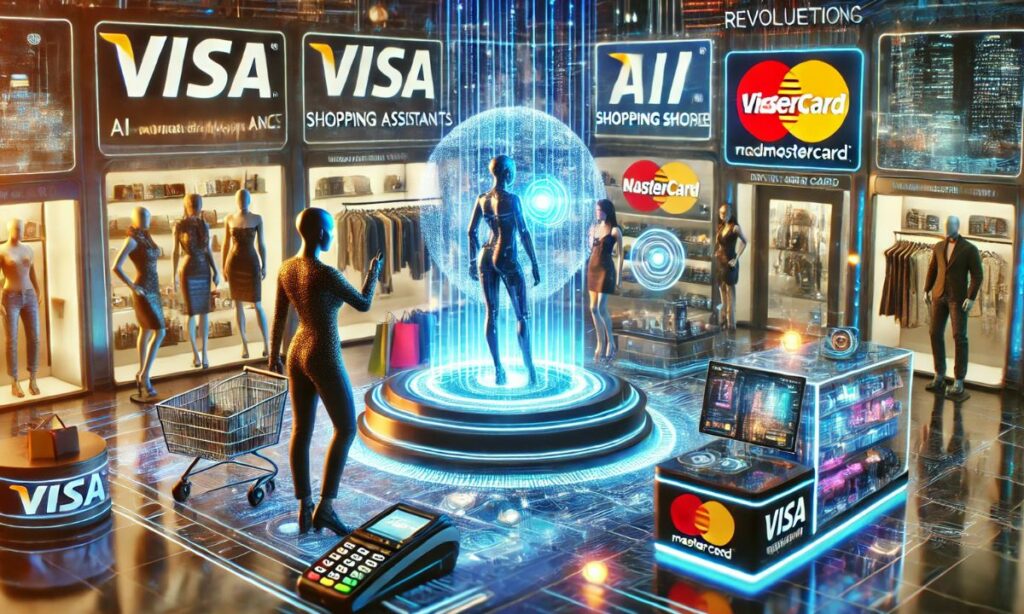
Payment giants are pushing boundaries even further. Visa’s Intelligent Commerce and Mastercard’s Agent Pay systems now enable AI agents to complete transactions autonomously based on predetermined consumer preferences, signaling a potential revolution in purchase journeys.
Consumer trust evolving gradually
Despite technological advances, consumers remain cautious about surrendering control. Recent eMarketer research reveals 66% of Americans hesitate to allow AI to make purchases independently. However, most respondents expressed willingness to use AI for price monitoring, securing high-demand items, or tracking maintenance requirements.
A comprehensive Bain & Company analysis shows AI-generated content now powers over 40% of U.S. search interactions. Trust varies significantly by context – 56% trust AI for learning and 51% for shopping recommendations, compared to just 34% for health guidance and 29% for news content.
AI agents gain sophistication and autonomy

Today’s AI assistants have evolved beyond simple chatbots. Modern agents independently browse websites, compare pricing, and generate product reviews. OpenAI’s Operator and Amazon’s Nova Act navigate complex search and purchasing processes with minimal human intervention. Industry anticipation is high for Perplexity’s upcoming Comet platform, expected to accelerate this transition.
Enders Analysis reports impressive performance improvements, noting that OpenAI’s research agents doubled their accuracy on the challenging “Humanity’s Last Exam” benchmark, improving from 13% to 26.6%. These gains stem from enhanced web data processing and multi-platform task execution capabilities.
Marketing strategies require fundamental rethinking
The AI revolution demands that marketers learn to communicate effectively with machines. Recent Wharton research synthesized findings from numerous labs into a comprehensive AI marketing framework, revealing several surprising insights:
- Consumers accept price increases 2.6 times more readily when presented by AI rather than human representatives
- Machine-like interfaces outperform humanized approaches when marketing sensitive products
- AI flattery significantly enhances persuasive impact when deployed subtly
- Human-like bots increase engagement but may prove counterproductive for complaint handling
Marketing professor Stefano Puntoni notes, “AI flattery works remarkably well, provided consumers don’t recognize it as a deliberate tactic.”
Preparing for tomorrow’s digital ecosystem
As platforms continue deploying new capabilities, marketers face mounting pressure to reimagine content strategies. Success increasingly depends on convincing AI agents before reaching human consumers, requiring structured data frameworks, natural language optimization, and ethical personalization approaches.
The industry has moved beyond viewing generative AI as merely interesting technology. At Possible 2025, the premier digital marketing conference, AI is now considered essential infrastructure rather than optional innovation.
Businesses are adapting to this new reality by developing enhanced product feeds, implementing smarter metadata systems, and designing AI-first content strategies. This shows a fundamental shift where machines increasingly make preliminary decisions that shape consumer choices.
What’s your experience with AI agents in your daily digital life? Share your thoughts in the comments below on how these digital assistants are changing your search and shopping habits.