

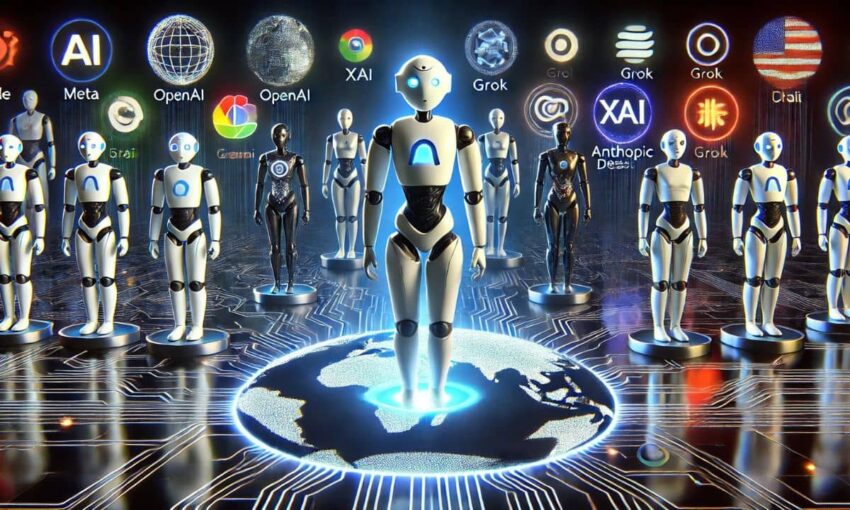
Meta CEO Mark Zuckerberg unveiled the company’s first dedicated artificial intelligence assistant application this week. The move places Meta in direct competition with OpenAI’s ChatGPT, Google’s Gemini, xAI’s Grok, and Anthropic’s Claude. The announcement came during the first-ever LlamaCon developer event. It signals a critical milestone in Meta’s artificial intelligence strategy.
The launch highlights Meta’s determination to dominate the conversational AI market. Meanwhile, new contenders like Xiaomi and Alibaba intensify the worldwide race for AI supremacy.
From integration to standalone experience

Meta’s new virtual assistant, branded simply as Meta AI, operates on the company’s sophisticated Llama 4 language model. The product represents a departure from previous efforts. Earlier AI features were embedded within Facebook, Instagram, WhatsApp, and Messenger. The new application runs independently on both iOS and Android devices.
Key features of the app include:
- A “Discover” section showcasing user interactions with the AI
- Personalized prompt suggestions
- Advanced text and image generation capabilities
- Web search functionality
- Quick response times powered by Llama 4
During his keynote presentation, Meta Chief Product Officer Chris Cox emphasized the platform’s worldwide scalability. “Our developer community now includes thousands of Llama builders,” he said. “This ecosystem is expanding faster than any previous generation of technology.”
Llama models see explosive growth
Meta’s open-source large language models have achieved remarkable adoption rates. The company reported 1 billion downloads by March 2025. During LlamaCon, Meta confirmed this figure jumped to 1.2 billion downloads in April.
“Thousands of developers are contributing to our ecosystem,” Cox noted. “They’ve created tens of thousands of specialized models. These variations see hundreds of thousands of monthly downloads.”
Internal data shows Meta AI now reaches approximately 1 billion monthly users. This makes it one of the world’s fastest-growing virtual assistants. Earlier this year, CFO Susan Li reported Meta AI users increased from 600 million in December to 700 million in January. This growth continued through the first quarter.
The company plans to monetize its AI platform. A premium subscription tier will launch later this year. It will offer enhanced capabilities for business clients and power users.
Zuckerberg’s strategic vision
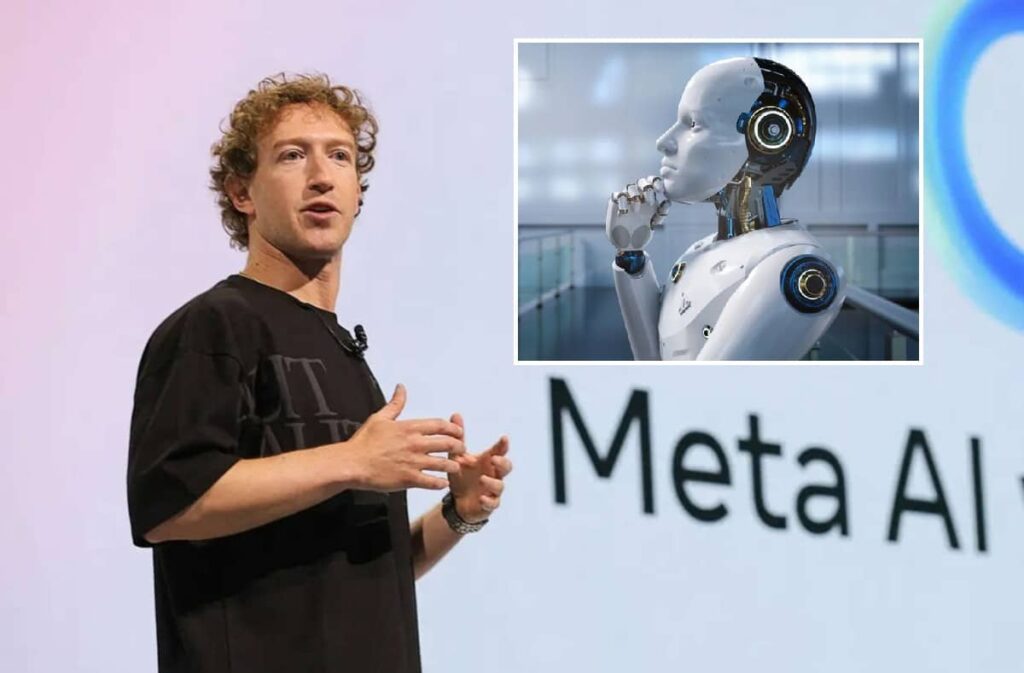
Zuckerberg has consistently prioritized AI development at Meta. He previously declared, “2025 will be the year when a highly intelligent, personalized AI assistant reaches over 1 billion people. I expect Meta AI to become that leading assistant.”
His statement reveals Meta’s broader strategy. The company aims to dominate artificial intelligence through both open infrastructure and direct user interfaces. This approach mirrors Google’s earlier success with search and the Android platform.
OpenAI expands with e-commerce features
As Meta advances its AI strategy, OpenAI has quietly introduced major new functionality to ChatGPT. The update directly challenges Amazon, Google, and product review websites. OpenAI has integrated shopping capabilities into its popular chatbot.
ChatGPT now offers:
- Customized product suggestions
- Real-time pricing information
- Customer reviews
- Direct purchase links
OpenAI emphasizes that these recommendations are “independently selected” rather than paid placements. The company positions this feature as helping users “discover, evaluate, and purchase products more efficiently.”
This update follows ChatGPT’s search tool success. The feature reportedly processed over 1 billion web searches in a single week during April.
By combining retail functionality with conversational AI, OpenAI emerges as a competitor not just to other AI developers but to established e-commerce platforms and content publishers.
Xiaomi enters AI race with MiMo
While American companies compete for AI dominance, Chinese technology giant Xiaomi has introduced its first major language model. The system, called MiMo, focuses on human-like reasoning capabilities. Industry observers view it as China’s response to systems from OpenAI.
Xiaomi claims MiMo has outperformed OpenAI’s o1-mini and Alibaba’s Qwen in several benchmark tests. These results await independent verification but demonstrate Xiaomi’s serious AI ambitions.
“MiMo represents the initial effort from our newly formed AI modeling team,” Xiaomi announced on WeChat. “Though 2025 may seem late to join the language model race, we believe artificial general intelligence requires long-term commitment.”
The announcement boosted Xiaomi’s stock price by over 5% in Hong Kong trading. This reflects investor confidence in the company’s AI strategy. Xiaomi’s AI expansion follows significant investment in electric vehicles, with its first SUV expected mid-year.
MiMo’s launch adds further competitive pressure among Chinese technology firms. It follows DeepSeek’s R1 and Alibaba’s Qwen3, released just one day before Xiaomi’s announcement.
Chinese AI challengers gain momentum

Alibaba’s Qwen3 continues showing strong performance in AI benchmarks. The system challenges models from OpenAI, Meta, and Xiaomi. The Chinese e-commerce leader, with government support, aims to become a central AI infrastructure provider. The company invests heavily in cloud computing resources and open-source language models.
DeepSeek’s R1 model, released earlier this year, surprised industry analysts. Its cost-effective yet high-performance architecture prompted numerous open-source language model developments across Asian markets.
These efforts from Xiaomi and Alibaba support China’s broader initiative toward technological self-sufficiency in advanced AI. President Xi Jinping’s recent visits to AI research centers underscore this national priority.
Meta’s substantial AI investment
Meta has allocated up to $65 billion for AI infrastructure in 2025 alone. This massive investment covers custom semiconductor development, data center expansion, and talent acquisition.
Financial analysts expect Meta’s first-quarter earnings report, scheduled for Wednesday, to show early business impacts from its AI deployment. Investors focus on whether Meta can effectively monetize widespread adoption, similar to its earlier success with mobile advertising.
Global technology competition intensifies
Meta’s standalone AI application represents significant progress, but it enters a highly competitive landscape. OpenAI rapidly expands ChatGPT’s capabilities, Google integrates Gemini across its services, and China’s Xiaomi and Alibaba gain technical sophistication with government backing.
In this accelerating pursuit of artificial general intelligence, success depends on multiple factors. Companies must effectively scale their technologies, develop profitable business models, and build sustainable ecosystems.
Meta, OpenAI, and Xiaomi employ different strategies but compete in the same transformative race. The technological finish line continues advancing as competition drives rapid innovation.
The rapid advancement of AI assistants impacts technology users worldwide. We want to hear your perspective. Have you tried Meta’s new standalone AI app? How does it compare to ChatGPT or other assistants you’ve used? Do you see practical advantages in these new AI features?
Share your thoughts below.