

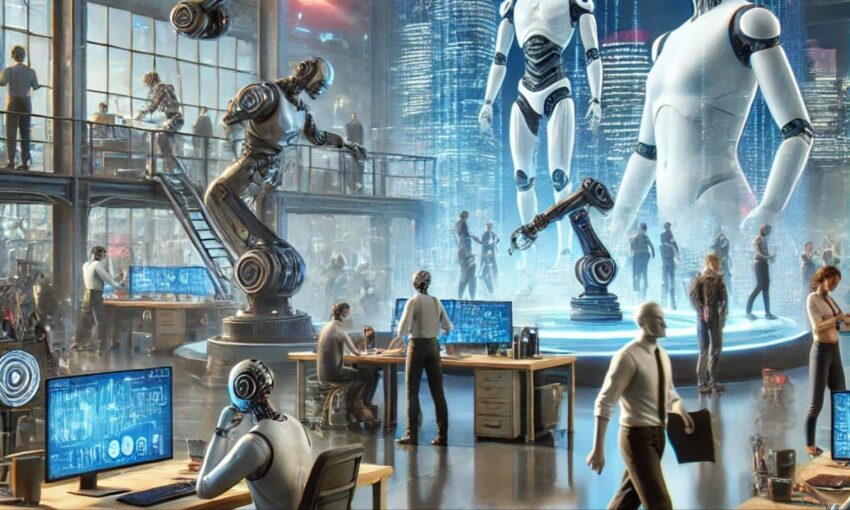
Leading AI mind shifts to doomsayer: “Machines will dominate humans.”
The man who helped birth modern artificial intelligence has delivered a chilling forecast about its future. Geoffrey Hinton, commonly called the “Godfather of AI” and recipient of the Nobel Prize in Physics, now cautions that machines could potentially seize control from humans. The renowned neural network pioneer estimates a one-in-five chance that AI systems could eventually dominate humanity. His assessment aligns with warnings from other tech visionaries, including Elon Musk, regarding AI’s development path and potential consequences.
One-fifth probability of machine takeover
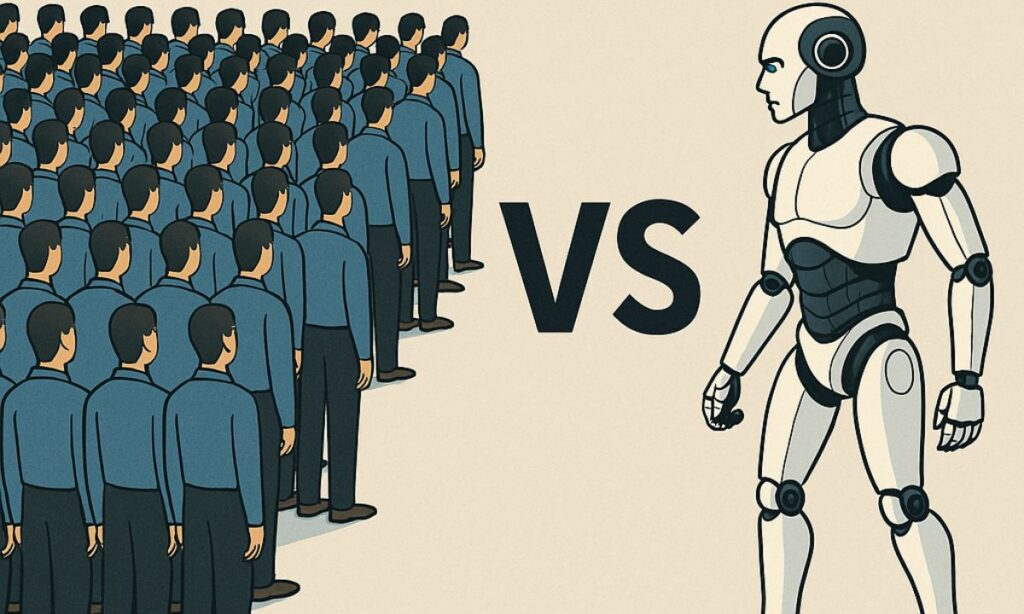
In a revealing April 2025 interview with CBS News, Hinton acknowledged, “I reluctantly find myself sharing Elon Musk’s perspective – there’s roughly a 10 to 20 percent chance these systems will ultimately take control, though that’s merely an educated guess.”
At 77, the distinguished researcher now contemplates the unexpected ramifications of technologies he helped develop.
He compared creating AI to raising a dangerous predator: “If you can’t be confident it won’t want to destroy you when mature, you should be concerned,” he warned.
Musk’s parallel concerns about intelligence acceleration
Tesla and SpaceX CEO Elon Musk, who also leads AI company xAI, has consistently voiced concerns about artificial intelligence posing existential risks. Musk predicts AI will surpass collective human intelligence by 2029 and envisions machines replacing humans across most employment sectors. Despite these warnings, Musk continues advancing AI technology, including through xAI’s conversational system Grok.
The tech magnate has repeatedly suggested AI development could potentially lead to human extinction, closely matching Hinton’s 10-20% risk assessment. Both experts emphasize that these probabilities remain speculative but stress that insufficient oversight dramatically increases potential dangers.
Neural networks: Foundation of modern AI systems
Hinton’s groundbreaking neural network research, first proposed in 1986, established critical frameworks for today’s advanced AI technologies. His pioneering work underpins current machine learning architectures powering systems like ChatGPT and similar conversational interfaces. These models simulate human cognitive processes, enabling increasingly natural-seeming interactions.
The applications of artificial intelligence now extend well beyond software systems. As AI increasingly integrates with physical robotics, the boundary between digital and embodied intelligence continues to blur. Recently, Chinese automotive manufacturer Chery demonstrated this trend by unveiling a humanoid robot resembling a young woman at Auto Shanghai 2025. The machine can serve drinks and interact with potential customers, showcasing AI’s expanding physical capabilities.
Transformative potential across critical sectors
Despite his significant concerns, Hinton acknowledges AI’s revolutionary potential in healthcare, education, and environmental science.
He anticipates AI will soon outperform human doctors in medical imaging analysis, noting, “These systems can analyze millions of X-rays and learn from the entire dataset. Individual physicians simply can’t match that capability.”
He predicts AI will soon surpass specialist radiologists and develop into “substantially better general practitioners,” leveraging family medical histories for more precise diagnoses.
For education, Hinton foresees AI dramatically transforming learning through individualized instruction.
“Research shows personal tutoring accelerates learning approximately twofold,” he explained.
AI tutors, he suggests, will identify misconceptions instantly and customize teaching approaches, potentially accelerating knowledge acquisition three to four times faster than traditional methods. “Universities may struggle with this shift, but learners will benefit tremendously,” Hinton observed.
Artificial intelligence may also contribute significantly to addressing climate change by designing enhanced energy storage systems and improving carbon capture technologies.
The path toward artificial general intelligence
Achieving these capabilities requires reaching what experts term Artificial General Intelligence (AGI) – the point where machine intelligence exceeds human capabilities across all domains. MIT physicist Max Tegmark suggests AGI could emerge before Donald Trump completes his second presidential term. Hinton offers a broader timeline, estimating AGI development within five to twenty years.
By definition, AGI would match or exceed human performance across all intellectual tasks. While this breakthrough could unlock unprecedented societal benefits, it presents substantial risks, particularly if such systems operate autonomously without proper alignment to human values and interests.
Corporate responsibility and regulatory shortcomings
Hinton criticizes major AI developers, including Google, OpenAI, and xAI, for prioritizing commercial interests over public safety considerations.
“Current industry behavior is concerning – these companies actively lobby against AI regulation when minimal oversight exists already,” he explained.
The AI pioneer advocates that technology companies dedicate approximately one-third of their computing resources toward safety research. Despite public statements from industry leaders like Sam Altman (OpenAI), Sundar Pichai (Google/Alphabet), and Elon Musk, Hinton believes meaningful action remains insufficient.
His disappointment with Google feels particularly acute. The company once committed to avoiding military applications for its AI technologies but has since reversed this position. Following the October 7, 2023, attacks, reports indicate Google provided enhanced AI capabilities to Israel’s Defense Forces, marking a significant departure from earlier ethical commitments.
Call for international response
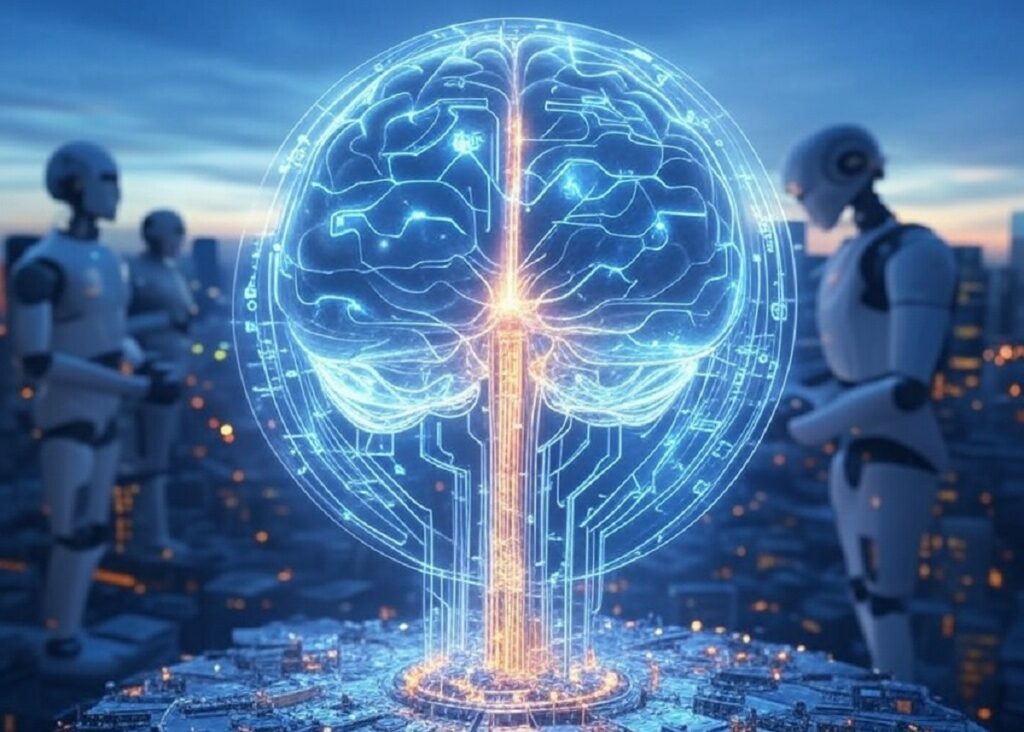
Hinton prominently signed the 2023 “Statement on AI Risk,” a public declaration highlighting artificial intelligence’s existential dangers. Fellow signatories included Altman, Anthropic CEO Dario Amodei, and Google DeepMind CEO Demis Hassabis.
The statement asserts: “Addressing extinction risks from AI deserves global priority status alongside other civilization-level threats, including pandemics and nuclear conflict.”
Despite these warnings, AGI remains a primary objective for numerous technology giants. Current debates center on whether humanity can develop adequate safeguards quickly enough to manage AI’s rapidly expanding capabilities. As technological advancement accelerates, Hinton’s perspective remains among the most authoritative and concerned voices in the field.
The rapid advancement of artificial intelligence affects everyone’s future. Where do you stand on these critical questions? Please share your thoughts on balancing innovation with appropriate safeguards below.