

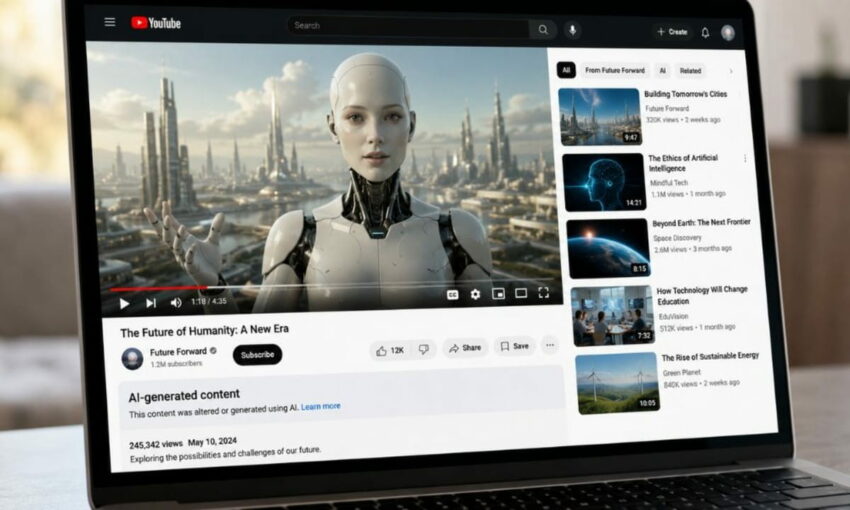
YouTube wants viewers to spot synthetic clips faster, so the platform is pushing its disclosure tags into plain sight. The new YouTube AI labels will sit across both videos and Shorts, where nobody can miss them.
The Google-owned company announced Wednesday that it will shift its label for photorealistic and meaningfully AI-altered content out of the description box and onto more visible real estate. Long-form videos will carry the tag directly beneath the player, above the description. Shorts will show it as an overlay on the clip itself.
“The goal here is context at a glance. If it looks real but was made with AI, viewers will know immediately,” said Rene Ritchie, YouTube’s head of editorial and creator liaison, in a video explaining the rollout.
The change lands as voice clones, deepfakes, and digitally reworked footage flood social platforms. Creators now whip up lifelike faces, scenes, and narration with far less effort than before, and that ease raises the stakes for transparency.
YouTube puts labels in front of viewers
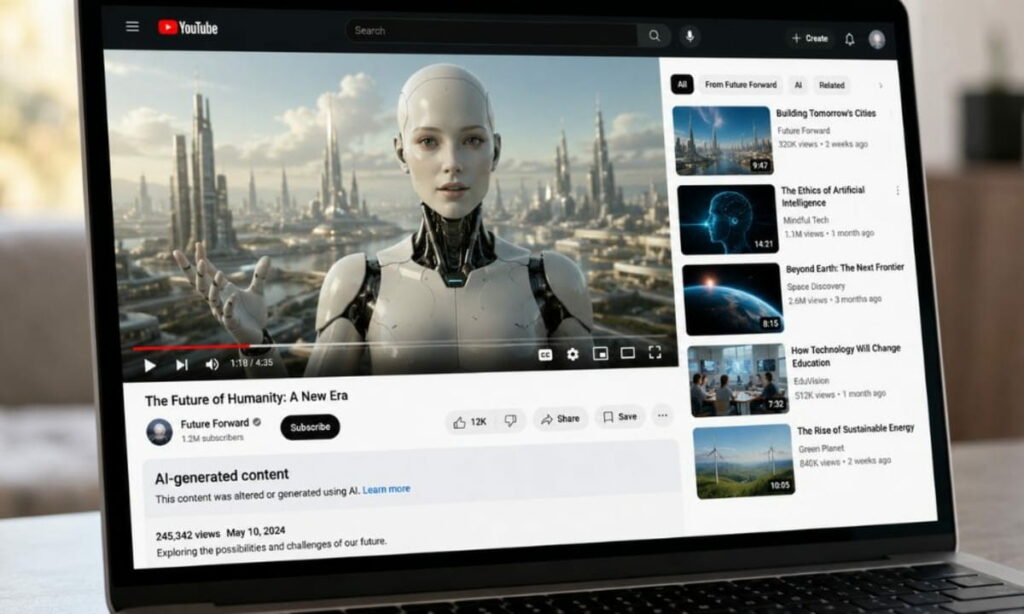
Until now, the platform tucked these disclosures inside the expanded description, where many viewers never looked. The new YouTube AI labels hand them the information without a single click.
YouTube said the format applies to photorealistic material and clips that lean heavily on AI to fabricate or alter realistic content. That covers anything that could trick someone into thinking a person, place, or event was genuine.
The Shorts overlay matters most here. People swipe through Shorts in seconds, so a buried tag misses the audience entirely. Putting YouTube AI labels directly on the video gives them a real shot at being registered.
Lighter touches will stay in the description. YouTube said that unrealistic, animated, or slightly tweaked content, such as filters or minor edits, should be disclosed in the expanded section rather than on the main stage.
Creators still must disclose realistic AI use
The platform first rolled out mandatory AI disclosure in 2024, when it added a tool in Creator Studio asking uploaders to flag realistic AI use. That rule sticks.
Creators must still tag content when they generate or alter realistic people, voices, events, or places. Face swaps, synthetic narration, and edited footage that reshapes a real location all qualify.
But YouTube no longer leans only on self-reporting. Starting in May 2026, the company will deploy internal signals to catch significant photorealistic AI use. If a creator skips the disclosure, YouTube can apply one of its YouTube AI labels on its own.
That move gives the platform a far more hands-on role in enforcing its own system. It also signals that YouTube no longer trusts every uploader to flag every realistic clip.
Automatic labels could create creator friction
The detection system helps viewers, yet it could spark friction with creators who feel wrongly flagged.
YouTube said creators can correct the disclosure status in YouTube Studio when the platform tags a video by mistake. That gives them a clear path to push back.
Still, some YouTube AI labels never come off. The company said disclosures stay permanent when creators use its AI tools, such as Veo or Dream Screen. Tags also remain when a clip carries C2PA metadata, marking it as fully generated.
So creators who rely on platform-native tools should expect permanent marks. YouTube wants viewers to know when its own systems shaped the content, and it wants metadata-based disclosures to hold.
Labels will not punish monetization

YouTube moved quickly to calm revenue fears.
Ritchie said the new YouTube AI labels alone “do not affect how our videos are recommended or whether they can earn money. This is purely about giving viewers the right information at the right time.”
The company framed the entire update around that balance.
“We’ve heard consistently from our community that they value transparency when it comes to generative AI content,” YouTube said in its blog post, adding that the changes aim to pair transparency with creator control.
Even so, audience behavior could shift. Some viewers may welcome the honesty. Others may skip a clip the moment they spot heavy AI use. A label may not touch the algorithm, but it can still bend trust.
A wider fight over synthetic media
The update fits a broader scramble across the internet. Platforms now face mounting pressure to flag synthetic media before it fools anyone.
Realistic AI clips can entertain, teach, and speed up production. They can also mislead when they show fake events, cloned voices, or manipulated public figures, and the danger spikes when those clips race through Shorts, search, and recommendations.
YouTube AI labels will not fix everything. Bad actors can still slip misleading content through, detection can miss clips, and the system can flag honest videos by accident.
Yet the change hands viewers a clearer starting point. It tells creators that disclosure will become a routine part of publishing realistic AI-assisted video, not a footnote buried below the player.
For YouTube, the timing counts. The platform has spent years courting creators while guarding viewer trust. Now it must serve both, and the revamped YouTube AI labels show how it plans to do exactly that, encouraging experimentation while making sure audiences know when a video did not come from a camera alone.
Should YouTube push its AI labels even further, or does this strike the right balance for viewers? Please share your thoughts below.