


California just tightened the screws on artificial intelligence companies. And it did not ask for permission from Washington. Gov. Gavin Newsom signed an executive California AI order Monday that bars AI firms from winning state contracts unless they can prove that their systems meet strict safety, privacy, and bias standards.
No proof, no deal. It is that simple.
The directive ranks among the toughest procurement mandates any U.S. state has imposed on the AI industry. It builds on years of California legislation pushing accountability onto major AI developers. But this order goes further — it turns the state’s purchasing power into a compliance hammer.
Safety checks come before contract signings
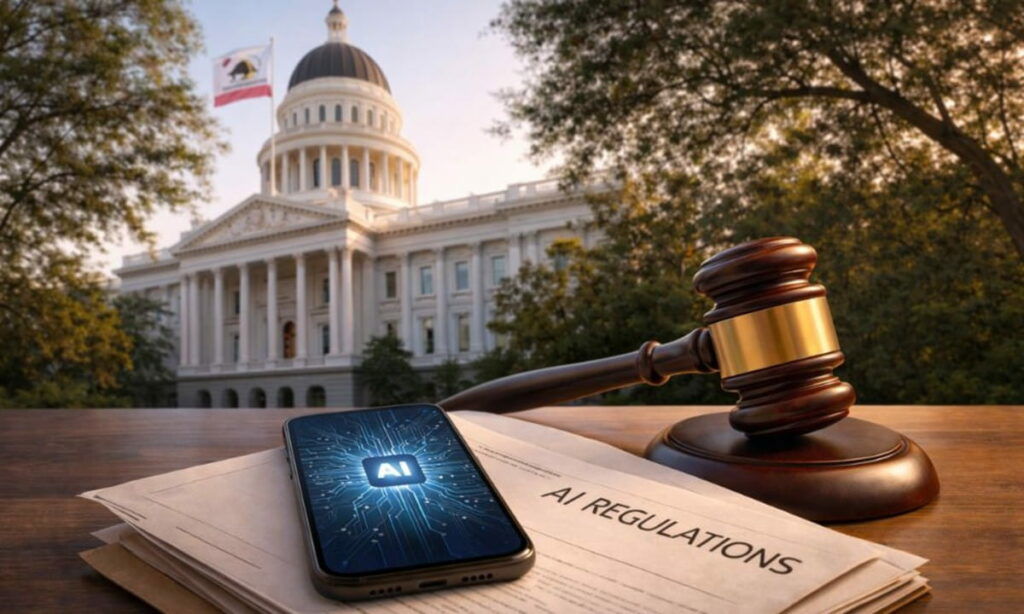
Companies can no longer walk into a government pitch meeting and talk features. Under the latest California AI order, they must first open the hood.
State officials will examine how AI systems prevent harmful outputs. That review includes whether a company’s tools carry adequate safeguards against generating illegal content, including child sexual abuse material. Firms must also show how they handle sensitive user data and protect individual privacy.
Decision-making transparency ranks high on California’s checklist. Companies must explain how their models function — whether they track people’s behavior, restrict certain types of speech, or shape how individuals access information online.
Bias and discrimination protections carry equal weight. Firms must present concrete steps they take to reduce unfair outcomes across their platforms. That requirement targets a well-documented problem: AI systems that reinforce discrimination in hiring decisions, criminal justice, and financial services.
The message from Sacramento is direct. Prove your technology does not hurt people before you collect a state check.
California charts its own course on AI oversight

One of the California AI order’s sharper provisions draws a boundary between state and federal authority.
If federal agencies flag an AI company as a national security or supply chain risk, California will not automatically treat that designation as its own verdict. State officials will conduct independent reviews and reach their own conclusions.
That provision arrives in the wake of a high-profile dispute involving the Pentagon and an AI startup. The Defense Department cut ties with the company after a reported clash over its willingness to support mass surveillance programs and autonomous weapons systems. The company pushed back on those requests, and the relationship collapsed.
That episode exposed a fault line running through Washington’s approach to AI governance. California’s order signals the state has no interest in letting federal defense priorities write its tech procurement policy.
By carving out an independent review authority, California positions itself as a parallel regulatory power. Not a satellite of Washington.
Watermarks aim at synthetic media
The California AI order also steps into the growing battle against AI-generated misinformation.
State agencies must now embed watermarks in any AI-produced or AI-altered video content they release. These digital markers give viewers a way to identify whether a human or a machine created what they are watching.
The rationale is practical. Synthetic video and images have reached a level of realism that makes visual verification increasingly difficult. Officials want clear labeling on government-produced content to limit confusion and reduce the risk of false information spreading through public channels.
A political statement wrapped in a procurement rule
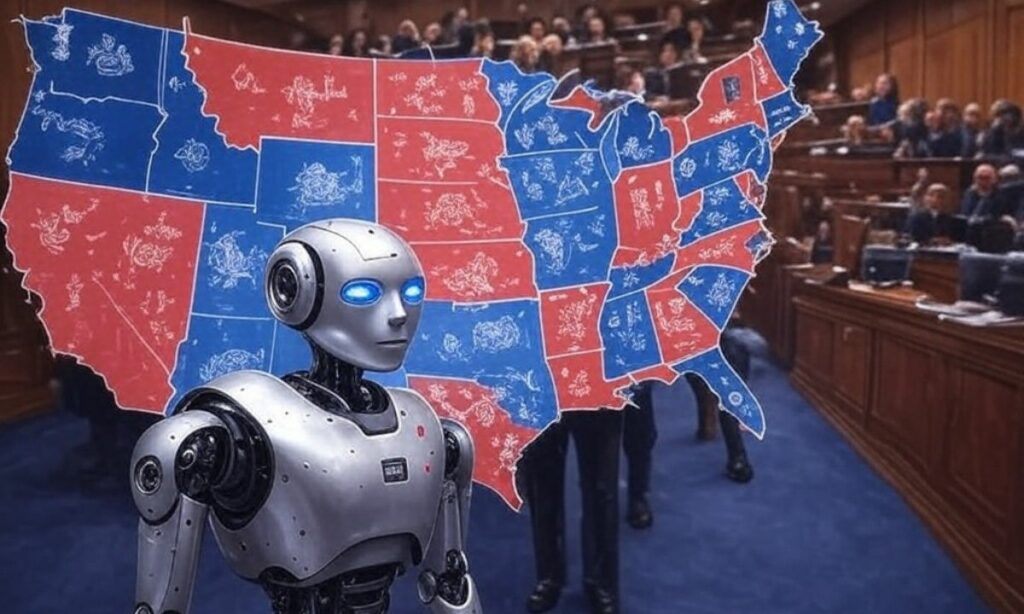
The California AI order’s reach goes beyond the state’s borders.
Federal officials have spent months arguing against a fragmented regulatory landscape. They warn that competing state rules could slow AI development and put American companies at a disadvantage globally.
California’s response, in effect, is to move faster. Not slower.
By tying economic access to ethical performance, the state turns its procurement process into a regulatory lever. Companies that want a piece of California’s massive public sector market must now build accountability into their core operations, not treat it as an afterthought.
That dynamic could ripple outward. If other large states adopt comparable requirements, the industry may face a new national baseline for responsible AI deployment. One built from the bottom up rather than handed down from Washington.
What companies face going forward?
Compliance will cost money. Building the documentation, auditing systems, and bias-testing frameworks California now requires real investment.
But the alternative — sitting out of one of the country’s largest government markets — carries its own price.
The order puts every AI firm with government ambitions on notice. California is not waiting for federal consensus on how to manage artificial intelligence. It has already been decided.
What are your thoughts on the latest California AI order? Please share your views in the comments below.