

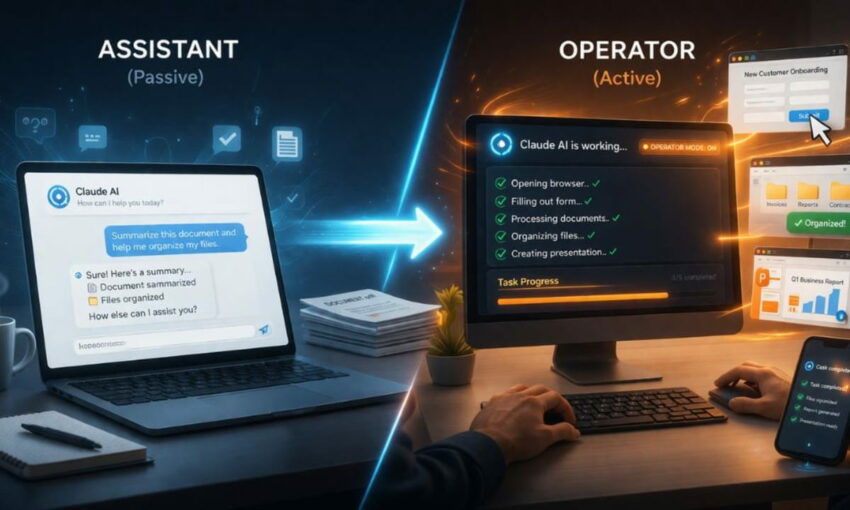
Artificial intelligence has just got a lot more hands-on. Anthropic has rolled out a major upgrade to its Claude AI platform, and the update signals something far bigger than a software refresh. This is a fundamental rethinking of what an AI system is supposed to do.
Until now, most AI tools have generated text, answered questions, and left the rest to the user. Claude’s new capabilities change that equation entirely. The system can now interact directly with a computer, execute tasks across applications, navigate files, and complete complex workflows with minimal human intervention.
This is AI moving from the passenger seat to the driver’s seat.
AI shifts from assistant to operator
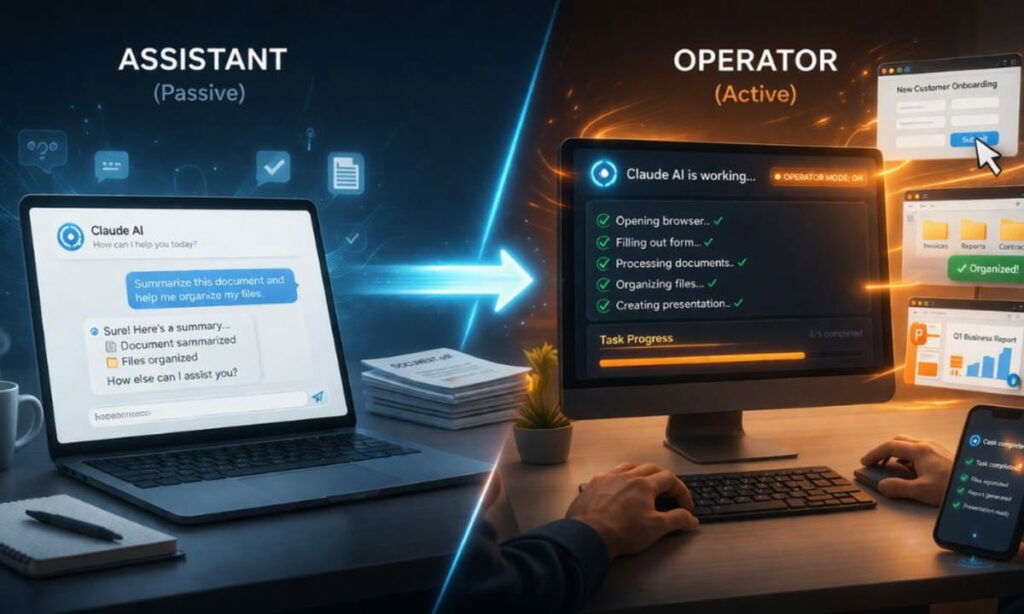
The latest Claude upgrade draws a clear line between what AI used to do and what it can do now. Instead of simply responding to prompts, Claude AI can now act on them.
Users can instruct the system to fill out forms, sort through documents, or manage files spread across multiple applications. When a task requires access to an external service, Claude first checks for connected integrations, such as Slack or Google Calendar. If no integration exists, the system goes a step further. It takes direct control of the browser, mouse, keyboard, and screen to complete the job on its own.
That level of autonomy marks a meaningful shift in how AI agents function in real-world settings. Repetitive digital tasks that once consumed hours can now be delegated entirely.
Anthropic has not ignored the risks that come with this kind of access. The company has built explicit permission requirements into the system. Users control which files, folders, and applications Claude AI can touch. That emphasis on user control and AI safety reflects growing awareness across the industry that more powerful tools demand more careful boundaries.
Dispatch feature adds remote control layer

Among the most striking additions in this Claude AI update is a capability called Dispatch. It lets users control their desktop computer through Claude via a mobile device.
The setup is straightforward. Both devices need an internet connection. From there, a user can issue instructions from a smartphone and watch Claude AI execute them on a PC in real time. Tasks can range from retrieving files and building presentations to checking messages and reorganizing data.
Dispatch is not just a remote access tool, though. It maintains a continuous thread of context. The system remembers past tasks and user preferences, which allows it to become more efficient over time. Users retain full control over this memory, with the ability to review, edit, or delete stored data whenever they choose.
This feature reflects a broader push across the AI industry toward persistent, context-aware agents. The goal is no longer a tool that forgets every session. The goal is a system that learns how you work and keeps pace.
Growing competition in AI agents

Anthropic’s move arrives at a pivotal moment. The race to build capable AI agents is accelerating fast, and several major players are closing in.
OpenAI has been advancing its own agentic features, while Meta-backed startup Manus has introduced an AI system specifically designed to operate computers autonomously. The competitive landscape is no longer defined by which model produces the best answers. It is increasingly defined by which system can take the most effective action.
Execution, not just intelligence, is becoming the new benchmark.
Risks remain as adoption expands
Anthropic has been candid about the limitations of this technology. The system can misinterpret instructions. It can make mistakes. That honesty matters, especially as agentic AI tools move into professional environments where errors carry real consequences.
The company advises users to start with trusted, low-stakes applications. Sensitive data should stay out of the loop until the technology matures further. These precautions align with broader concerns across the AI safety community about reliability, security, and unintended actions in automated workflows.
As automation takes on more responsibility inside digital ecosystems, the margin for error shrinks. A wrong action in a financial or legal context can cause damage that no prompt can undo.
A broader shift across AI ecosystems
Claude AI update fits into a much wider transformation unfolding across the technology sector. Companies are moving aggressively beyond chat interfaces toward AI systems that integrate directly into how people work.
This shift is visible across industries. In media and music, platforms like Spotify are actively testing tools to help artists manage how AI uses their identity and creative output. The common thread running through all of it is control. Who controls the output? Who controls the workflow? Who controls the data?
These questions are becoming central to how AI development is governed, and every major update from companies like Anthropic pushes those questions further into the spotlight.
Spotify is wading into the AI debate with a new safeguard built specifically for artists. The streaming giant is testing an “Artist Profile Protection” feature that lets musicians review and approve releases before they appear on their official pages. The move targets a growing problem: AI-generated tracks flooding platforms and landing on the wrong artist profiles due to metadata errors or outright manipulation. Only approved releases will show up on a verified profile under the new system.
The urgency behind that decision is hard to miss. Sony Music recently pushed for the removal of more than 135,000 AI-generated songs impersonating its artists. Spotify’s beta tool represents one of the more concrete steps any major platform has taken to give artists real control over their catalog, streaming data, and discovery placement amid the AI content surge.
What does it mean going forward?
Claude AI’s expanded capabilities point toward a near-term future where AI agents are standard fixtures in both personal and professional environments. Automating repetitive tasks, managing multi-step workflows, and operating seamlessly across devices could reshape how productivity is defined.
For businesses, the payoff is faster execution and leaner operations. For individuals, it means more time freed up from routine digital labor. However, both contexts demand the same thing: clear oversight, transparent behavior, and systems that users can trust.
Anthropic’s latest update makes one thing unmistakably clear. Artificial intelligence is no longer just about producing smart outputs. It is about taking smart action. That shift is already redefining the relationship between people and technology, and the pace is only going to quicken.
Think Claude AI and other AI agents will change the way you work? Please drop your thoughts in the comments below.