

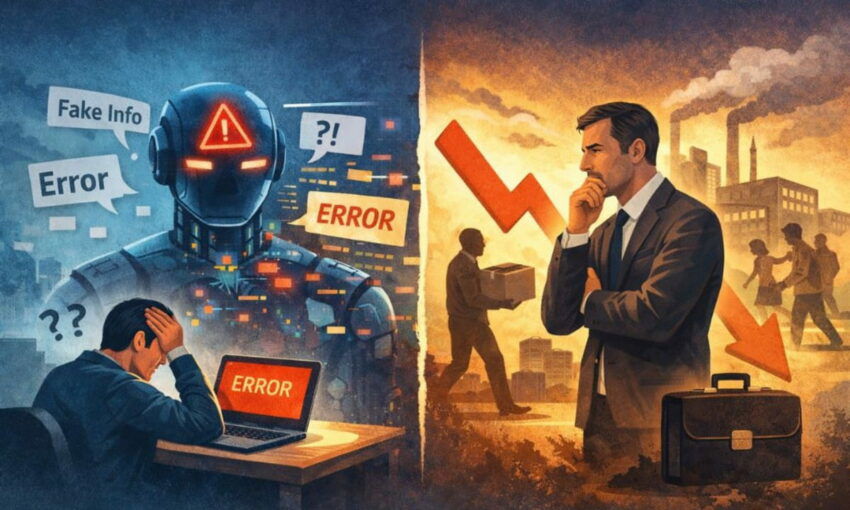
Artificial intelligence is no longer just a buzzword. It is now woven into the daily routines of millions worldwide. And a sweeping new global study reveals that users have a clear message for developers: accuracy matters more than almost anything else, with AI hallucinations top global worry list, eclipsing job loss fears in a landmark survey.
The survey, conducted by Anthropic, drew responses from more than 80,000 participants spanning 159 countries. It stands as one of the most comprehensive snapshots of real-world AI usage ever assembled. The results are striking — and they signal a meaningful shift in how the public views this rapidly evolving technology.
AI hallucinations outrank job fears as the top concern
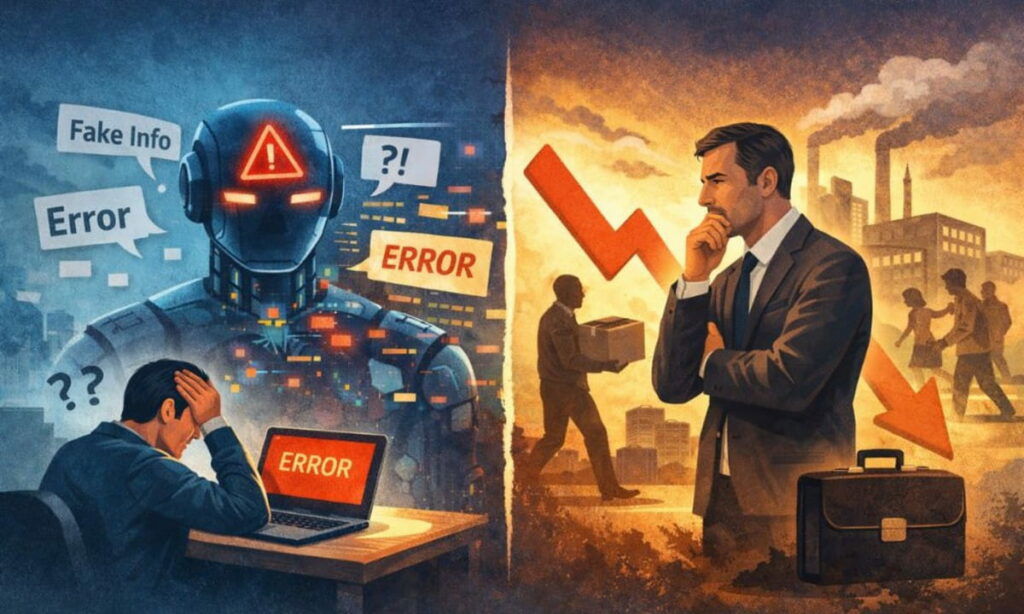
For years, the dominant anxiety around artificial intelligence centered on automation and employment. Robots are taking jobs. Algorithms replacing workers. That fear has not disappeared. But it has been overtaken by something more immediate.
Roughly 27% of survey respondents identified AI errors and misinformation — commonly called AI “hallucinations” — as their primary concern. Only about 22% pointed to job displacement and automation as their biggest worry.
AI hallucinations occur when AI systems generate information that sounds authoritative but is factually wrong or entirely fabricated. The gap between these two concerns tells a story. As AI adoption accelerates across industries, users are bumping up against a hard reality: a tool that confidently gives you the wrong answer can cause serious damage.
One respondent described losing considerable time and productivity because of AI-generated errors. Another raised an equally troubling point — it is often impossible to spot mistakes in subjects where you lack existing knowledge. That is the trust problem in its rawest form.
Productivity gains are real, but so are the limits
The survey is not a catalog of complaints. Far from it. Around 32% of users reported measurable productivity improvements after incorporating AI tools into their work.
Across professions and industries, respondents described AI as a capable assistant. It handles repetitive tasks with speed. It generates ideas on demand. It compresses workflows that once took hours. Some users said AI enabled them to take on broader responsibilities. Others said it carved out time for creative work or personal pursuits they previously had no bandwidth for.
This is the dual reality defining the current moment in AI integration. The technology genuinely delivers. But it also fails in ways that matter. Nearly 19% of respondents said AI had underperformed against their expectations — a significant share that points to a widening gap between industry promises and everyday user experience.
AI embeds itself in daily life beyond the workplace
The survey data reveals something deeper than productivity statistics. Artificial intelligence is no longer confined to professional settings. It is becoming a fixture of daily life — a study partner, a creative collaborator, and a sounding board during stressful moments.
Some respondents described turning to AI during periods of isolation or emotional difficulty. Others used it as an educational companion or a tool for working through complex decisions. This expanding footprint raises serious questions about human dependence on machine-generated guidance.
About 16% of users expressed concern that sustained AI use could erode critical thinking skills. As AI systems absorb more cognitive tasks, the worry is that human reasoning muscles may weaken from disuse. That is not a fringe concern. It is a legitimate challenge for educators, employers, and policymakers alike.
Geographic divide shapes how AI is perceived globally
Where you live shapes how you feel about artificial intelligence. The survey data makes that clear.
Respondents in South America, Africa, and parts of Asia expressed more optimism about AI’s potential. Users in North America, Europe, and East Asia showed higher levels of skepticism and concern.
The pattern is partly explained by familiarity. In regions where AI is already embedded in workplace systems, people have had more firsthand experience with its shortcomings. In emerging markets, where adoption is still scaling, AI tends to register more as an opportunity than a threat.
Economic context also matters. In regions navigating immediate financial pressures, AI-driven job loss may feel like a distant concern compared to existing challenges.
Methodology questions add nuance to the findings
No study of this scale escapes scrutiny. Critics have noted that the respondent pool likely skews toward early adopters — users who are already tech-comfortable and may not represent the broader population.
Researchers also flagged the absence of standard statistical measures such as confidence intervals, which are typically used to gauge data reliability. Additionally, the survey relied on AI-driven interview tools to collect and analyze responses — an approach that enables massive scale but may sacrifice the depth and texture of human-led research.
Even so, the dataset commands attention. A global sample of more than 80,000 users across 159 countries offers a rare and genuinely useful picture of how AI is functioning — and faltering — in the real world.
Reliability, not raw capability, defines the next AI frontier

The findings arrive at a pivotal moment. AI developers are under pressure to move fast, ship new features, and push capability boundaries. But this survey suggests users want something different from the next wave of innovation.
They want accuracy. They want systems they can trust. Reducing AI hallucinations has moved from a technical footnote to a strategic imperative. Transparency, factual grounding, and consistent reliability will separate the platforms that earn long-term user loyalty from those that do not.
Anthropic says it plans to expand its AI-driven research program to track how these dynamics evolve. The goal is to use the findings to shape product development that is genuinely responsive to user needs — not just benchmark performance.
The signal from users across the globe is clear. Artificial intelligence has already demonstrated real value. It boosts output, saves time, and opens new possibilities. But its long-term success hinges on solving one foundational challenge: giving people answers they can actually rely on.
Have you experienced AI hallucinations in your work or daily life? Please share your thoughts and experiences in the comments below.