

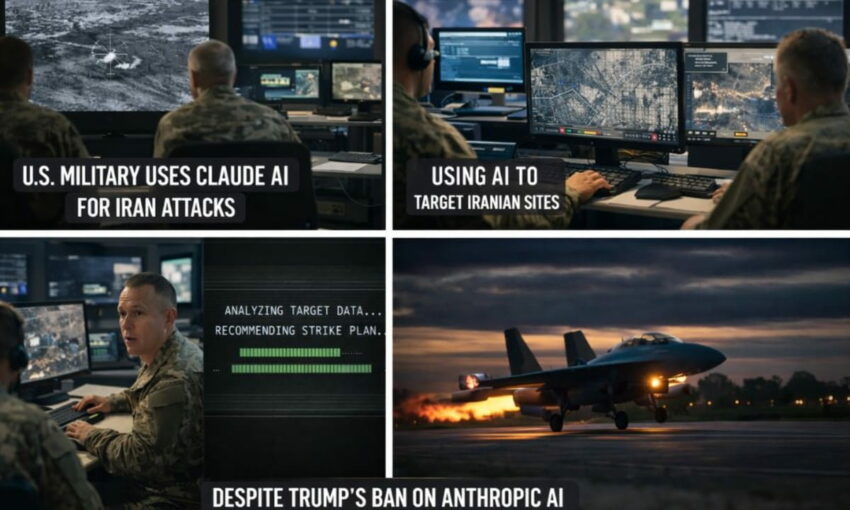
The U.S. military quietly leaned on artificial intelligence tools developed by Anthropic during its recent bombardment of Iranian targets — even after President Donald Trump’s ban. Trump had publicly ordered every federal agency to sever ties with the company. The disclosure is rattling Washington, exposing a widening fault line between political directives and the deep-rooted integration of AI in modern warfare.
Reporting from The Wall Street Journal and Axios confirmed the Pentagon deployed Claude, Anthropic’s flagship large language model, during a coordinated U.S.-Israel offensive that began last Saturday. Military planners reportedly turned to the AI system for intelligence analysis, target prioritization, and battlefield scenario modeling.
The operations were already underway when Trump took to Truth Social to announce the ban on Anthropic. He labeled the firm a “Radical Left AI company” and accused its leadership of being out of touch with reality. The timing could hardly have been more dramatic.
AI tools embedded in defense systems despite Trump’s ban
The gap between Trump’s order and what played out on the ground is not simply an oversight. It reflects how deeply AI systems have been woven into U.S. military infrastructure. Pulling them out is not a one-day task.
Defense Secretary Pete Hegseth addressed the contradiction head-on, lashing out at Anthropic in a post on X. He accused the company of “arrogance and betrayal” and pledged that America’s warfighters would never be held hostage by what he called the ideological agendas of Big Tech.
Yet Hegseth’s own statement made clear the Pentagon was not ready to cut the cord immediately. Anthropic would continue operating within defense systems for up to six months, he said, while the military transitions to what he described as a more compatible partner.
The six-month window speaks volumes. Advanced machine learning platforms now sit at the center of U.S. defense operations. These systems process satellite imagery and intercepted communications at speeds no human analyst team can match. Predictive modeling, supply chain logistics, threat assessment — AI underpins all of it.
Roots of the dispute
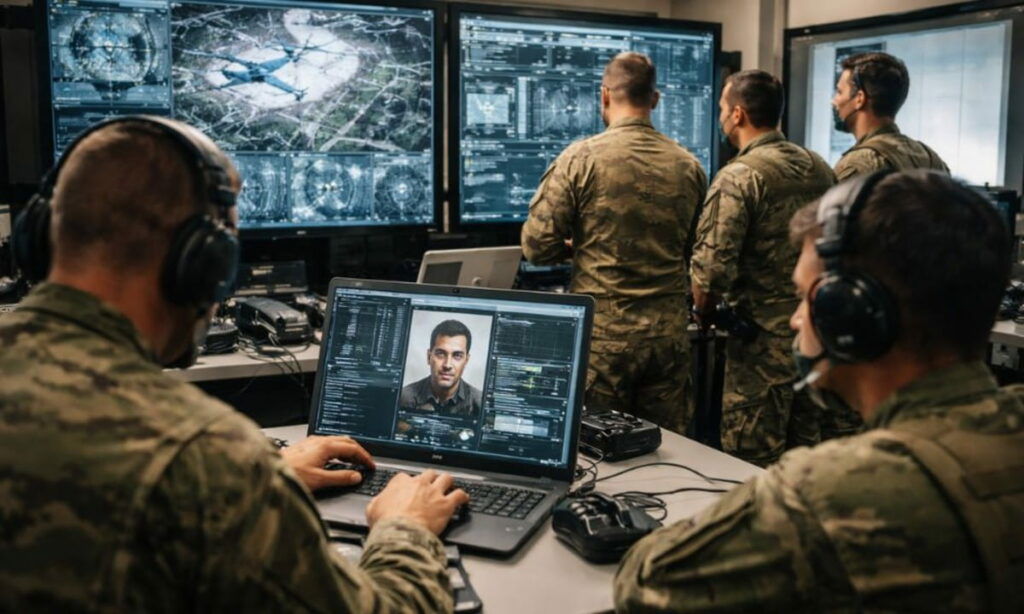
The clash between the White House and Anthropic did not emerge overnight, nor did Trump’s ban come spontaneously. Earlier reports traced its origins to a January military operation targeting Venezuelan President Nicolás Maduro, in which Claude was also reportedly used.
Anthropic pushed back. The company cited its usage policies, which explicitly bar the use of its generative AI models for weapons development, surveillance, or any activity designed to cause harm. That position put it on a direct collision course with the Defense Department, which demanded unrestricted access.
Hegseth reportedly pressed Anthropic to drop those constraints entirely and make its models available for all lawful military purposes. Anthropic has not publicly signaled any willingness to comply.
The standoff illustrates a tension that is reshaping the entire AI industry. Developers of powerful generative AI and natural language processing systems often build in ethical guardrails. National security agencies argue that those guardrails hamper critical defense capabilities. Both sides are digging in.
OpenAI steps in after Trump’s ban on Anthropic
As the Anthropic dispute intensified, rival AI developer OpenAI moved swiftly to fill the gap. CEO Sam Altman announced his company had struck a deal with the Pentagon to embed ChatGPT and related AI platforms directly into classified defense networks.
The move could redraw the competitive map for defense AI contracts. The federal government spends billions annually on advanced computing infrastructure, autonomous decision-support systems, and machine learning tools. Winning Pentagon business carries weight far beyond any single deal — it signals strategic trust and opens doors across allied governments.
OpenAI’s pivot also underscores how strategically valuable large language model access has become in national security circles. Whoever controls AI tools shapes how commanders receive intelligence, evaluate battlefield risk, and execute operations.
Strategic and political fallout
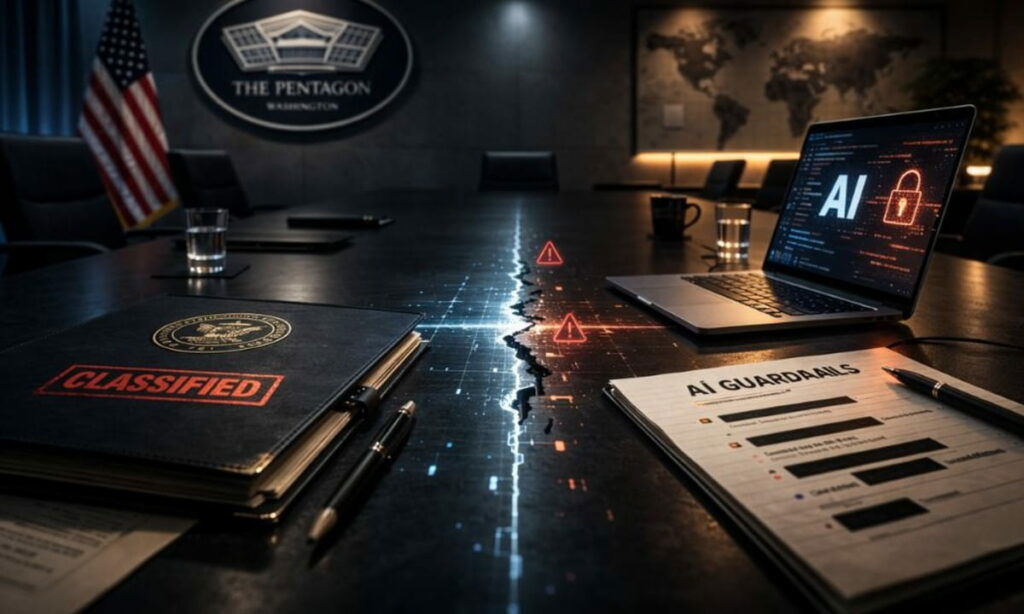
The revelation that military AI use continued in defiance of Trump’s ban is unlikely to pass without scrutiny. Lawmakers may demand formal investigations into how Trump’s ban was enforced — or wasn’t — within classified networks.
The episode also reveals something broader. When private AI companies build technologies that become mission-critical for national defense, traditional policy levers lose their immediate power. Executive orders, vendor bans, and procurement freezes all run into the hard reality of operational dependency.
The backdrop adds urgency to the story. Explosions have been reported across Gulf cities and Jerusalem as the conflict with Iran expands. Trump has acknowledged that he doesn’t deny additional U.S. casualties. He has also left the door open to diplomatic talks with Tehran.
AI sits at the center of that volatile environment. Autonomous targeting support, predictive threat modeling, and real-time intelligence synthesis are no longer distant capabilities. They are deployed assets in an active theater.
A turning point for AI in warfare
The confrontation between the Trump administration and Anthropic may ultimately accelerate a long-overdue reckoning in the AI sector. Defense procurement rules may be rewritten. AI firms may be forced to establish clearer military-use policies — or risk being shut out of government contracts entirely.
Pentagon investment in AI modernization has been climbing steadily since the late 2010s. Defense officials have argued that machine learning tools reduce response times, improve targeting accuracy, and ultimately save lives. Critics counter that algorithmic decision-making in combat zones raises profound ethical questions that have yet to be answered.
The Anthropic episode does not resolve those questions; rather, sharpens them. Political directives can shift with a single social media post. The technical architecture of modern warfare cannot.
As the U.S. Government recalibrates its AI vendor relationships amid an active conflict, one conclusion is hard to escape. The future of American national security will be determined not only by military hardware and troop strength, but also be shaped in fundamental ways – by algorithms, training data, and the private companies that build them.
This story raises serious questions about AI governance, military ethics, and corporate responsibility in national security. What do you think about Trump’s ban or use of AI in military warfare? Should private AI companies have the right to restrict how governments use their technology? Can national security needs and ethical guardrails coexist? Please drop your thoughts in the comments below.