

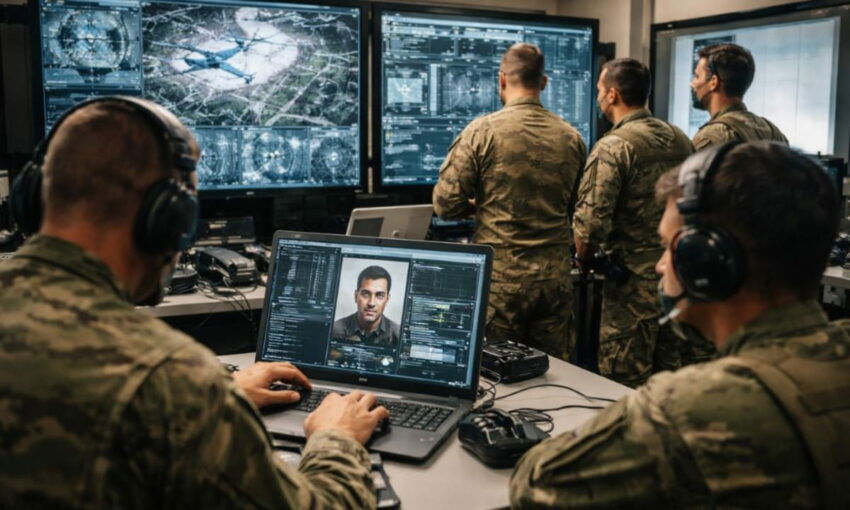
The growing role of AI tools in modern warfare has taken a dramatic turn after reports surfaced that the U.S. military relied on Anthropic’s AI model, Claude, during the operation that led to the capture of Venezuelan President Nicolás Maduro.
According to accounts citing officials familiar with the matter, Claude was integrated into the mission through Anthropic’s partnership with Palantir Technologies, a major defense contractor whose software platforms are widely used by the Pentagon and federal law enforcement agencies.
The operation culminated in Maduro and his wife being taken into custody and transported to the United States. He now faces sweeping federal charges in New York, including narco-terrorism conspiracy, drug trafficking, and money laundering.
If confirmed, the mission would mark a significant milestone in the national security use of artificial intelligence tools. It would also position Anthropic as the first AI model developer to see its technology used in classified Pentagon operations.
Anthropic declined to confirm operational details. In a statement, a company spokesperson said: “We cannot comment on whether Claude, or any other AI model, was used for any specific operation, classified or otherwise. Any use of Claude — whether in the private sector or across government — must comply with our Usage Policies, which govern how Claude can be deployed. We work closely with our partners to ensure compliance.”
The Department of War also declined to comment when contacted.
AI and the new defense frontier
Defense officials have increasingly embraced AI tools to enhance intelligence analysis, operational planning, and battlefield coordination. Such systems can rapidly summarize classified documents, identify patterns in large data sets, and assist with logistics planning. Some platforms can also be integrated into autonomous drone systems or predictive surveillance frameworks.
Claude’s reported involvement highlights how generative AI models are moving beyond research labs and enterprise applications into sensitive national security environments.
Anthropic’s published guidelines prohibit the use of its systems for violence, weapons development, or surveillance. However, a source familiar with the matter said the company maintains visibility into both classified and unclassified deployments and believes all usage aligns with its internal policies and with partner compliance frameworks.
The reported mission adds urgency to ongoing debates in Washington about oversight and accountability. AI in defense contexts has been framed as both a strategic advantage and a regulatory challenge. The Trump administration has made AI investment a core national security priority.
In December, War Secretary Pete Hegseth underscored that stance, declaring: “The future of American warfare is here, and it’s spelled AI.” He added, “As technologies advance, so do our adversaries. But here at the War Department, we are not sitting idly by.”
A $200 million contract under scrutiny

Anthropic’s relationship with the Pentagon has not been without tension. Last summer, the company secured a defense contract valued at up to $200 million. Reports indicate that concerns about how Claude could be deployed within military environments prompted internal debate among officials about whether the agreement should continue.
The central issue is compliance. Generative AI systems can generate analyses, recommendations, and predictive outputs. Yet questions remain about how such outputs are validated, audited, and constrained within military decision chains.
National security experts say the key distinction lies in whether AI is advisory or autonomous. If systems are used to summarize intelligence or assist analysts, they serve as force multipliers.
The Pentagon has stated broadly that emerging technologies must align with U.S. law and the Law of Armed Conflict. Still, specific operational details often remain classified.
Maduro in federal court
Maduro’s capture has sent shock waves through Latin America and beyond. Images showed him being escorted into the Daniel Patrick Moynihan United States Courthouse in Manhattan for an initial appearance in early January. Prosecutors have outlined allegations tied to narcotics trafficking networks and financial crimes.
Seven U.S. service members were reportedly injured during the raid, according to officials briefed on the operation. Analysts say the mission signals deterrence on multiple fronts. It demonstrates operational reach. It also reinforces Washington’s willingness to use AI tools in cross-border counter-narcotics actions.
The integration of AI capabilities into such operations may reshape how future missions are designed.
The broader AI arms race

The reported use of Claude underscores the accelerating AI competition among global powers. Defense planners view AI infrastructure as central to cybersecurity, drone swarms, intelligence fusion, and strategic forecasting. Rival nations are investing heavily in similar technologies.
At the same time, tech companies face growing pressure to clarify how their models are used. Transparency remains limited when deployments intersect with classified missions. Corporate policies often restrict certain categories of activity. Yet enforcement mechanisms are complex when federal agencies are involved.
For readers watching the rapid evolution of AI in government, the Maduro operation marks a turning point. It signals that generative AI tools are no longer confined to chat interfaces and enterprise dashboards. They are entering the core of the national defense strategy.
Whether this development strengthens security or heightens risk will depend on oversight, policy guardrails, and international norms.
What is clear is that AI is now embedded in modern power projection. And the debate over its role in warfare is only beginning.
What’s your take on the use of AI tools in military operations? Please share your thoughts in the comments below.