

Twelve months have passed since an obscure Chinese AI technology firm disrupted the global artificial intelligence market, and its AI industry now operates with unprecedented energy, scale, and confidence. DeepSeek’s emergence in January 2025 fundamentally altered perceptions about American technological supremacy in machine learning.
The company delivered a generative AI system that matches the capabilities of premier U.S. conversational platforms, such as ChatGPT, while requiring dramatically lower development costs.
That breakthrough transformed how Chinese investors viewed domestic tech potential. It fundamentally changed survival prospects for struggling Chinese AI startups.
Wu Chenglin watched his software venture, DeepWisdom, nearly fail three separate times before DeepSeek’s arrival. His company has since secured approximately $30 million in fresh investment capital as AI optimism swept through China’s technology ecosystem.
“It gave a lot of people confidence,” Wu explained, describing how DeepSeek’s success empowered Chinese developers and entrepreneurs who previously believed Silicon Valley held insurmountable advantages.
DeepWisdom builds platforms enabling software engineers to accelerate development through automation technologies. Early user interest couldn’t prevent severe funding challenges. Everything shifted once sector-wide investment accelerated following DeepSeek’s public release.
Investment capital floods Chinese AI companies
China’s venture capital community experienced dramatic changes. Shi Yaqiong serves as vice president at Jinqiu Capital in Beijing. Her investment firm completed transactions with more than 50 artificial intelligence companies during the previous 12 months.
She witnessed intensified competition among investors immediately after DeepSeek’s technological demonstration.
“Projects that had initial valuations of $10 million to $20 million in 2024 were expected to be valued at $20 million to $40 million in 2025,” Shi observed.
Stock markets have validated this momentum. Chinese AI startups Zhipu AI and MiniMax saw substantial share price increases after launching public offerings in Hong Kong this month.
This enthusiasm reflects broader global technology rallies fueled by expectations that machine learning will revolutionize sectors, including financial services and medical care. Semiconductor manufacturers and established technology corporations have driven equity markets to unprecedented levels.
Concerns about potential AI market bubbles persist simultaneously. Investors remain vigilant for indicators that company valuations have exceeded realistic profit potential, questioning how quickly emerging firms can achieve profitable operations.
U.S. restrictions haven’t dampened Chinese AI enthusiasm
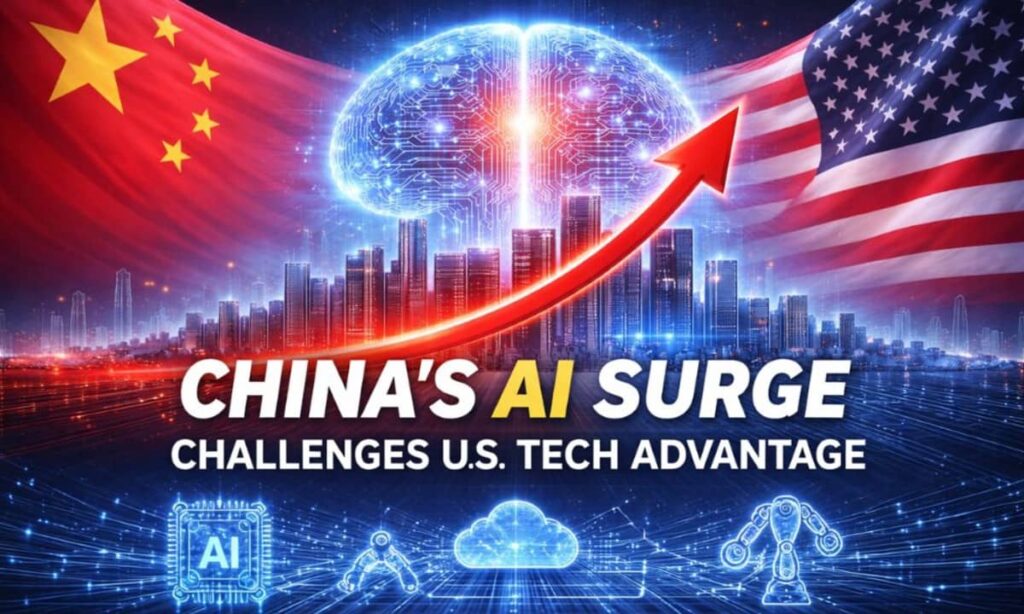
Structural obstacles continue to affect China’s artificial intelligence development. Access to cutting-edge semiconductors from Nvidia remains limited under American export regulations intended to constrain China’s technological advancement.
These barriers haven’t diminished developer interest.
A recent AI networking gathering at a Beijing coffee shop drew crowds of young software engineers who filled available seating while discussing technical methodologies and commercial strategies. Multiple attendees suggested export limitations might drive Chinese companies toward more affordable, transparent development approaches.
Semiconductor restrictions mean Chinese AI development will likely emphasize “open-source and cheap” solutions, explained entrepreneur Li Weijia, who participated in the networking event. This philosophy could enhance technology accessibility, he argued.
China’s substantial “engineer dividend” continues to accelerate growth. The nation graduates massive numbers of software developers annually, with many pursuing artificial intelligence careers.
Zhilian Zhaopin, an online recruitment platform, documented a 39% surge in AI job applications during the initial three quarters of 2025, coinciding with DeepSeek’s rising prominence.
DeepSeek addressed critical market needs
Chinese software developers spent years criticizing inadequate access to machine learning models offering both capability and affordability.
“China has a huge application developer ecosystem,” stated Shen Qiajin, founder of ideaFlow. “People are very good at building apps.”
“But for a very long time, we didn’t have a good cost-efficient model,” Shen added.
DeepSeek filled this void.
The organization started in 2023 as an experimental initiative within a Hangzhou-based quantitative hedge fund. Its creators possessed access to premium processing hardware before restrictions intensified.
DeepSeek is now preparing to unveil its subsequent model within weeks. Traffic analysis company Similarweb estimates the firm controls approximately 4% of the worldwide chatbot market share.
ChatGPT maintains dominance with roughly 68% market control, while Google Gemini has captured about 18%.
DeepSeek’s commitment to publishing technical documentation has accelerated adoption. Western rivals, including OpenAI, market proprietary closed systems.
Neil Shah from Counterpoint Research noted DeepSeek’s transparent methodology resonates in price-conscious markets.
The platform has achieved “strong adoption in emerging markets,” Shah said, though Western consumers remain hesitant primarily due to data privacy and national security considerations.
Domestic demand drives Chinese AI expansion
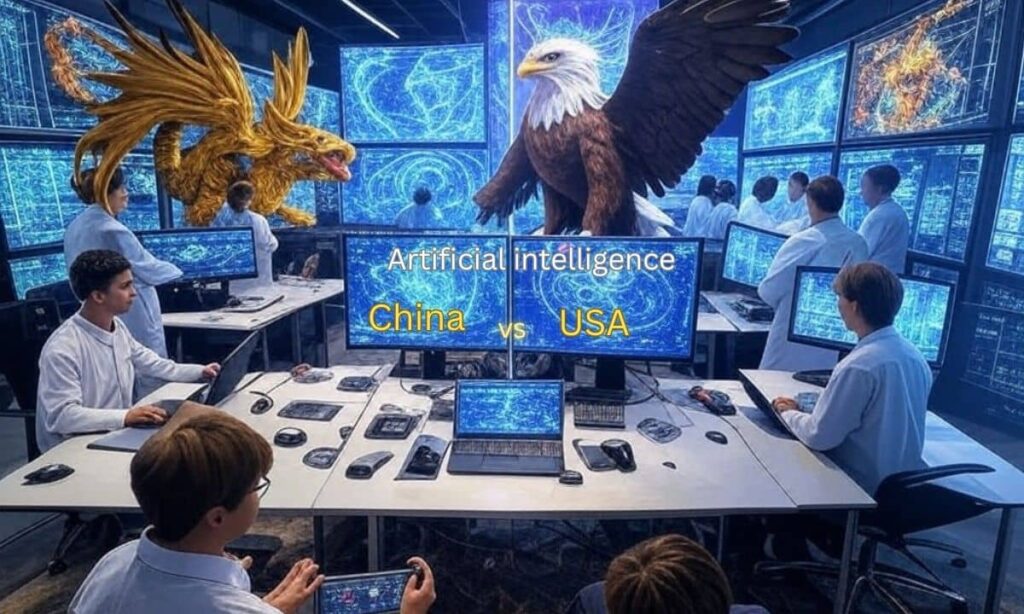
China’s internal market alone represents an enormous opportunity. More than half a billion Chinese internet users reported using generative AI products by June 2025, according to the China Internet Network Information Center.
Many households encountered the technology through straightforward practical applications.
Entrepreneur Yang Yiwen recalled that her parents’ first meaningful artificial intelligence interaction occurred during last year’s Lunar New Year celebration, when they observed her using DeepSeek for family vacation planning.
“They found it quite fun,” Yang said.
One year after DeepSeek’s market disruption, China’s artificial intelligence landscape has shed its cautious approach. The sector now operates with density, determination, and expanding global influence, despite unresolved questions regarding long-term sustainability and international competition.
What’s your take on China’s AI trajectory? Please share your perspective in the comments below and join the conversation about how open-source approaches might reshape global technology competition.