

A groundbreaking moment unfolded in Asian financial markets as one of China’s premier artificial intelligence companies entered the public trading arena, signaling a pivotal shift in the nation’s technology landscape.
Knowledge Atlas Technology JSC, operating under the brand name Zhipu, experienced a robust market reception during its inaugural trading session in Hong Kong. The Beijing-headquartered artificial intelligence developer secured approximately $558 million through its initial public offering, establishing itself as the pioneering Chinese large language model company to achieve publicly traded status.
Strong investor demand drives opening day gains
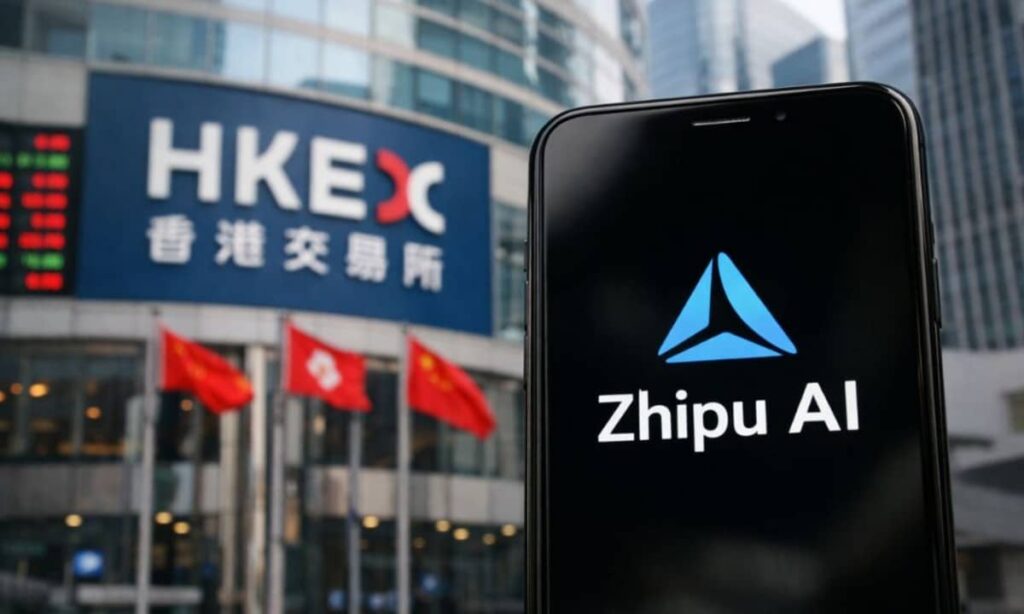
Trading activity showed immediate enthusiasm from market participants. The company’s shares surged by as much as 15 percent beyond the offering price of HK$116.20 during morning trading hours. Exchange documentation indicates that roughly 37.4 million shares entered circulation through the flotation process.
The listing delivered a debut market capitalization hovering around HK$4.3 billion, positioning Zhipu among notable recent artificial intelligence public offerings globally. The successful launch also marks a resurgence in Hong Kong’s technology sector, which has witnessed multiple listings from AI-focused enterprises spanning semiconductor design and data infrastructure providers.
From university research to market leader
Established in 2019 by academic researchers affiliated with a prominent Chinese university, Zhipu has emerged as a central player in Beijing’s domestic artificial intelligence development strategy. The organization belongs to a group of Chinese technology startups working to construct systems capable of rivaling international powerhouses, including OpenAI and Anthropic.
This competitive positioning has attracted global attention. OpenAI specifically identified Zhipu last year as operating on the “front line” of China’s large language model advancement efforts—an uncommon recognition highlighting the company’s expanding technical capabilities and credibility within the industry.
The ‘AI tigers’ phenomenon

Industry observers frequently classify Zhipu alongside other prominent Chinese developers collectively termed the “AI tigers.” This group includes DeepSeek, which disrupted global technology markets in early 2024 following the launch of an unexpectedly powerful language model that caught industry experts off guard with its sophisticated performance capabilities.
Despite possessing less international brand recognition than DeepSeek outside Asian markets, Zhipu has methodically built a global presence. Company records show operational facilities in the United Kingdom, Singapore, Malaysia, and multiple Middle Eastern nations. The firm has created joint innovation centers throughout Southeast Asia, with active projects in Indonesia and Vietnam designed to adapt AI solutions for local market requirements.
Navigating geopolitical headwinds
The company’s growth trajectory has encountered significant challenges. U.S. Commerce Department officials added Zhipu to the Entity List in January 2024, citing alleged connections to China’s military establishment. This designation imposes restrictions and prevents American companies from providing certain technologies without explicit government authorization.
These export controls, coupled with comprehensive U.S. limitations on advanced semiconductor shipments, have created obstacles for Zhipu’s access to state-of-the-art chips and specialized technical knowledge. Nevertheless, the organization has maintained its model development and training operations by increasingly depending on domestic supply networks and strategic partnerships.
Capital allocation and growth strategy
IPO prospectus documents reveal Zhipu’s intention to direct approximately 70 percent of raised capital toward research and development activities, emphasizing enhancements to its general-purpose large model capabilities. Remaining funds will support commercialization initiatives, infrastructure investments, and international expansion efforts.
Financial disclosures show the company generated 312.4 million yuan in revenue during 2024, demonstrating initial commercial traction through enterprise customers and government-sponsored projects. Like numerous AI developers worldwide, Zhipu operates in an intensive investment phase, prioritizing model performance and scalability over immediate profitability targets.
Implications for China’s AI ecosystem
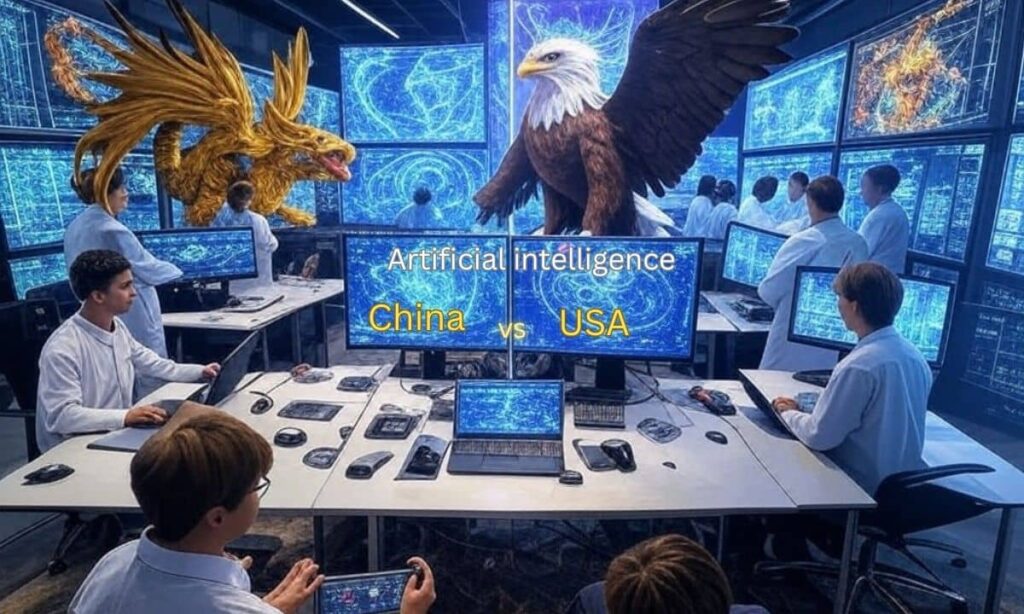
Financial market analysts regard this listing as a benchmark for other Chinese artificial intelligence startups evaluating public market entries. Competing firm MiniMax is anticipated to proceed with its own IPO imminently following a confidential regulatory filing submitted last year, fueling expectations of additional AI-related public offerings.
Beyond capital acquisition, Zhipu’s public debut carries substantial symbolic significance. The event underscores Beijing’s commitment to nurturing national technology champions amid escalating technological competition with the United States. Public market access provides Zhipu with enhanced financial maneuverability while simultaneously exposing the company to heightened scrutiny from international investors.
Hong Kong’s strategic positioning
For Hong Kong, the successful IPO strengthens the city’s function as a financial bridge connecting Chinese technology enterprises with international capital markets. Following a period of reduced activity, technology listings connected to strategic sectors, such as artificial intelligence, are regenerating market interest and investor confidence.
As Zhipu transitions into its role as a publicly traded entity, market observers will monitor whether the company can transform strong research foundations into sustainable revenue growth. The firm’s operational and financial performance may influence how global capital markets assess and value China’s emerging generation of artificial intelligence companies.
The intersection of geopolitical tensions, technological innovation, and capital market dynamics makes Zhipu’s journey particularly consequential for understanding the future trajectory of AI development in Asia and beyond.
What’s your take on China’s AI companies entering global markets? Please share your thoughts and perspectives on how this technological competition will reshape the industry in the comments below.