

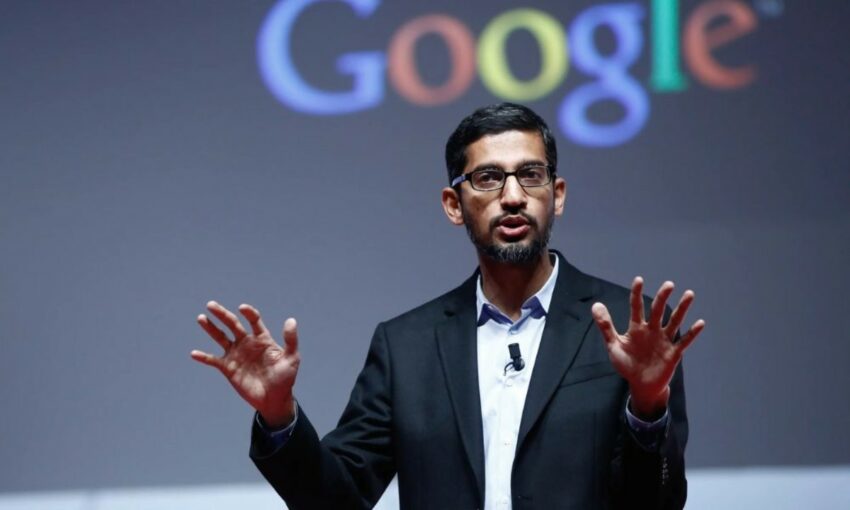
Google’s CEO, Sundar Pichai, has issued a stark warning to the public about the potential dangers of artificial intelligence. Don’t trust AI outputs without verification, he says. The Alphabet leader shared this caution during a recent interview with BBC News. His timing reflects growing concerns about the accuracy of AI tools and results, as these technologies become embedded in daily life.
Pichai recognizes the explosive growth of AI systems. Yet he emphasized their fundamental limitations. These models make mistakes, he explained. Users need multiple reliable sources to cross-check AI-generated information.
The Google chief stressed the importance of maintaining diverse information ecosystems. No single tool should dominate how people access knowledge.
“This is why people also use Google search,” Pichai said. “We have other products that are more grounded in providing accurate information.”
AI platforms excel at certain tasks, particularly creative applications. They help users draft content and brainstorm concepts. But Pichai urged intentional, aware usage. He told BBC audiences that people “have to learn to use these tools for what they’re good at, and not blindly trust everything they say.”
Despite Google’s substantial investment in accuracy improvements, “the current state-of-the-art AI technology is prone to some errors,” he acknowledged.
New Gemini model enters crowded market of AI tools
Google recently launched Gemini 3.0 for consumer use. The company reports gaining back market position from competitors as AI tools flood the market. Since May, Google has introduced an “AI Mode” feature within search. This allows conversational interactions with Gemini resembling expert consultations.
Pichai characterized this deployment as marking a “new phase of the AI platform shift.” The aggressive rollout reflects Google’s determination to compete against ChatGPT, Perplexity AI, and emerging rivals.
Earlier BBC research exposed serious accuracy problems across leading AI platforms. Investigators tested ChatGPT, Copilot, Gemini, and Perplexity on news article summarization. All AI tools delivered results with “significant inaccuracies.” These findings intensified pressure on technology companies as millions depend on AI for information gathering.
Innovation speed versus security requirements
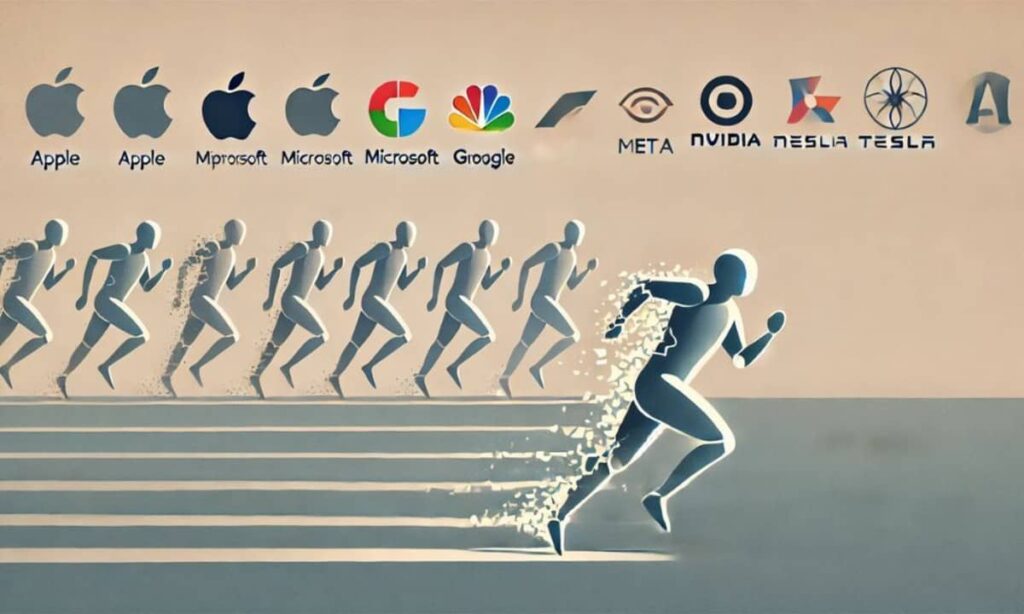
Pichai described the challenge of balancing rapid development with protective measures. Alphabet aims to operate “bold and responsible at the same time,” he stated.
Consumer expectations drive companies toward faster innovation cycles. Alphabet responded by scaling security investments proportionally with AI expansion. Recent initiatives include releasing open-source tools that identify artificially generated images.
The CEO responded to revived concerns from Elon Musk. Musk previously warned OpenAI founders that DeepMind might enable AI “dictatorship.” Pichai dismissed fears of single-company AI dominance.
“If there was only one company that was building AI technology and everyone else had to use it, I would be concerned about that too,” he said.
Current market conditions remain far from monopolistic control, he added.
Investment bubble warnings emerge
Pichai addressed mounting worries about unsustainable AI investment levels. Alphabet’s valuation jumped to $3.5 trillion within seven months. Rival companies experienced similar valuation surges. Industry analysts warn of potential parallels to the dot-com crash.
No company enjoys immunity from market corrections, Pichai admitted. “I think no company is going to be immune, including us,” he stated.
The AI sector displays both a sound investment strategy and “irrationality,” according to Pichai. He drew comparisons to early Internet expansion. That era saw massive capital deployment with mixed wisdom. Yet the long-term transformation proved revolutionary despite short-term excesses.
Banking executives, including JPMorgan’s Jamie Dimon, predict AI investments will eventually pay dividends. However, they caution that substantial losses will occur throughout the process.
Pichai highlighted Alphabet’s competitive advantages. The company controls its entire technology “full stack” spanning custom chips, large language models, and YouTube’s vast data resources. This vertical integration provides stronger positioning than many competitors, he argued.
UK expansion meets energy challenges

Alphabet recently committed £5 billion toward UK infrastructure and research programs. Pichai announced plans for advanced AI research facilities in London. The company will begin “training our models” domestically within the UK. British officials hope this investment strengthens their position as a leading AI center behind the United States and China.
Growth demands significant energy resources, Pichai cautioned. International Energy Agency data shows AI consumed 1.5% of worldwide electricity last year. Countries must develop additional energy capacity and prevent supply constraints.
“You don’t want to constrain an economy based on energy,” Pichai warned.
He conceded that Alphabet’s climate commitments have slowed due to increased computational demands. The company maintains its net-zero emissions target for 2030.
Workplace transformation ahead
Pichai described AI as “the most profound technology” humanity has developed. He predicts sweeping changes across virtually every employment sector and industry.
Disruption appears inevitable, yet new possibilities will emerge as AI tools take over the market, Pichai suggested. Workers who successfully integrate AI capabilities into routine tasks will thrive.
“It doesn’t matter whether you want to be a teacher [or] a doctor,” he explained. “All those professions will be around, but the people who will do well in each of those professions are people who learn how to use these tools.”
How do you think AI will reshape your profession or industry? Are you concerned about accuracy issues with current AI tools?
Please share your views below.