

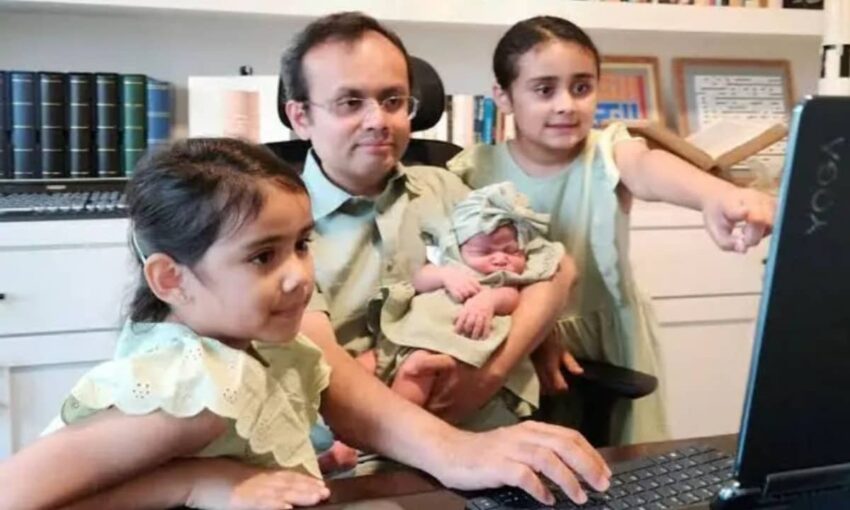
What started as one father’s deeply personal response to grief has evolved into a worldwide case study examining how artificial intelligence fundamentally alters the landscape of human memory and familial relationships. The initiative, dubbed Grandpabot, emerged from Muhammad Aurangzeb Ahmad‘s desire to bridge an impossible gap: connecting his children with a grandfather whose voice they would never hear in life.
Ahmad, an affiliate assistant professor at the University of Washington Bothell, lost his father in 2013. When his youngest child reached the age of curiosity two years afterward, pointing at photographs and asking questions about the unfamiliar face, Ahmad recognized a critical moment. He refused to let his father become merely a collection of secondhand anecdotes. Instead, he built something unprecedented—a digital reconstruction powered by his father’s written correspondence, audio recordings, and the fragmented memories that outlived the man himself.
“Our perception of any individual always passes through our personal filter,” Ahmad explained.
What emerged wasn’t a flawless replica. Rather, it became an intentionally crafted representation designed to sustain connections that death typically severs.
Building digital bridges across generations
Ahmad’s research collective at UW Bothell frames this work as establishing “digital familial bonds after life.”
The concept, grandpabot, taps into an expanding frontier within artificial intelligence development, where machine learning systems analyze personal data archives to replicate deceased individuals’ communication styles and behavioral patterns. Industry observers have labeled these creations grief support tools, legacy preservation platforms, or virtual representations.
Regardless of terminology, they all provoke identical concerns: Where should boundaries exist when technology becomes the medium for maintaining relationships with the departed?
The professor’s children engaged with the simulation far more organically than anticipated. Having experienced pandemic-era isolation, they’d already normalized screen-mediated interactions with educators, peers, and family members. Conversing with a computerized version of their grandfather simply felt like another facet of their digital-first reality.
“This represents truly uncharted territory,” Ahmad observed, highlighting children’s remarkable capacity to accept technologically mediated connections.
From private project to public discourse
What began inside Ahmad’s household now occupies center stage in broader cultural conversations. Grandpabot embodies both the potential and complications inherent in contemporary AI applications. These systems can provide solace by safeguarding memories and narratives. Yet they simultaneously introduce novel psychological vulnerabilities.
Ahmad expresses particular concern about blurred boundaries separating healthy connection from unhealthy dependency.
“Our society already struggles with widespread isolation,” he noted. “My fear centers on these companion technologies becoming dangerously habit-forming, potentially causing people to withdraw from genuine human interaction and authentic relationships.”
Academic experts studying comparable projects share those apprehensions. Simulated dialogues deliver consistency and perceived closeness. They can also establish unrealistic expectations that no algorithm can satisfy. Digital constructs don’t experience grief, undergo personal growth, or generate spontaneous new memories. What they offer instead amounts to carefully curated behavioral patterns extracted from incomplete historical records.
For certain families, that proves sufficient. For others, it risks becoming an obstacle preventing necessary emotional healing.
Ethical considerations and psychological implications
The proliferation of generative AI has prompted universities and ethics specialists to examine appropriate usage frameworks for these technologies. Some authorities advocate for explicit consent protocols before creating digital likenesses. Others emphasize psychological counseling requirements when individuals begin depending on simulations for emotional support.
Because the technology can reproduce someone with startling accuracy, it threatens to obscure distinctions between healthy remembrance and problematic emotional fixation.
Ahmad recognizes these competing forces. His objective wasn’t resurrecting a living presence but preventing a relationship’s complete dissolution. The simulation enables his children to absorb stories, cultural touchstones, and philosophical perspectives that would otherwise vanish. It helps them comprehend their grandfather as someone possessing wit, personal history, and a distinct identity beyond static imagery.
Reshaping how families preserve legacies
The project has ignited fresh academic discussions about artificial intelligence’s role in family heritage preservation. Future generations might inherit interactive databases built through machine learning rather than traditional memoirs or preserved letters. However, these archives only reflect the completeness of source materials. They magnify contemporary decisions families make regarding what deserves preservation, documentation, and transmission.
As technology advances, researchers anticipate growing family adoption of these tools. Some will employ them for oral history conservation. Others might construct digital genealogies featuring interactive biographical elements. A smaller segment may develop simulations functioning as emotional support systems. Each application carries distinct advantages and challenges, particularly as developers compete to build platforms capturing nuanced personalities.
Balancing innovation with human authenticity
Currently, Ahmad’s research remains rooted in a singular family experience. It has attracted attention not through widespread implementation but through its profound emotional resonance. Grandpabot exists where remembrance intersects innovation. It demonstrates how digital systems can maintain aspects of someone’s essence while simultaneously underscoring that no simulation substitutes for living human bonds.
Ahmad continues refining the technology while acknowledging its inherent limitations. Fundamentally, the simulation represents tribute shaped by affection, recollection, and determination to maintain a grandfather’s presence in grandchildren’s lives. It also serves as a powerful reminder that while technology excels at story preservation, meaningful human relationships ultimately require participation from the living.
What are your thoughts on using AI to preserve memories of deceased loved ones? Please share your perspective in the comments below.