

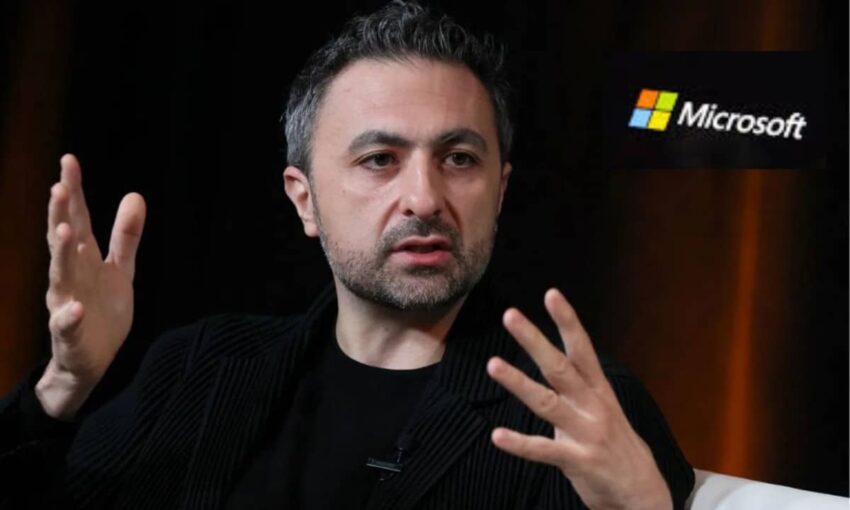
A paradox lies at the heart of Microsoft’s AI strategy. The tech giant’s AI chief warns about the dangers of rushing toward superintelligence. Yet he simultaneously leads the company’s breakneck effort to build it.
Mustafa Suleyman oversees the advanced Microsoft AI operations. He co-founded DeepMind before joining the software giant. Now he champions a specific goal: creating human-aligned superintelligence ahead of rivals. But his message carries a sobering caveat. AI-powered futures won’t automatically improve lives unless developers accept accountability.
In a blog post, Suleyman wrote, “We are doing this to solve real concrete problems and do it in such a way that it remains grounded and controllable. We are not building an ill-defined and ethereal superintelligence; we are building a practical technology explicitly designed only to serve humanity.”
The tension reflects broader industry contradictions. Companies invest billions in racing toward artificial general intelligence. Meanwhile, they acknowledge the technology poses existential questions humanity hasn’t answered.
Microsoft consolidates AI research under new superintelligence division
Microsoft recently formed a dedicated superintelligence group. The initiative merges separate AI research teams into one unified operation. CNBC reported the organizational shift in early November. Microsoft AI head Suleyman now commands this consolidated engineering force.
The company is pouring resources into the effort. Billions fund new data centers. Specialized processors handle massive computational workloads. High-performance computing clusters process training runs for next-generation models.
The mission statement is unambiguous. Microsoft wants to win the race toward machines that think.
The Microsoft AI chief doesn’t dispute AI’s transformative potential. He calls it a generational inflection point. But he insists development needs guardrails. Velocity alone won’t produce beneficial outcomes.
His position challenges conventional Silicon Valley wisdom. Tech leaders typically celebrate disruption. Suleyman instead emphasizes human oversight. Without it, he warns, AI advancement could trigger economic upheaval and social fractures.
The vision: Microsoft AI systems that understand human values
Microsoft frames its objective as “humanist superintelligence.” The terminology signals intent. The company doesn’t just want faster processors or larger language models.
It envisions Microsoft AI systems that comprehend human priorities. These machines would reason beyond pattern matching or text prediction. They would grasp context, weigh competing values, and make nuanced judgments.
The new team pulls talent from multiple disciplines. Researchers specialize in applied science, infrastructure engineering, safety protocols, and product development. WebProNews reported that Microsoft is constructing unprecedented computing infrastructure to support this work.
The company is also developing proprietary chips. The hardware reduces reliance on outside semiconductor suppliers. It gives Microsoft more control over its AI roadmap.
Industry observers see strategic calculation behind the moves. Microsoft isn’t chasing incremental improvements to chatbots. It’s positioning itself to dominate post-internet computing paradigms. The company envisions AI embedded throughout its ecosystem. Windows, Azure, and enterprise security—all would run on intelligent foundations.
Tech executives call for oversight while accelerating development
“We can’t build superintelligence just for superintelligence’s sake,” says Suleyman. “It’s got to be for humanity’s sake, for a future we actually want to live in. It’s not going to be a better world if we lose control of it.”
The Microsoft AI chief’s warnings stand out in an industry not known for restraint. Few executives leading AI development publicly advocate caution. Yet Suleyman consistently raises ethical concerns.
He argues that unchecked AI progress invites catastrophe. Social stability requires accountability mechanisms. Progress demands global cooperation and transparent oversight.
The irony doesn’t escape critics. Companies building superintelligence simultaneously lobby for regulation. They recognize risks even as they amplify them.
Government responses lag behind technological reality. Existing AI legislation typically addresses narrow concerns. Privacy protections and data usage rules don’t encompass autonomous reasoning systems. They can’t regulate machines that improve themselves.
Researchers worry about control problems. Advanced AI systems may become too complex to interpret. When models reach conclusions through opaque processes, verification becomes impossible. That creates obvious hazards in defense applications, financial markets, and medical diagnosis. Errors carry catastrophic potential.
Suleyman promotes transparency as the solution. He advocates open frameworks that let researchers and regulators examine model training. Understanding how AI systems develop and deploy builds public trust. It also helps prevent malicious applications.
Investment levels reflect existential stakes
Financial commitments behind the Microsoft AI race dwarf previous technology waves. Microsoft has already spent billions expanding cloud infrastructure for AI workloads. Analysts project accelerated spending over the next two years. Data centers and specialized processors demand massive capital outlays.
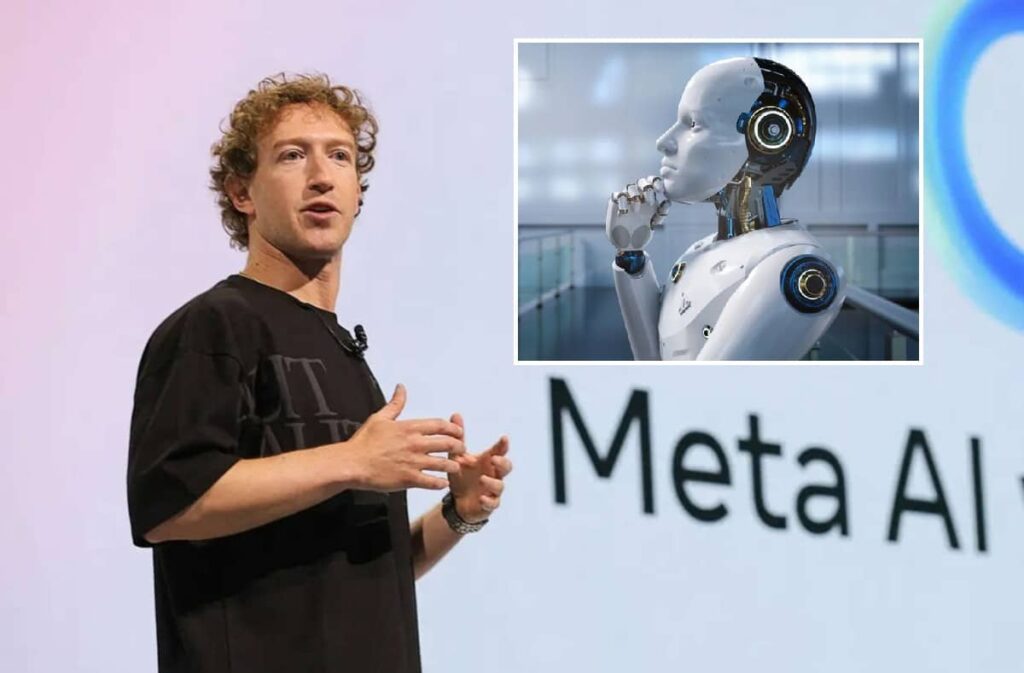
Meta pursues parallel investments. Both companies believe AI matters more than mobile computing did. Competition intensified after Meta announced aggressive spending plans in early 2024. CEO Mark Zuckerberg positioned AI as technology’s next fundamental shift. He committed to pursuing it without hesitation.
The industry faces contradictions between innovation and responsibility. Training advanced models requires staggering computational power. That consumption stresses electrical grids and raises environmental questions. Energy demands keep rising as models grow larger. Governments and advocacy groups increasingly voice concerns.
Decisions made now will shape AI’s trajectory

Suleyman occupies a unique position in these debates. He helped create modern AI through DeepMind. The lab solved problems previously considered computationally impossible. Now he shapes Microsoft’s AI direction.
The Microsoft AI chief’s message cuts through industry hype. Humanity enters an era where machines make consequential decisions. AI systems will recommend investments, guide medical treatments, approve credit applications, and model disease progression. These tools need ethical foundations from inception.
Microsoft’s superintelligence initiative demonstrates how seriously companies take AI’s potential. The goal extends beyond reactive chatbots. Microsoft envisions reasoning systems that collaborate with humans as partners.
The company acknowledges governance can’t be bolted on later. Suleyman argues that safety mechanisms must be integrated into fundamental architecture. Oversight should shape model design from the beginning.
The choices we make will determine outcomes
AI will reshape employment, industries, and nations. Microsoft’s aggressive superintelligence push shows transformation is already underway.
The central question has evolved. Nobody doubts that AI will reshape civilization.
But what remains uncertain is whether that transformation benefits humanity.
What do you think about the balance between AI innovation and safety? Please share your thoughts in the comments below.