


The fight for dominance in artificial intelligence-powered web browsing escalated this week as OpenAI unveiled ChatGPT Atlas, its answer to Perplexity’s Comet browser, marking a pivotal moment in how users interact with the Internet.
The launch positions two distinct philosophies against each other: OpenAI’s focus on automated task completion versus Perplexity’s emphasis on transparent, citation-backed research. Both companies are betting that traditional search engines have reached their limit.
Atlas arrived on macOS devices this week, with OpenAI promising Windows and mobile editions in the coming months. The AI browser embeds ChatGPT directly into the browsing experience, enabling users to execute complex commands without needing to switch between applications.
“ChatGPT Atlas brings the power of ChatGPT into your browser, making it easier to ask questions, get answers, and take action without leaving your workflow,” OpenAI stated in its release announcement.
Atlas Features
The new AI browser runs on Chromium architecture, ensuring compatibility with existing Chrome extensions. This strategic choice lowers the barrier for users considering a switch from established browsers.
Tom’s Guide identified seven fundamental capabilities: integrated ChatGPT across all tabs, answers that understand page context, writing assistance that appears inline, memory functions that recall user preferences, voice-activated natural language controls, an advanced Agent Mode for complex tasks, and enhanced privacy safeguards.
Mashable highlighted the practical applications, observing that the assistant can “summarize a webpage, adjust writing tone, or even reopen yesterday’s travel site with a single command.”
The standout feature remains Agent Mode, available exclusively to Plus and Pro subscribers. This functionality handles multi-step operations, such as flight reservations or product price comparisons across multiple retailers.
OpenAI built guardrails into the system.
“Agent Mode will pause on sensitive sites like banking or trading platforms, preventing the system from making unauthorized moves,” the company clarified, addressing concerns about autonomous AI actions.
Comet’s approach

Comet launched ahead of Atlas supports both macOS and Windows platforms. Perplexity designed its AI browser around academic and professional research needs rather than general automation.
Digit emphasized, “Comet gives users citation-backed answers every time, building trust in its results.” This approach appeals to users who need verifiable information sources rather than synthesized summaries.
Scalevise described Comet as “a workspace model that remembers goals and synthesizes across multiple tabs,” suggesting a different approach to how AI browsers should function.
The pricing structure reflects Perplexity’s tiered strategy: a no-cost basic version, Comet Plus at five dollars monthly, and Comet Max targeting enterprise clients at two hundred dollars per month.
Head-to-head
CNN characterized OpenAI’s entry as posing “a direct challenge to Google Chrome,” noting that Alphabet experienced share price declines following the Atlas announcement. The network described Atlas as “a browser designed not to show blue links but to provide immediate summaries, answers, and actions.”
Comet stakes its claim on transparency.
Financial Express quoted an industry analyst saying, “For research-driven workflows, Perplexity has the edge because it shows where every answer is coming from.”
Tom’s Guide identified Atlas’s inability to synthesize information across multiple open tabs as “a big miss,” a capability where Perplexity’s Comet excels. This cross-tab awareness allows Comet to connect information from various sources into coherent research outputs.
Safety and privacy
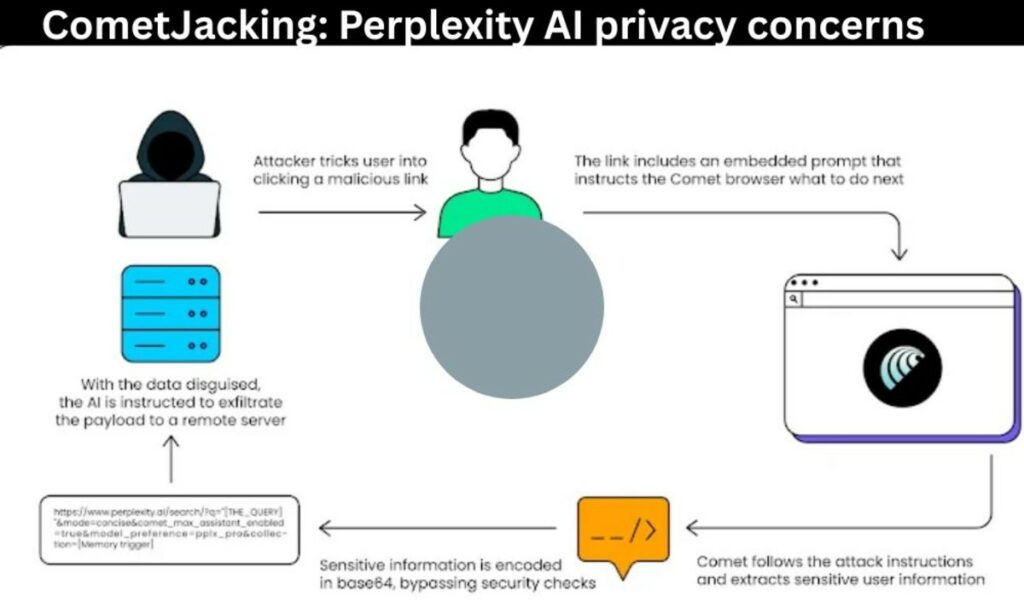
OpenAI imposed strict limitations on Atlas functionality. The company confirmed the browser “cannot run local code, download files, or access saved passwords,” with all memory features operating on an opt-in basis only.
Perplexity addressed its own security challenges after independent researchers identified vulnerabilities related to “prompt injections” from malicious third-party websites. The company released patches following these discoveries.
Both AI browsers face ongoing scrutiny about data handling, particularly regarding how conversational AI systems process and store browsing behavior.
Market implications
Digit framed the competition in behavioral terms, “the competition is less about which AI is stronger and more about the behavioral contract users are willing to accept.”
CNN elevated the stakes, describing the rivalry as “a fight over the future of how we access the internet.” Mashable concluded that Atlas represents more than browser technology, calling it “an assistant built into your daily web life.”
The implications extend beyond individual companies. Google Chrome’s decades-long dominance faces its first serious challenge from AI-native alternatives that fundamentally reimagine information retrieval.
Pricing
OpenAI offers Atlas as a free download, reserving advanced capabilities for ChatGPT Plus or Pro members at $20 monthly.
Perplexity maintains its freemium model, providing core Comet functionality at no charge while offering Plus subscriptions at $5 and Max enterprise packages at $200 monthly.
The pricing suggests different target audiences: OpenAI appears focused on premium individual users, while Perplexity courts both casual researchers and corporate clients.
Outlook
Atlas serves professionals seeking workflow automation with built-in safety controls. Comet targets academics, journalists, and researchers requiring source verification and information depth.
Despite their differences, both browsers share a common objective: dismantling the traditional search engine model that Google Chrome represents.
Financial Express posed the central question facing both companies: whether users will trust artificial intelligence systems to control their primary gateway to online information.
That trust will determine which browser, if either, succeeds in redefining how billions of people access the internet in the age of generative AI and machine learning.
Industry observers suggest the winner won’t be decided by processing speed or interface design. Instead, user confidence in AI accuracy, transparency, and safety will shape the future of intelligent browsing.
Which AI browser approach resonates with you—OpenAI’s task automation or Perplexity’s citation-backed research? Please share your views in the comments below.