

America’s economic landscape is undergoing a dramatic transformation driven by artificial intelligence, yet a prominent financial journalist cautions that this unprecedented surge in AI carries substantial risks.
Andrew Ross Sorkin, the acclaimed New York Times financial columnist and CNBC Squawk Box co-anchor, drew striking comparisons between current market conditions and the 1920s economic expansion during a recent CBS News interview. His latest work, 1929, examines the historic market collapse that marked the onset of the Great Depression.
“Current valuations make me nervous because they might lack long-term viability,” Sorkin explained to CBS’s 60 Minutes.
“The uncertainty lies in whether we’re experiencing an extraordinary technological revolution — largely powered by artificial intelligence and digital innovation — or simply witnessing overinflated asset prices across the board.”
Stock surge collides with trade policy turbulence
Financial markets had climbed steadily for consecutive months before experiencing sharp declines last week. The downturn followed President Donald Trump’s announcement of potential new trade tariffs targeting China. Sorkin noted the rally’s resemblance to 1928, when equity values jumped nearly 90 percent before the devastating crash.
“Tremendous anxiety defined that period,” he recalled while standing alongside correspondent Lesley Stahl at the New York Stock Exchange trading floor. “Similar apprehension characterizes our current moment.”
Artificial intelligence fuels unprecedented capital deployment
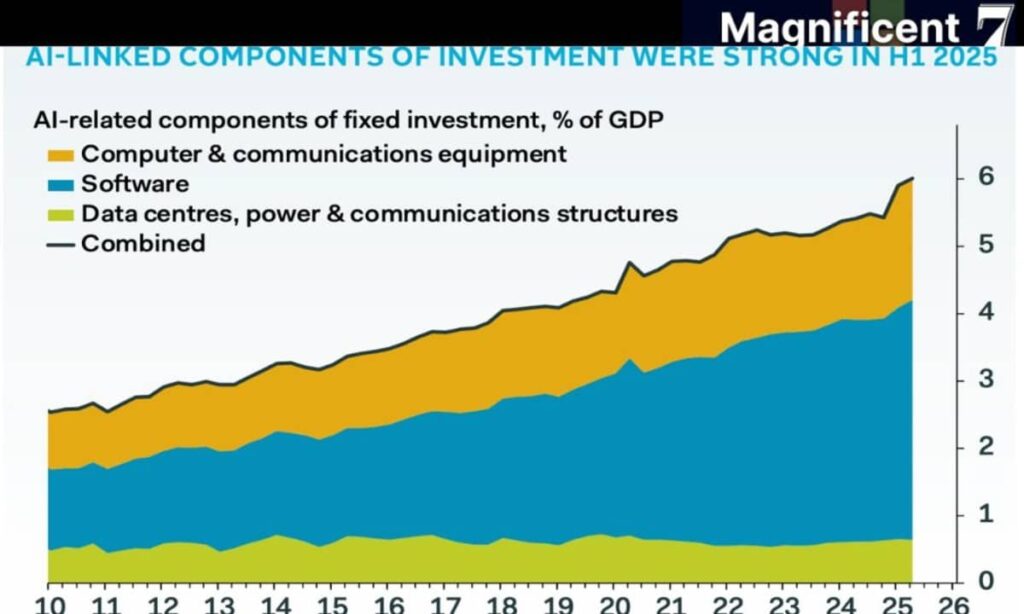
Sorkin identified artificial intelligence as the primary catalyst sustaining economic momentum.
“The economy is receiving artificial support — ironically from the artificial intelligence revolution,” he observed. “We’re witnessing hundreds of billions in AI-directed capital investment. Whether this represents genuine opportunity or temporary euphoria remains unclear. The answer probably won’t emerge for several years.”
The expansion of AI enterprises, computing infrastructure, and semiconductor manufacturers has attracted enormous investment flows. Market analysts credit AI-related equities for pushing the S&P 500 and Nasdaq to unprecedented peaks this year. However, Sorkin cautioned that excessive speculation might destabilize markets, echoing the credit-fueled excess that characterized the 1920s.
Historical patterns reveal recurring dangers
The financial historian identified troubling similarities to previous market bubbles. In 1929, investors purchased stocks using borrowed funds. The 2000 dot-com implosion erased trillions in market capitalization. The 2008 financial crisis, sparked by irresponsible mortgage lending, threatened the entire banking sector.
“Bubbles consistently prove our downfall,” Sorkin stated. “Denying we’re in one now becomes increasingly difficult. The perpetual question centers on timing the inevitable burst.”
Regulatory framework deteriorates
Sorkin voiced significant alarm about eroding investor safeguards. Following the 1929 catastrophe, federal authorities established the Securities and Exchange Commission and implemented rigorous transparency requirements for publicly traded corporations. Many of those protections, he argued, are dissolving.
“The Consumer Protection Bureau has been effectively dismantled,” Sorkin noted. “My greatest concerns involve unchecked speculation, mounting debt levels, and these developments occurring simultaneously as regulatory safeguards disappear.”
A significant regulatory shift now permits broader public participation in private company investments before initial public offerings — including unproven AI ventures. This democratization provides opportunities previously limited to wealthy individuals, yet simultaneously exposes pension funds and ordinary investors to substantial losses should valuations crumble.
BlackRock chief executive endorses investment democratization

Larry Fink, who leads BlackRock — the planet’s largest asset management firm overseeing $12.5 trillion — supported expanded investment access. His annual shareholder letter proposed incorporating private startup investments, particularly AI companies, into 401(k) retirement portfolios.
“Tremendous investment potential exists in artificial intelligence and data infrastructure,” Fink told CBS News. “Current regulations prevent including these assets in retirement vehicles. The Trump administration now signals willingness to change that.”
Fink recognized inherent dangers but emphasized that long-term diversification shields investors. “All investments carry risk except overnight bank deposits,” he reasoned.
Digital currencies exhibit troubling manipulation patterns
Sorkin highlighted emerging assets like cryptocurrencies as displaying classic manipulation characteristics. He recounted how a casual joke about a “Sorkin coin” materialized into an actual digital token valued at $170 million within 24 hours before collapsing.
“The situation suggested coordinated manipulation by insiders artificially inflating prices,” he explained. The incident, he added, mirrored speculative frenzies preceding previous financial catastrophes.
Corporate leaders remain silent under political pressure
Despite mounting risks, Sorkin reported that business executives avoid public criticism.
“They fear administration retaliation or regulatory obstacles to corporate mergers,” he said. “Most chief executives are terrified of making public statements critical of current policies.”
He also challenged assumptions that political figures could prevent another crash. Some economists theorize that Trump, whose political fortunes depend on market performance, will deploy all available tools to avoid a 1929-style meltdown.
Sorkin expressed skepticism.
“Confidence evaporates instantly,” he said.
Market correction appears certain despite unknown timing
Nearly a decade of researching 1929 led Sorkin to an unambiguous verdict.
“A crash will definitely occur,” he stated. “I cannot predict the timing or severity. But it’s coming.”
Meanwhile, Wall Street celebrates record valuations, with artificial intelligence technology driving the momentum. Whether the AI surge represents sustainable growth or fleeting exuberance, Sorkin argues, will only become clear with time.
The intersection of revolutionary technology, weakening regulations, and soaring valuations creates conditions that demand investor vigilance and policy attention.
What’s your perspective on the AI surge and market stability? Please share your thoughts and concerns about the AI boom in the comments below.