


A comprehensive Senate analysis released Monday suggests artificial intelligence and automation technologies may wipe out millions of American positions over the next 10 years. AI job loss could fundamentally transform various sectors spanning from transportation to financial services and quick-service dining.
The document, assembled by Democratic researchers supporting Vermont Senator Bernie Sanders, Ranking Member of the Senate Health, Education, Labor, and Pensions Committee, utilized OpenAI’s ChatGPT in its preparation.
The findings predict emerging AI technologies “could eliminate nearly 100 million U.S. jobs in a decade,” including potential losses affecting 47 percent of commercial trucking professionals, 64 percent of accounting specialists, and 89 percent of quick-service restaurant and counter service personnel.
Why does the report matter?

American economic infrastructure has channeled extraordinary capital into AI development. Private sector commitments have approached half a trillion dollars over the past decade. Federal government momentum has similarly intensified. President Donald Trump has committed billions toward artificial intelligence and supporting energy infrastructure, articulating his ambition to establish the United States as the “undisputed world leader in artificial intelligence.”
This forward momentum has driven robust equity market performance, yet skeptics caution that identical enthusiasm could trigger unprecedented economic upheaval. Both entry-level and specialized professional positions face vulnerability.
Beyond routine manual occupations, industry observers now anticipate creative fields, including design, software engineering, and analytical professions, confronting automation challenges.
Who is most at risk?
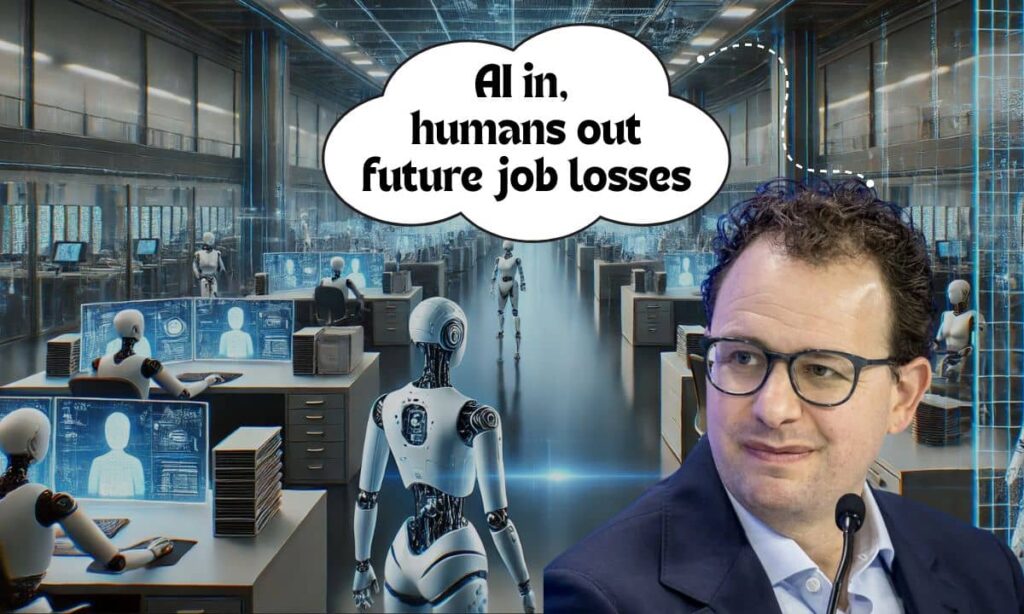
Senate researchers developed a “ChatGPT-based analytical framework” to determine professions facing the greatest vulnerability from AI job loss. Twenty employment categories emerged prominently, with 15 projected to surrender over half their positions to artificial labor throughout the coming decade.
The analysis calculated that 83 percent of customer support representatives, 81 percent of distribution center workers, and approximately nine in ten quick-service food employees could witness position elimination through machine learning and robotics.
Nevertheless, document authors recognized substantial uncertainty: “No one knows exactly what will happen” as AI systems proliferate. They underscored that the assessment represents “one potential future in which corporations decide to aggressively push forward with artificial labor.”
Conflicting forecasts
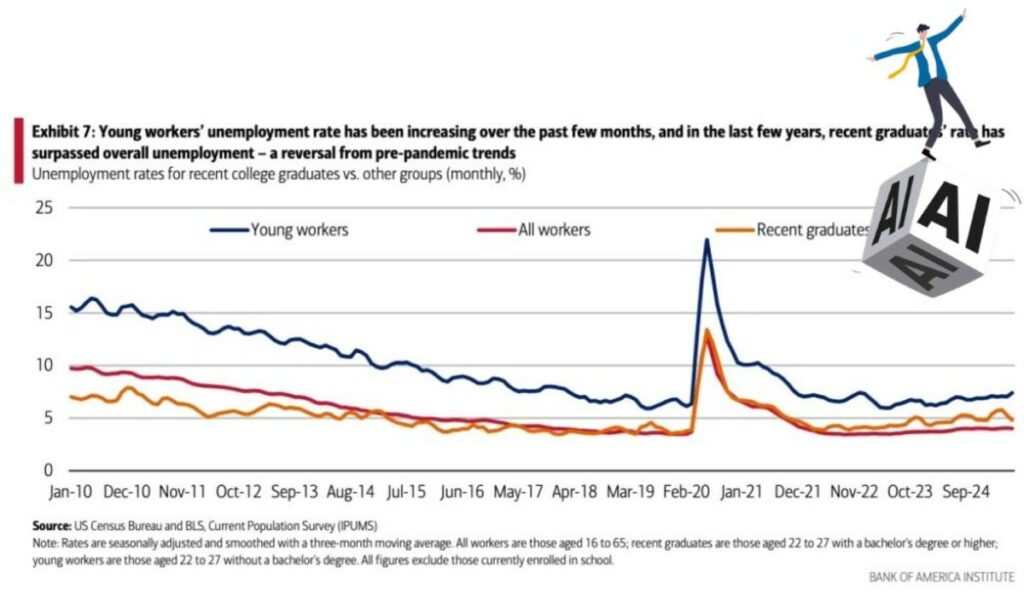
Additional research underscores comparable threats. Management consulting organization McKinsey forecasted that 30 percent of American employment could undergo automation by 2030. Countless additional positions may experience permanent transformation through AI technology’s influence on operational procedures and productivity metrics.
However, not every projection paints a bleak picture. The World Economic Forum, referenced by Forbes, calculated that although 92 million positions could vanish, 170 million emerging opportunities may materialize, generating a net increase of 78 million by the decade’s conclusion. Proponents of this perspective argue that technology will transform rather than demolish employment markets.
What does the report say?
The Senate document raised more pointed concerns. “Artificial labor could not only put millions of people out of work from their existing jobs. It could also replace new jobs that could have been created,” the text stated.
The analysis cautioned against overly simplistic remedies. “A factory worker who loses their job cannot be told to learn to code if artificial labor also takes the coding job,” researchers noted.
The staff members additionally emphasized a troubling cyclical pattern: “Software engineers used to train their replacements. Now, they are creating their replacements—who in turn could create their own replacements.”
Voices of concern
Senator Sanders stressed that technological advancement receives primary funding from America’s wealthiest corporate interests.
In video remarks published to his official platform, he stated: “Some of the very wealthiest people in the world, including Elon Musk, Larry Ellison, Mark Zuckerberg, Jeff Bezos, and others, are now investing hundreds and hundreds of billions of dollars into these revolutionary, transformative technologies.”
He continued, “Among other impacts, the artificial intelligence and robotics being developed by these multibillionaires will allow corporate America to wipe out tens of millions of decent-paying jobs, cut labor costs, and boost profits. The result: the wealthiest people in the world will get even richer while working families lose their jobs and their income.”
Entrepreneur Andrew Yang, a previous presidential contender, similarly identified significant risks.
Speaking to Newsweek, Yang remarked: “I don’t think enough attention is being paid to various downsides of the advent of AI, from job replacement to the splintering of reality to rampant identity theft to the changing of hiring practices in a way that will systematically block certain folks that are not on the good side of various data points.”
He added, “You can regard AI as a crucial area for American competitiveness, but also see it as something that you might want to try to rein in in other dimensions.”
Policy paths forward
Beyond identifying AI job loss threats, the report detailed multiple interventions designed to safeguard workers. These included:
Implementing a 32-hour standard workweek.
Mandating corporations allocate at least 20 percent of equity shares to employees.
A “robot tax” assessed against larger organizations, with revenue supporting workers displaced by AI and automation.
These recommendations reflect expanding discussions regarding equitable distribution of artificial intelligence benefits throughout society, preventing concentration exclusively among corporate leadership and investment stakeholders.
The bigger picture
The Senate analysis contributes to expanding research documenting AI’s transformative capacity. The approaching decade may witness sweeping modifications to America’s labor force, with results dependent upon regulatory frameworks, corporate strategies, and technology adoption velocity.
Currently, the cautions remain unmistakable: automation and artificial intelligence may deliver operational efficiency and enhanced profitability, yet absent protective measures, millions of American workers could face economic abandonment.
Have you witnessed AI job loss in your industry or workplace? Please share your thoughts, experiences, and solutions on the potential AI job threat in the comments section below.