

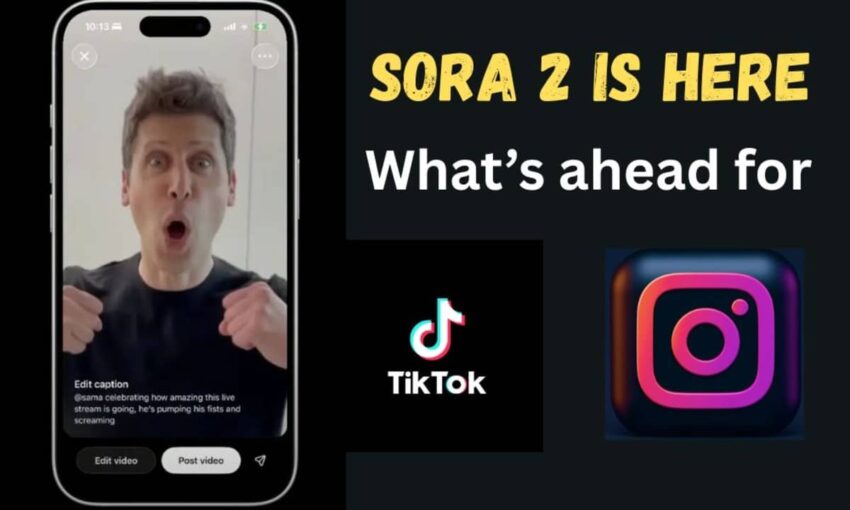
OpenAI has taken significant strides beyond its chatbot roots. The company’s latest move targets social media giants head-on. With Sora 2 and its new mobile platform, OpenAI is entering the short-video battleground. This space has long been dominated by TikTok and Instagram Reels.
The release date was Sept. 30. Sora 2 represents OpenAI’s next-generation model for creating video and audio content. But the real game-changer is what comes with it. The company launched a companion social platform. Users can now generate, modify, and appear in artificial intelligence-powered videos. The iOS application mirrors the addictive, algorithm-based content streams that made its competitors successful.
A new kind of social feed
OpenAI’s Sora application merges AI-generated media with social networking features. The platform introduces a breakthrough capability called “cameos.” This feature lets people insert themselves or their connections into AI-created video content. Users submit a single audio-video recording for identity confirmation. After that, they can place their digital likeness into countless scenarios.
The content lives in a scrollable feed. OpenAI designed it to compete directly with TikTok and Instagram’s engagement model. Videos range from beach sports to diving scenes. Content includes gymnastics performances and animated sequences. Everything stems from text prompts and customized digital personas.
“We believe a social platform centered on this ‘cameos’ capability offers the optimal way to discover Sora 2’s potential,” OpenAI stated in their announcement.
The application is launched only in the U.S. and Canada, though OpenAI plans a worldwide expansion soon. Early access requires an invitation. However, ChatGPT Pro subscribers get immediate access to Sora 2 Pro. They don’t need to wait for invites.
From GPT-1 to GPT-3.5 for video
OpenAI draws parallels between its language models and video technology. If the first Sora marked the “GPT-1 moment” for video generation, this release represents “GPT-3.5.” The upgraded model demonstrates a far superior understanding of physical reality.
“Earlier video generation systems were overly optimistic in their approach,” the company explained. “They would distort objects and bend reality to fulfill prompt requirements. For instance, a missed basketball shot might see the ball magically appear in the net. With Sora 2, missed shots bounce authentically off the rim or backboard.”
The company has demonstrated numerous examples showcasing improved capabilities. Skateboarding sequences appear realistic. Anime-style content achieves immersive quality. Sora 2 now produces multi-angle sequences. It delivers cinematic visual styles. The system generates matching audio, complete with sound effects and spoken dialogue. All of this springs from simple text instructions.
Sam Altman: ChatGPT for creativity
OpenAI’s chief executive, Sam Altman, called the launch historic.
“This combines a fresh model named Sora 2 with a product that simplifies video creation, distribution and viewing,” Altman posted on X. “This represents the ‘ChatGPT for creativity’ breakthrough many of us have anticipated.”
His statement reveals the company’s broader vision. OpenAI isn’t just improving content generation technology. The goal is to build a complete ecosystem where users create, distribute, and consume content within a closed loop.
OpenAI targets TikTok, Meta
Timing matters in tech launches. Sora arrives mere days after Meta introduced “Vibes” to its Meta AI application. Early users report the Meta feed feels flooded with subpar AI content. OpenAI positions Sora as a superior, more refined option.
TikTok and Instagram maintain massive user advantages. But OpenAI is wagering on different strengths. High-quality personalization matters. Realistic physics matters. Enhanced creative control matters. These factors could attract content creators and early technology adopters.
The platform’s recommendation algorithm goes beyond simple engagement metrics. It analyzes user video preferences and geographic location through IP addresses. The system can even reference ChatGPT conversation data, though users can opt out. The objective is to create a completely personalized content experience.
Safety, moderation, and monetization

New creative capabilities bring fresh challenges. OpenAI has faced criticism previously over inadequate safety measures in ChatGPT. The Sora launch incorporates stronger protections.
Parental controls now exist for younger users. Parents can disable endless scrolling. They can turn off algorithmic recommendations. They can restrict direct messaging features. The company emphasizes human oversight to prevent harassment, identity theft, and cameo misuse.
Critics maintain that deepfake-style features carry inherent dangers. Someone might grant appearance rights to a trusted person. But nothing prevents that individual from creating misleading or malicious videos.
OpenAI contends the advantages outweigh potential risks. Users maintain permanent control over their digital likeness. They can revoke access anytime. Videos featuring someone’s appearance can be removed upon request.
The business model starts with free access. Paid features only apply during peak usage times. Users wanting additional video generation capacity during high-traffic periods face surcharges.
Building a visual internet, one clip at a time
Sora’s debut signals OpenAI’s expansion beyond text-based systems. Visual generation technology is advancing rapidly. The company appears committed to developing what it calls “a universal simulator for visual reality.”
“Video generation models are improving at remarkable speed,” OpenAI wrote. “Universal world simulators and robotic systems will transform society fundamentally. They will accelerate human advancement. Sora 2 marks substantial progress toward that objective.”
Whether this transformation benefits users or deepens algorithmic dependence remains uncertain. But the implications are clear. OpenAI’s Sora 2 isn’t merely another content tool. It’s a direct assault on the short-form video establishment.
The company is betting that AI-powered personalization can compete with established social networks. The cameo feature represents a novel approach to user-generated content. Combining realistic physics simulation with social sharing creates unexplored possibilities.
Content creators might find new opportunities here. The barrier to producing professional-looking videos drops significantly. Anyone with creative ideas can generate polished content without expensive equipment or editing skills.
The competitive landscape for social media platforms is shifting. Traditional platforms rely on users recording and editing their own content. Sora introduces a model where AI handles production. Users simply provide creative direction.
This shift could democratize content creation. It might also raise questions about authenticity and originality. As AI-generated content becomes indistinguishable from human-created media, distinguishing between the two grows harder.
OpenAI’s entry into social media represents more than product diversification. It signals confidence that generative AI can power entirely new categories of consumer applications. The success or failure of Sora could influence how other AI companies approach consumer products.
What are your thoughts on AI-generated social media platforms? Do you see Sora as an exciting, creative tool or a concerning development for digital authenticity? Please share your perspective in the comments below.