

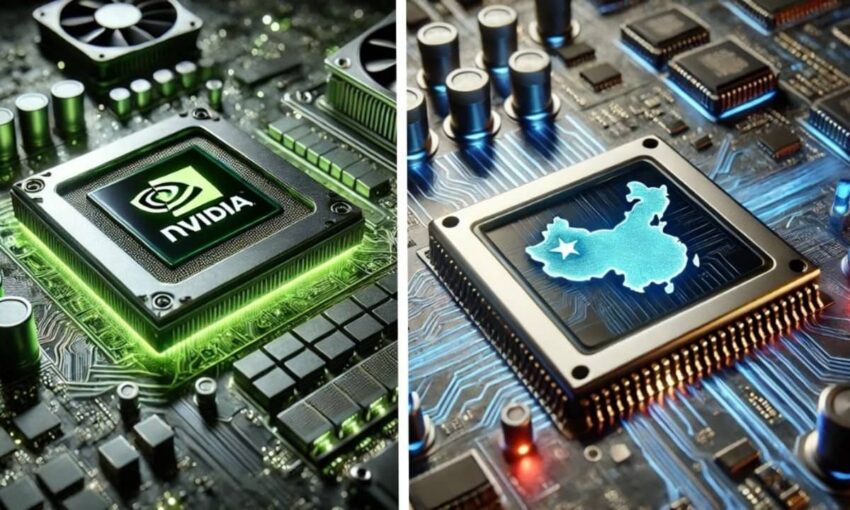
Beijing has imposed greater restrictions on Nvidia, prohibiting major Chinese technology corporations from acquiring the American semiconductor giant’s artificial intelligence processors. This development, initially reported by the Financial Times, demonstrates that China’s AI ecosystem is advancing fast. In fact, it shows China’s growing confidence in its domestic chip manufacturing capabilities and marks a significant shift in global semiconductor dynamics.
Nvidia faces a complete Chinese market lockout
Earlier this year, Nvidia secured regulatory clearance to distribute its China-specific H20 graphics processing units after U.S. officials relaxed export controls. The semiconductor company simultaneously introduced the RTX Pro GPU, specifically engineered for China’s AI-driven manufacturing facilities and supply chain operations.
However, Chinese regulators began directing domestic technology firms in August to suspend H20 acquisitions pending comprehensive national security evaluations. This prohibition has subsequently expanded to encompass Nvidia’s RTX Pro 6000D processor, creating a complete market barrier for the company. Authorities have additionally initiated preliminary antitrust investigations, claiming Nvidia breached China’s competitive regulations.
This rapid policy reversal illustrates the evolving tension between dependence on American technology and Beijing’s commitment to fostering indigenous semiconductor solutions.
Growing trust in homegrown chip technology
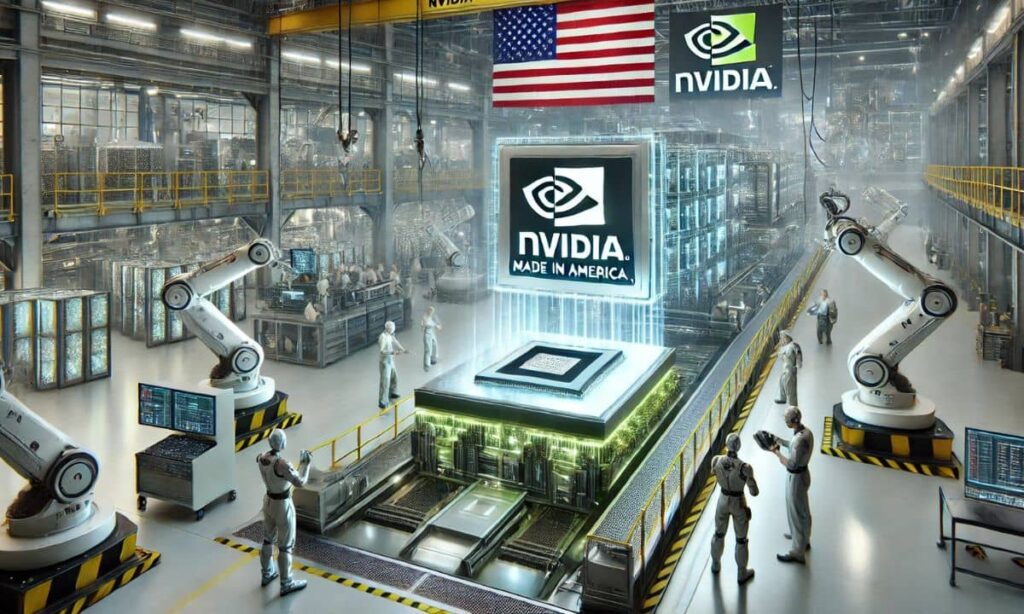
Industry analysts indicate that these restrictions demonstrate Beijing’s growing confidence in domestic processor manufacturers. Intelligence reports suggest Chinese officials determined that local semiconductors had reached performance levels matching Nvidia’s region-specific GPUs.
Although production capacity presents ongoing challenges, domestic manufacturers are accelerating expansion efforts. Industry forecasts predict China’s chipmakers will triple artificial intelligence processor manufacturing within the next twelve months.
“All these recent actions show that China has much more confidence in its domestic sector than it used to,” said Qingyuan Lin, senior analyst at Bernstein.
Security concerns and strategic positioning
Officials justified the Nvidia sales suspension, citing national security imperatives. Authorities expressed apprehension that American-manufactured processors might incorporate covert monitoring capabilities, fears intensified by U.S. congressional concerns. Experts also interpret these restrictions as components of Beijing’s comprehensive trade negotiation approach, utilizing access to China’s expansive AI marketplace as diplomatic leverage with Washington.
“The move is likely to be a negotiation tactic as part of a broader set of discussions involving other topics including tariffs,” noted AJ Kourabi of SeminAnalysis. “China is no doubt trying to encourage and establish silicon self sovereignty, while also getting the best possible chip in the meantime.”
Chinese technology champions are gaining ground
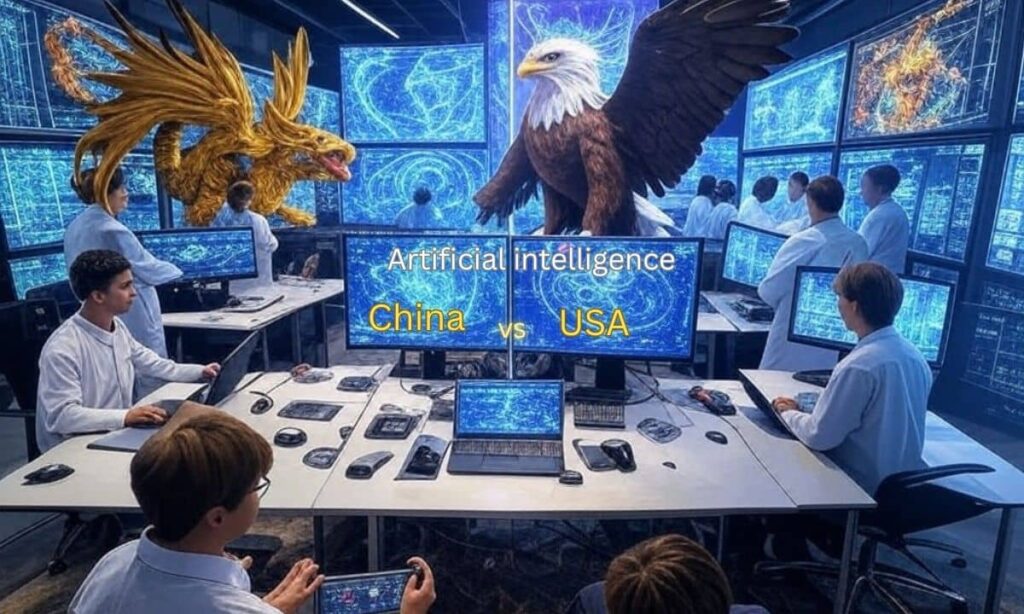
Huawei has emerged as the primary beneficiary of this technological transition. The telecommunications giant recently introduced an advanced AI computing infrastructure utilizing proprietary Ascend processors, marketing it as the “world’s most powerful” system.
SemiAnalysis research conducted earlier this year revealed that Huawei’s CloudMatrix platform exceeded Nvidia’s performance on specific benchmarks. Individual Ascend chips generate substantially less computational power than Nvidia equivalents, yet Huawei’s design connects five times more processors simultaneously, achieving comparable overall performance.
Concurrently, artificial intelligence startup DeepSeek declared its newest model would operate exclusively on China’s next-generation domestic semiconductors. Technology leaders, including Alibaba and Baidu, are incorporating internally designed processors into their machine learning infrastructure, diminishing—though not eliminating—reliance on Nvidia hardware.
Industry experts express reservations
Despite technological advancement, analysts warn that China confronts significant obstacles. Manufacturing scale and ecosystem development remain vulnerable areas. Several specialists argue that completely replacing Nvidia represents an unrealistic short-term objective.
“In terms of China’s domestic chip preparedness, I believe it is misleading to suggest the country can advance AI at a current level solely with domestic alternatives and without Nvidia’s systematic offerings,” said Ray Wang, research director at Futurum Group.
Evolving U.S.-China commercial relations
The Biden administration had maintained export limitations on cutting-edge semiconductors, expanding policies initially established during the Trump presidency. Nevertheless, Washington recently indicated possible flexibility, hinting that more sophisticated Nvidia GPUs could receive Chinese market approval.
Analysts believe Beijing’s rejection of H20 and RTX Pro processors represents a calculated strategy. By declining entry-level chips, China may be establishing a negotiating position for accessing higher-performance semiconductors.
Reva Goujon of the Rhodium Group emphasized the strategic timing, referencing Beijing’s concurrent investigation into U.S. analog chip imports.
“As Beijing tests Trump’s transactionalism, it has to build up leverage of its own,” she said.
Comprehensive market implications
The expanded prohibition intensifies volatility across global semiconductor markets. Nvidia, previously the leading AI processor supplier to Chinese enterprises, now confronts substantial revenue losses. Simultaneously, Beijing is expediting long-term semiconductor self-sufficiency objectives, enabling companies like Huawei and DeepSeek to occupy the resulting market void.
China’s strategic calculation appears definitive: construct an autonomous AI ecosystem capable of competing with American hardware dominance. Success will largely depend on how rapidly domestic semiconductor manufacturers can equal Nvidia’s performance standards and production capacity.
The semiconductor trade war between the world’s two largest economies continues to reshape global technology supply chains. As artificial intelligence becomes increasingly central to economic competitiveness, both nations are prioritizing technological sovereignty over interdependence.
This fundamental shift may permanently alter how AI development proceeds worldwide, with parallel innovation tracks emerging in East and West.
Chinese policymakers are betting that homegrown semiconductor capabilities can support the nation’s AI ambitions without foreign dependence. American companies face the reality of losing access to one of the world’s most lucrative technology markets. The outcome will significantly influence global AI leadership and technological innovation patterns for years ahead.
Does China’s AI tech prowess affect AI development globally? Do you think domestic Chinese chips truly match Nvidia’s capabilities? Or is this move more about geopolitical leverage than technological readiness?
Please share your views in the comments below.