


The artificial intelligence giant OpenAI is preparing to disrupt the employment marketplace with an ambitious new platform targeting a mid-2026 launch. This strategic move to create its own AI jobs platform puts the ChatGPT creator in direct competition with LinkedIn, creating an unexpected rivalry with Microsoft-owned territory despite Microsoft’s substantial financial backing of OpenAI.
The company envisions a comprehensive employment ecosystem powered by advanced AI algorithms. The platform will connect forward-thinking employers with candidates possessing artificial intelligence expertise, many trained through OpenAI’s expanding certification programs. Fidji Simo, OpenAI’s Chief Executive of Applications, revealed these plans in a blog announcement on Thursday.
“Artificial intelligence creates tremendous opportunities while simultaneously causing significant disruption,” Simo explained. “OpenAI cannot prevent this transformation. However, we can equip individuals with AI fluency and link them to organizations seeking these capabilities.”
Stirring a revolution with AI jobs platform
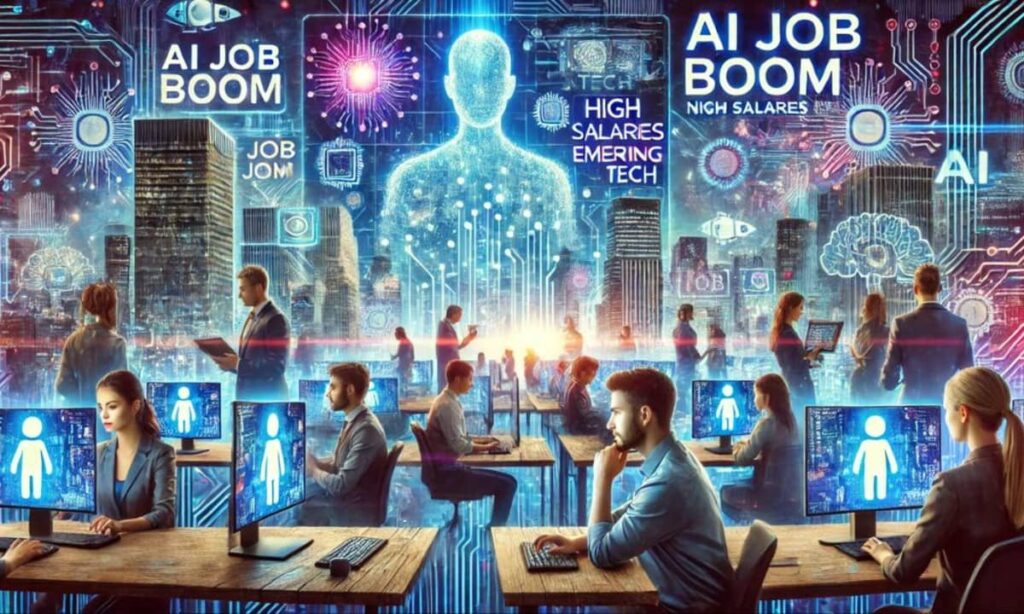
The upcoming employment platform extends far beyond traditional corporate hiring practices. TechCrunch reports the mid-2026 launch timeline includes specialized services for municipal governments and small enterprises seeking AI-competent professionals.
Local government integration represents a key component of OpenAI’s strategy. The platform will feature dedicated pathways helping cities and counties implement artificial intelligence solutions at the community level. Additionally, the system will provide resources enabling businesses in underserved regions to identify and recruit AI-literate talent.
While comprehensive platform specifications remain confidential, Simo emphasized creating a vibrant marketplace where professional skills, industry certifications, and employment opportunities seamlessly intersect through intelligent matching algorithms.
Comprehensive certification programs address skills shortage

OpenAI’s educational initiative, the OpenAI Academy, is expanding simultaneously to support the launch of its employment platform. New certification pathways will span multiple expertise levels, from fundamental workplace AI applications to advanced specializations, including prompt engineering and industry-specific AI implementations.
The company’s training methodology utilizes ChatGPT’s integrated “Study Mode” feature. This simulation environment allows learners to practice problem-solving within realistic workplace scenarios. OpenAI has established an ambitious target of certifying 10 million Americans before 2030, significantly bolstered by a major collaboration with retail giant Walmart.
“Providing AI training directly to our workforce puts cutting-edge technology at their fingertips,” stated John Furner, Walmart U.S. CEO.
This educational push aligns with OpenAI’s participation in the federal government’s national AI literacy expansion, supporting the recently announced “America’s AI Action Plan” initiative.
Complex relationship with Microsoft investor

Despite receiving $13 billion in Microsoft funding, OpenAI increasingly competes with its primary investor across multiple technology sectors. Competition now spans search engines, productivity software, and talent acquisition services.
Microsoft’s LinkedIn ownership makes OpenAI’s employment platform announcement particularly significant within Silicon Valley circles. Industry observers are closely watching whether Microsoft will view this development as complementary to existing services or as direct competition requiring a strategic response.
Challenging employment landscape drives innovation
Current job market conditions underscore the urgency of OpenAI’s initiative. Recent government data reveals the U.S. economy added only 22,000 positions in August, representing a dramatic hiring slowdown. Unemployment rates climbed to 4.3%, reaching a four-year peak.
Simultaneously, automation has eliminated over 10,000 positions in 2025 alone, according to Challenger, Gray & Christmas employment tracking. While some organizations invest in employee skill development, others are reducing recruitment or replacing entry-level positions with automated systems.
Federal Reserve Bank of New York research indicates that although widespread layoffs haven’t materialized, 13% of service industry companies anticipate AI-influenced job reductions within six months. Many employers are implementing hiring freezes or prioritizing candidates already proficient with AI technologies.
Information technology transformation accelerates
Gartner research forecasts that artificial intelligence will become integral to all IT functions by 2030. VP analyst Alicia Mullery, speaking at the company’s Gold Coast symposium, noted that 81% of current IT work remains AI-free, but this will change rapidly.
Projections suggest that by 2030, automated systems will handle 25% of IT tasks completely, while humans assisted by AI will manage the remaining 75%. This trend particularly threatens entry-level IT positions, which experienced a 40% decline from January 2023 through July 2025, per Revelio Labs analysis.
Despite these concerns, Gartner researchers reject predictions of an “AI employment catastrophe.” Their data shows that only 1% of current job losses directly result from artificial intelligence implementation. The future likely involves hybrid roles, increased productivity demands, and expanded AI oversight responsibilities rather than wholesale job elimination.
Debate continues over AI employment impact
Economic experts remain divided on the impact of AI on employment. Goldman Sachs analysis suggests AI could displace approximately 7% of the American workforce under widespread adoption scenarios. However, economists also characterize this impact as potentially “temporary,” with new employment categories emerging.
The World Economic Forum’s Future of Jobs Report 2025 projects AI will generate 78 million more global positions than eliminate by 2030, supporting the job creation argument.
Public sentiment remains cautious despite optimistic projections. Pew Research Center polling reveals 51% of Americans express greater concern than excitement about AI advancement. Primary worries include employment security, privacy protection, misinformation proliferation, and algorithmic bias issues.
Transformation opportunity amid uncertainty
As organizations accelerate AI investments, the central question shifts from job displacement to workforce transformation. Every major industry, including information technology, logistics, education, and healthcare, is reevaluating human-machine collaboration models.
The AI jobs platform positions the company as both a market disruptor and a solution provider. The platform’s ultimate success in addressing worker concerns versus intensifying them depends on its commitment to accessibility, equity, and meaningful skill development within a rapidly evolving economic landscape.
The artificial intelligence revolution continues to reshape employment markets worldwide. OpenAI’s bold entry into talent acquisition signals confidence that AI-powered solutions can solve challenges created by AI advancement itself.
What are your thoughts on the proposed AI jobs platform? Will AI-powered employment marketplaces create more opportunities or increase job market uncertainty?
Please share your perspective and experiences with AI in the workplace in the comments below.