

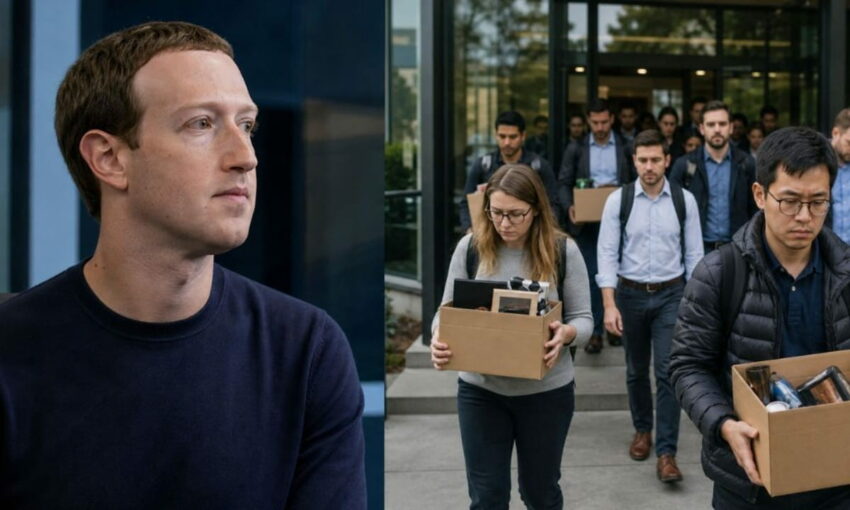
The debate over whether technology destroys jobs or creates them just got a lot more concrete. AI job cuts have arrived on the payroll, and one of the world’s most profitable companies just made that reality impossible to ignore.
Meta Platforms CEO Mark Zuckerberg this week tied the company’s latest workforce reductions directly to rising costs for artificial intelligence infrastructure. The company plans to begin cutting roughly 10% of its staff on May 20, according to Reuters. That translates to approximately 8,000 workers, with further reductions still possible before the year ends.
A profitable company still cutting jobs
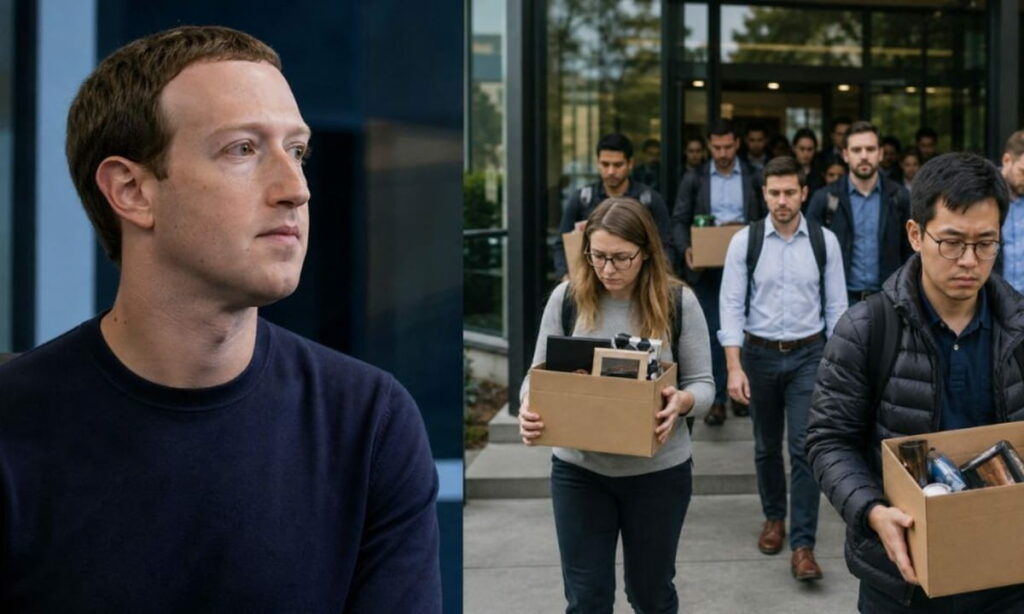
The timing makes this round of AI job cuts particularly striking. Meta is not bleeding money. The parent company of Facebook, Instagram, and WhatsApp posted $56.31 billion in first-quarter revenue, up 33% from the same period last year. Its platforms reached 3.56 billion daily active users, a 4% increase.
Yet the company lifted its 2026 capital spending forecast to between $125 billion and $145 billion. That jumped from an earlier projection of $115 billion to $135 billion. Meta cited higher component prices and growing data-center demands as the drivers.
That is the core tension. Strong earnings. Record user numbers. And still, AI job cuts.
Zuckerberg makes the trade-off plain

The CEO did not attempt to disguise the math behind the decision.
“We basically have two major cost centers in the company: compute infrastructure and people-oriented things,” Zuckerberg said, according to Reuters.
He went further, explaining the direct competition between AI spending and headcount.
“If we’re investing more in one area to serve our community, then that means we have less capital to allocate to the other,” he said. “So that means we do need to take down the size of the company somewhat.”
Zuckerberg pushed back on one specific narrative. He said the current wave of AI job cuts does not stem from pushing employees to use AI tools internally.
“Getting everyone internally to use AI tools and getting to do the work more efficiently is not the thing that’s driving layoffs,” he said.
Still, the direction is unmistakable. More chips, more servers, and more data-center capacity now compete directly with payroll budgets.
Meta has also begun tracking certain employee activity on work computers to help train its AI systems. Reuters reported that the monitoring software captures mouse movements, clicks, and keystrokes within specific work applications. Meta said the data supports training models designed to handle routine computer tasks. That disclosure has deepened unease among staff and sent a wider signal to workers across the tech sector.
Cuban flags which roles face the biggest risk
Billionaire entrepreneur Mark Cuban has added his voice to the growing conversation around AI job cuts. He pointed to entry-level white-collar positions, routine software development, customer service, research and data analysis, and finance and legal support as the categories most exposed to automation pressure.
The pattern connecting those roles is straightforward. Work built around repeatable rules sits closest to the automation frontier.
Cuban argued that no worker can afford complacency right now.
“Whether you are an employee, you’re gonna have to understand how it impacts your job, or how you can use it to be better at your job,” he said.
That warning carries weight as labor market data shows a widening divide. Workers who build AI skills command higher wages. Workers in routine roles face a shrinking pool of opportunities.
The numbers behind the concern
Global research puts hard figures on the scale of potential AI job cuts and displacement.
The World Economic Forum’s 2025 Future of Jobs report projected that automation trends could generate 170 million new roles by 2030 while eliminating 92 million others. That leaves a net gain of 78 million jobs on paper. The same report warned that 39% of workers’ core skills may shift significantly within five years.
The International Monetary Fund estimates that artificial intelligence could affect close to 40% of jobs globally. In advanced economies, that exposure climbs to roughly 60%.
Anthropic’s own labor market research found that computer programmers faced approximately 75% task coverage under its AI exposure measure. Customer service representatives and data entry workers ranked among the most vulnerable categories.
Younger workers face the sharpest near-term pressure. SignalFire’s 2025 tech talent report found that new graduates accounted for just 7% of Big Tech hires in 2024. That figure dropped 25% from 2023 and more than 50% from 2019. At startups, fresh graduates represented less than 6% of new hires.
Entry-level roles matter beyond the paycheck. They teach judgment, professional context, and business instincts that no classroom replicates. AI job cuts at the junior level remove that learning ground entirely.
Productivity gains tell a different story
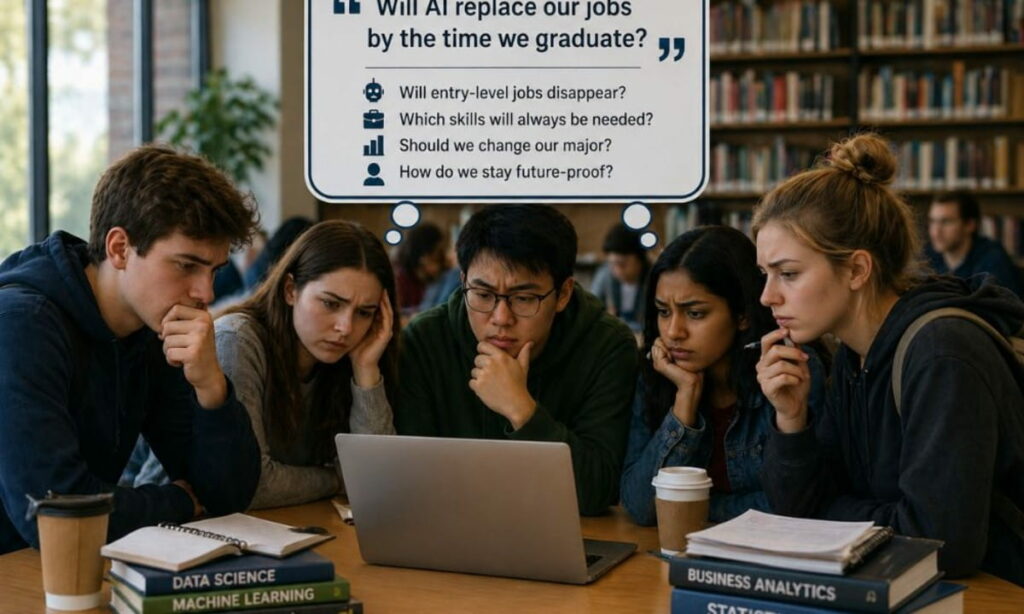
The picture is not entirely bleak. PwC’s 2025 AI Jobs Barometer found that industries with the highest AI exposure posted 27% productivity growth between 2018 and 2024. Lower-exposure sectors managed just 9%. Workers with verified AI skills earned an average wage premium of 56% in 2024.
Those figures explain why executives keep increasing AI spending even as AI job cuts mount. The productivity returns justify the investment in the short term. But workers experience a different reality — fewer junior openings, faster skill turnover, increased surveillance, and less job security.
Meta sits at the center of that contradiction. Its revenue is growing. Its user base keeps expanding. Its balance sheet supports aggressive spending. Yet AI job cuts remain part of the plan.
What comes next
This is not a story confined to Silicon Valley. AI job cuts now touch hiring pipelines, coding teams, customer support floors, finance departments, and legal review functions across every major industry.
The workers who come out ahead may not be those who resist the shift. The companies that thrive may not be those that chase automation without a strategy. The advantage will likely belong to people and organizations that combine AI capability with the human judgment, context, and creativity that machines cannot replicate.
Will AI job cuts grow, or will new roles emerge fast enough to absorb the displaced workforce? Please share your views in the comments and join the conversation.