

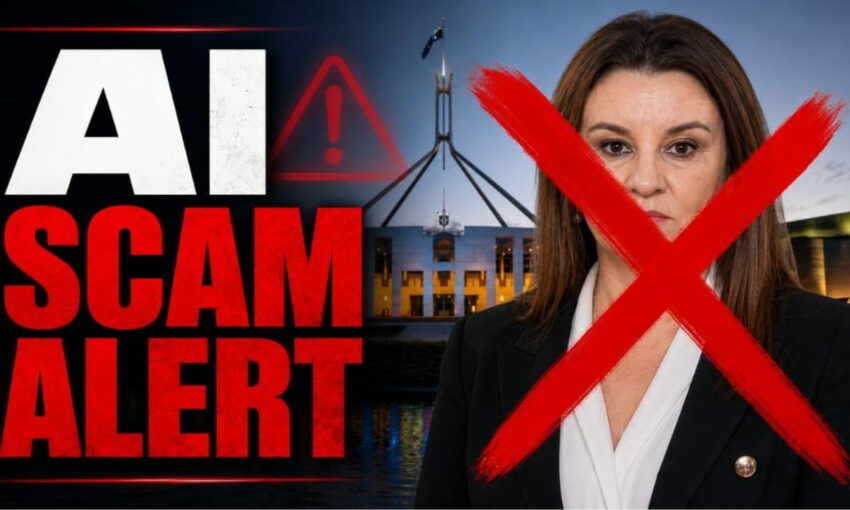
Scammers have turned a fabricated brawl between two Australian politicians into the hook for an investment scam, and the fake clip keeps resurfacing across social media.
The visuals show Tasmanian Senator Jacqui Lambie swinging at Liberal Party leader Angus Taylor on the ABC News program Insiders. One frame shows Taylor pressing a tissue to a bloodied nose. Another shows Lambie held back mid-punch.
The fight never happened.
AFP Fact Check reported the synthetic images and traced them to a look-alike website that pushed viewers toward a trading platform called Vault Wealthholm.
Fake fight built for clicks
A post on X dated June 10 framed the scene as a national flashpoint. It claimed the pair erupted after Taylor told voters to “budget better,” and that Lambie fired back about surviving on $36 a day with two kids. The post bragged about more than 5 million views.
That tactic matters. The clip leads with outrage, not money. Anger pulls the click, and the investment scam waits at the other end.
Copies spread to Instagram and Facebook. Some users cheered Lambie, treating the staged feud as real footage.
ABC says the images are fake
ABC confirmed the brawl never aired on Insiders. The broadcaster also warned that fraudsters keep hijacking its name and logo.
“There are an increasing number of scam posts on non-ABC platforms and the ABC takes what action on them it can,” a spokesperson told AFP.
The public broadcaster pointed users to a help-center notice urging people to “stay alert to scams.” It cautioned that fake material may be “staged to look like ABC material.” ABC said the posts seek “to exploit the trust audiences place in the ABC’s brands.”
The counterfeit page skipped ABC’s real domain, abc.net.au. It carried a strange byline too, listing Lambie herself as the author of a story about her own fight. The text read like a script rather than a report. Each red flag was clear, yet many readers never check a domain once emotion takes over. That gap is exactly what an investment scam exploits.
Lambie warns her followers
Lambie flagged the threat back in April. She told followers that criminals had cloned her image, body, and voice for bogus promotions.
“They’re using fake videos, fake articles and fake ads with my face, body and voice to try and trick people into investment scams. It is not me,” she said.
She stressed that she backs no such product.
“I have not endorsed any of this. I am not promoting any investment scheme. I have not done these interviews.”
Then she gave a blunt instruction.
“Please don’t click the links, don’t put in your details, and don’t send any money.”
Taylor’s office rejected the material, too.
“Angus has a thick skin and can take a joke, but fake AI content like this is garbage and people should treat it that way,” a spokesperson said.
How does the trap close?

The fake page did not stop at the political theater. At the bottom, it promoted Vault Wealthholm and urged readers to “start with $350.” Every link funneled users into a chat with someone called “Charlotte.”
AFP checked the Australian Securities and Investments Commission register and found no listing for the platform. Licensed financial firms must follow strict rules, so a missing record is a loud warning. The structure of this investment scam mirrors patterns regulators flag often: a low entry fee, a trusted brand, manufactured drama, and a quick push into private chat.
Regulators track a wider surge
Australia’s National Anti-Scam Centre said impersonating public figures is now routine.
“While this is usually to provide fake endorsements of products or services in advertisements, in this case it appears to feature controversial content designed to lure viewers to view the content and lead them to scam investment opportunities,” a spokesperson said.
“Purporting to be ‘news’ may make it less obvious and able to avoid quick detection.”
The numbers back the concern. The ACCC reported that Australians lost $45.5 million to investment scam activity through Scamwatch in the first quarter of 2026, the top loss category for the period. Total reported losses across Scamwatch and ReportCyber hit $248.3 million, even as regulators pulled down 5,834 scam websites.
ASIC has also moved against fake trading sites. From mid-May, it began publishing the web addresses of licensed financial firms so people can match a real site against a register before they hand over a cent. That step targets the exact trick behind this investment scam.
Why does this version spread so fast?

This fraud works because it stacks three forces. First, political conflict travels fast, since people share before they verify. Second, a familiar logo lends instant credibility. Third, the payoff is money, so one click flips entertainment into financial risk.
The mix creates a nasty problem. A single post can look like breaking news, behave like gossip, and operate like an ad for an investment scam all at once. That blend slows down both fact-checkers and platform moderators.
How to spot the bait?
Slow down before you tap any viral clip that ends with a money offer. Check the domain first. A real ABC story lives on the broadcaster’s official site. Check the byline next. No senator writes a news report about her own punch-up. Watch the tone as well, because a script-style story that closes with a trading pitch signals an investment scam.
Above all, distrust any combo of famous faces, secret platforms, and fast returns. That recipe almost always ends in an investment scam, and the next one may swap in a different politician, broadcaster, or headline.
What do you think? Should social media platforms face real penalties when fake news fraud spreads through paid posts? Please share your views in the comments.