

The artificial intelligence boom has triggered an unprecedented talent war in Silicon Valley. Major technology corporations are bypassing traditional buyouts, instead orchestrating massive licensing agreements that drain startups of their brightest minds while leaving behind corporate shells.
This emerging pattern transforms once-vibrant companies into what industry insiders call “walking dead” enterprises — technically operational but stripped of innovation capacity and leadership vision.
Windsurf’s dramatic downfall
The trajectory of AI coding company Windsurf illustrates this troubling trend perfectly.
During the summer negotiations, Windsurf appeared poised for a transformative acquisition by OpenAI. The deal promised substantial payouts for employees and long-term stability for the innovative coding platform. However, talks collapsed unexpectedly.
The aftermath proved devastating. Co-founders and key researchers abandoned ship within days, accepting Google’s $2.4 billion licensing arrangement that secured their expertise but left former colleagues stranded.
Jeff Wang, 39, inherited the interim CEO position amid organizational chaos. His immediate responsibility was to deliver crushing news to the remaining staff members during an emergency meeting.
“It was a very, very challenging day,” Wang recalled. “People were crying. It was very, very emotional. I was spending half the time calming down people, because they have families and they got nothing.”
Cognition eventually acquired Windsurf’s intellectual property and brand assets for $250 million — a fraction of the OpenAI valuation. Employees faced difficult choices between modest severance packages or uncertain futures elsewhere.
“You just got abandoned, now it’s time to prove to the world that you’re still here,” Wang reflected.
Corporate graveyards emerge
Investment professionals describe this phenomenon as fundamentally damaging to innovation ecosystems.
“There’s a big question of what their future prospects are,” observed Samir Kumar, general partner at Touring Capital. “Frankly, you hollowed out the organization.”
These “zombie startups” represent a disturbing evolution in corporate strategy. Companies survive only long enough to fulfill contractual obligations or extract remaining intellectual property value. Employee morale plummets while operational capacity diminishes rapidly.
Technology giants perfect new strategy
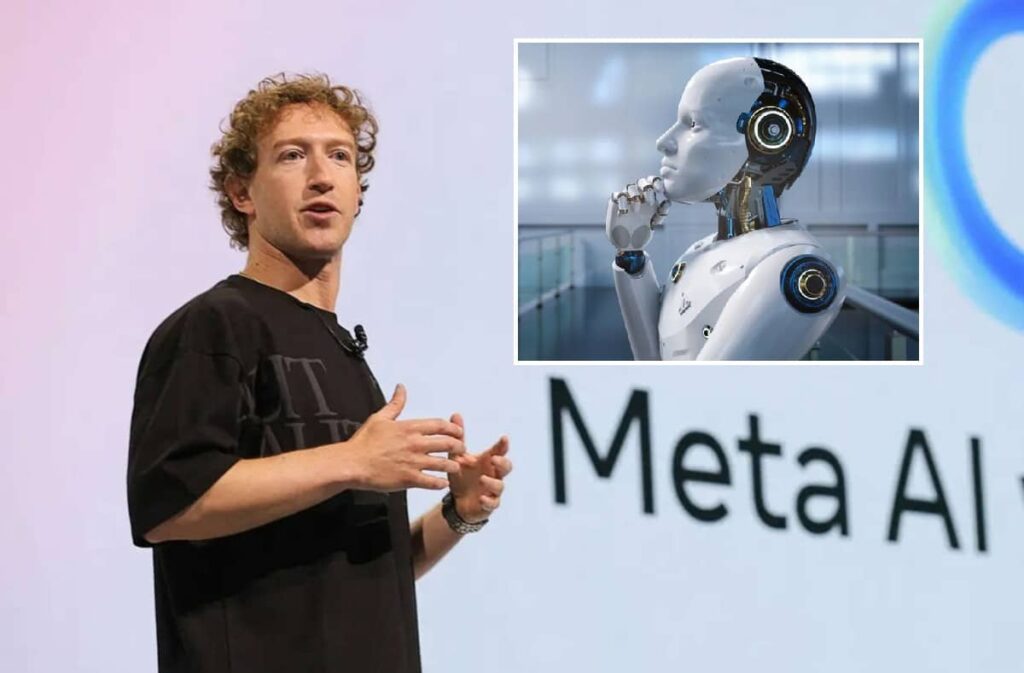
Leading corporations have refined this acquisition alternative into standard practice.
Meta shocked the industry with a $14.3 billion Scale AI investment during June. The arrangement doubled Scale’s theoretical worth while recruiting CEO Alexandr Wang for Meta’s superintelligence division. Scale eliminated 200 positions shortly afterward.
Microsoft pioneered this approach throughout 2024, absorbing Inflection AI’s leadership team and research talent while maintaining the company as a hollow operational entity.
Amazon executed two separate agreements within twelve months, recruiting founders and engineers from Adept and Covariant while licensing their proprietary technologies.
Google invested $2.7 billion securing Character.
These maneuvers help technology behemoths circumvent regulatory oversight. Minority shareholding positions avoid triggering Federal Trade Commission merger reviews that scrutinize traditional acquisitions.
“This is now a new playbook that companies are going to run,” explained Matt Murphy, Menlo Ventures partner. “If it’s not cracked down upon, I don’t really blame them.”
Regulatory challenges and legal workarounds
This strategy emerged following increased antitrust enforcement under former FTC leadership. Regulatory authorities attempted to block several major transactions, including Microsoft’s $69 billion Activision Blizzard purchase and Meta’s $400 million virtual reality acquisition.
Despite relaxed enforcement under current administration policies, technology companies continue pursuing licensing arrangements over direct purchases.
“They’re coming as close as possible to just getting under a majority stake of a company,” noted J.B. Branch from Public Citizen advocacy group.
Federal investigations remain active. The FTC continues examining Microsoft’s Inflection arrangement and Amazon’s Adept talent recruitment practices.
Economic winners and casualties
These transactions create distinct winners and losers across the startup ecosystem.
Founders and senior researchers typically secure lucrative employment contracts with established technology firms. However, mid-level employees and venture capital investors hoping for initial public offerings or conventional exits face significant losses.
“The money doesn’t flow as straightforwardly as it would in just a pure M&A transaction,” explained Rob Toews, Radical Ventures partner.
Operational disruption becomes immediately visible. Covariant, previously recognized as a robotics AI pioneer, lost 25% of its workforce to Amazon recruitment. Remaining employees described their workplace as resembling a “ghost ship.” Adept experienced similar talent hemorrhaging as staff migrated to competitors, including Anthropic.
Scale AI defends independence
Some companies reject the “zombie” characterization entirely. Scale AI maintains it operates as a thriving independent entity despite Meta’s substantial investment.
“Comparing Scale to these companies overlooks major differences in our revenue performance, company size, and deal structure,” stated spokesperson Joe Osborne. “Meta’s investment benefited our investors and employees, kept us independent, and positioned us for long-term success.”
Scale reports employing over 1,000 professionals while generating more than $100 million in annual revenue, serving enterprise and government customers.
Human cost of corporate maneuvering

Individual employees bear the heaviest burden during these transitions. Windsurf staff who anticipated life-changing OpenAI compensation instead confronted sudden buyout offers and career uncertainty. Covariant survivors maintain operations with dramatically reduced teams.
“It’s not just a technical, legal matter,” said attorney John Tye, representing a Covariant whistleblower. “It affects consumers who use these products. Monopolies are not typically good for the American public.”
Innovation pipeline threatened
Investment communities express concern that this model could strangle artificial intelligence innovation. Entrepreneurs increasingly prioritize quick exits to technology giants over building sustainable businesses.
“This is not business as usual,” warned Tom Chavez, Superset co-founder. “This is a disruption.”
Regulatory intervention remains uncertain. Current patterns suggest the path to AI market dominance increasingly runs through the remnants of startups that never realized their full potential.
Have you witnessed similar talent raids in your industry? What’s your take on Big Tech’s strategy of gutting startups instead of traditional acquisitions? Please share your experiences and opinions below.