

Artificial intelligence no longer represents futuristic possibilities; it is a reality. The technology actively transforms educational systems, career pathways, and daily experiences worldwide. Young people emerge as central figures in this digital revolution.
Teen voices challenge adult-dominated AI policies
A comprehensive 2020 UNICEF study surveyed 245 teenagers across five nations about artificial intelligence governance.
One participant captured widespread sentiment: “decision-making about AI felt adult-centric.”
The research revealed that peer networks and online resources provided more AI education than formal schooling.
Respondents expressed concerns about employment displacement and growing social inequality. However, they recognized AI’s capacity to eliminate mundane tasks and enhance human potential. The findings highlighted a critical gap between youth perspectives and policy development.
Subsequent research in 2022 expanded the scope dramatically. The UN-OICT initiative engaged 254 young people from 36 countries, producing remarkable insights. Nine out of ten participants maintained positive attitudes toward AI technology. More than two-thirds expressed trust in AI systems, with most incorporating these tools into daily routines.
Despite acknowledging risks—particularly unemployment and military applications—three-quarters believed these challenges remained manageable. Nearly all participants demanded meaningful roles in AI regulation processes. An overwhelming 86 percent anticipated productive collaboration with AI systems in their futures.
The research underscored a fundamental principle: young people must become partners, not passive observers, in technological advancement.
Additional studies emphasized the youth’s ethical reasoning capabilities. One teenager articulated this perspective:
“Youth voices are not experienced, but aware and thoughtful. If the policymakers listen to youth voices, they can be better decision makers.”
Digital skill gaps widen across generations

European youth demonstrate unprecedented connectivity levels. Nearly every individual aged 16-29 accesses the Internet daily. However, only 56 percent of the broader population possesses basic digital competencies.
Most businesses maintain high-speed Internet connections and utilize online platforms. Yet, minimal adoption of AI technologies persists across industries.
Globally, more than 256 million young people remain NEET—neither employed nor engaged in educational programs. This statistic reflects persistent inequalities in digital training access and educational opportunities.
AI reshapes the employment landscape
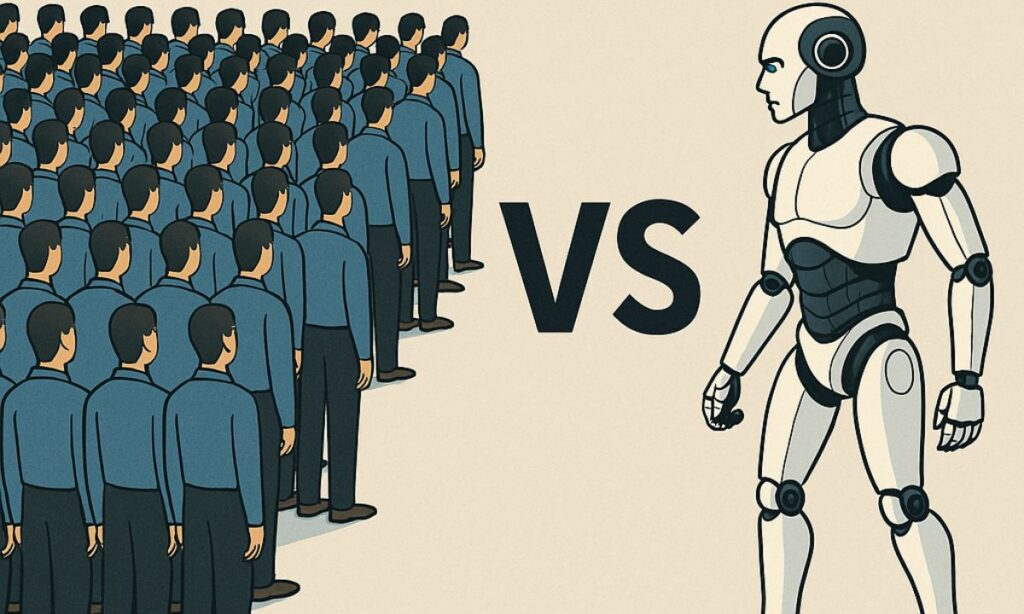
The World Economic Forum’s 2025 Future of Jobs analysis projects significant workforce transformation by 2030. Technology-driven changes, primarily artificial intelligence implementation, may eliminate 92 million positions while simultaneously creating 170 million new roles.
The net result suggests 78 million additional employment opportunities. Skills related to AI development, cybersecurity, and data analytics rank among the fastest-growing professional competencies.
Research indicates AI will primarily enhance rather than replace human capabilities across most sectors. However, entry-level positions face substantial disruption. Industry leaders warn that without comprehensive retraining programs, up to half of white-collar roles could disappear.
Innovation and workforce adaptability remain crucial for managing these transitions effectively.
Initiatives address AI skills shortage
Recognition of skills gaps has prompted coordinated responses. The AI Skills Coalition, established in early 2025, unites global partners, including Amazon, Microsoft, various governments, and non-governmental organizations.
The initiative targets training for tens of thousands of individuals while supporting United Nations digital development objectives.
Simultaneously, Giga—a collaborative UNICEF-ITU program—employs AI solutions to address connectivity challenges. The project has connected over 500 million students and nearly half of the world’s 6 million schools to digital resources.
These combined efforts emphasize youth participation as active technology co-creators and decision-makers rather than passive consumers.
Human-centered technology vision emerges
UN Secretary-General António Guterres articulated a comprehensive approach to digital education:
“Digital education must be human-centered, nurturing not only technical ability, but also creativity, critical thinking, and compassion. And as AI reshapes our world, young people must be seen not just as learners – but as co‑creators of a fairer digital future.”
This framework prioritizes human values alongside technological advancement. As AI capabilities expand, interpersonal skills like empathy and adaptability become increasingly valuable.
Strategic recommendations for youth preparation
Effective youth preparation requires systematic societal changes:
Educational Integration: AI literacy must become foundational within elementary and secondary curricula nationwide.
Continuous Learning Culture: Lifelong learning programs should enable mid-career professionals to acquire new skills and adapt to technological changes.
Infrastructure Development: Digital access expansion in underserved communities remains essential for equitable participation.
Policy Participation: Youth perspectives must influence technology governance and design processes at all levels.
Critical implications for society
Artificial intelligence presents unprecedented opportunities—from revolutionary healthcare advances to sustainable energy solutions. However, these benefits risk deepening existing inequalities without proper guidance.
Excluding youth voices from AI governance may leave significant populations behind as technology advances.
Young people represent more than the future workforce potential. They function as current creators, innovators, and leaders. Educational systems must prepare them to design and govern AI systems, not merely operate them.
The stakes extend beyond individual career preparation. Society’s ability to harness AI benefits while minimizing risks depends on inclusive development processes that prioritize human welfare alongside technological progress.
Youth engagement in AI development represents both opportunity and responsibility. Their perspectives, unencumbered by traditional constraints, offer fresh approaches to complex challenges.
Success requires collaboration between generations, combining youth innovation with experienced guidance. This partnership can ensure AI development serves humanity’s broader interests while creating opportunities for all.
The transformation has begun. The question remains whether society will embrace youth leadership in shaping AI’s future or allow technology to develop without their crucial insights.
Share your thoughts on how young people can better influence technology policy and education. What role should youth play in shaping our AI-powered future?