

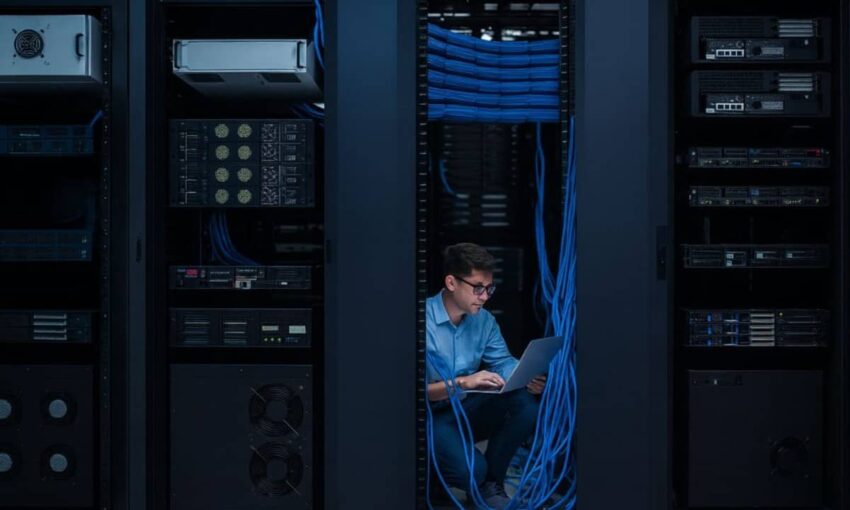
A rapidly expanding semiconductor company is capturing significant attention within the artificial intelligence sector, with numerous Wall Street observers suggesting it could replicate the trajectory that transformed Nvidia into a multi-trillion-dollar technology powerhouse. The company in question is Astera Labs, a data-center connectivity specialist engineered to address a critical challenge in the expanding market for AI infrastructure.
Three former Texas Instruments engineers established Astera Labs in 2017 after identifying a growing problem within cloud and artificial intelligence data centers — high-speed systems experiencing severe congestion due to excessive workload traffic.
They created the enterprise to eliminate bottlenecks in data-intensive systems and currently develop silicon solutions that transfer information more effectively between servers, chips, and memory components. These challenges have intensified as artificial intelligence applications proliferate across hyperscale cloud platforms, robotics, autonomous systems, and enterprise computing environments.
This strategic focus enables Astera Labs to cultivate a specialized position that major investors recognize as mission-critical within the expanding AI supply chain. The company’s technology aims to enhance throughput in the most vital area: high-performance connectivity. In a market prioritizing speed and capacity, Astera Labs is establishing itself as an essential link between processing capabilities and practical AI performance.
The financial metrics are attracting considerable attention. During the third quarter, revenue surged 104% to $230.6 million. Gross margins approached approximately 76%. More significantly, the company achieved GAAP profitability for the fourth consecutive quarter. Its financial results shifted from a $7.6 million loss in the third quarter of 2025 to a $91 million profit this year. That improvement — nearly 1,300% — represents an unusual achievement for a company that has traded publicly for less than two years.
Astera Labs operates on the NASDAQ exchange under the ticker symbol ALAB. As of December 1, 2025, shares concluded trading at $165.19, advancing 4.84% during the session and more than tripling the IPO price of $36 established in March 2024. The stock has experienced volatility, reaching a peak near $263 before selling pressure emerged in September. Despite a 41% decline from the high point, the stock remains up more than 328% from its market introduction.
Institutional investment is fueling momentum. Ensign Peak Advisors, Southeast Asset Advisors, and Legal & General Group have initiated or expanded positions. Larger participants, including AllianceBernstein, JPMorgan Chase, and the Swiss National Bank, already maintain substantial stakes. Approximately 60% of all outstanding shares are currently held by institutional investors, indicating confidence from entities wagering heavily on AI infrastructure and long-term semiconductor expansion.
The optimism carries inherent risks. Astera Labs remains expensive according to conventional valuation metrics. Its price-to-earnings ratio hovers near 174. Its price-to-sales ratio stands around 27. These figures demonstrate that analysts anticipate rapid expansion through the remainder of the decade, particularly if artificial intelligence adoption accelerates within cloud computing and enterprise networks.
Analyst perspectives are positive yet measured. The stock maintains a moderate buy rating. Nineteen analysts deliver an average rating of 4.32, with a top price target of $275, suggesting as much as 78% upside over 12 months. Simultaneously, average ratings have declined slightly over the past quarter. Analysts acknowledge the potential for volatility if growth decelerates or competition intensifies from larger semiconductor corporations.
The Nvidia comparison appears frequently. Before becoming the world’s most valuable semiconductor corporation, Nvidia gained recognition primarily for gaming chips. Its breakthrough originated from CUDA, a platform that enabled developers to experiment long before artificial intelligence reached mainstream adoption. That investment generated returns when deep-learning explosions materialized decades later.
Astera Labs is implementing a comparable strategy. It is constructing infrastructure in a market that barely existed when the founders departed Texas Instruments. Artificial intelligence activity is accelerating across data centers and network systems. The company occupies a position where every generative model, data pipeline, and edge computing application depends on transferring information rapidly.
Investors seeking high-growth artificial intelligence exposure may regard Astera Labs as a wager on the infrastructure supporting the AI expansion. Unlike numerous software companies in the sector, the company already generates profitability and genuine revenue growth. This combination — accelerated growth, robust margins, and institutional support — explains why some analysts characterize Astera Labs as one of the most compelling semiconductor narratives heading into the 2030s.
Understanding the investment landscape

Wall Street professionals emphasize that investors should comprehend both advantages and disadvantages. Elevated valuations could render the stock susceptible to downturns. A broader retreat in artificial intelligence investments could pressure share prices. Competition from major chip manufacturers could materialize if industry demand intensifies.
The company’s specialized focus on connectivity distinguishes it from traditional semiconductor players. While many firms concentrate on processing power, Astera Labs addresses the equally critical challenge of data movement. This positioning could prove advantageous as artificial intelligence workloads become increasingly data-intensive.
Market observers note that data-center infrastructure represents one of the fastest-growing segments within the broader technology sector. Cloud service providers continue expanding capacity to support artificial intelligence applications, creating sustained demand for connectivity solutions.
Current market position

Presently, enthusiasm persists. Astera Labs maintains a market capitalization near $28 billion and continues to demonstrate steady financial improvement. Its trajectory resembles the early stages of today’s largest artificial intelligence players. Whether it evolves into Nvidia 2.0 remains uncertain, but Wall Street is placing substantial bets on its future in the AI infrastructure competition.
The semiconductor industry faces ongoing supply chain challenges and geopolitical pressures. Companies that can deliver consistent results despite these headwinds attract premium valuations. Astera Labs has demonstrated resilience through its consecutive profitable quarters.
The company’s gross margin profile suggests pricing power and operational efficiency. Maintaining margins above 75% while scaling rapidly indicates strong product differentiation and limited immediate competitive pressure.
Looking forward, the artificial intelligence infrastructure market appears poised for continued expansion. Analysts project spending on AI-related data center equipment will grow significantly through 2030, providing a favorable backdrop for specialized connectivity providers.
Do you see Astera Labs as the next major semiconductor success story, or do current valuations create too much risk? What factors will determine whether it can replicate Nvidia’s trajectory? Please share your analysis in the comments and join the conversation about the future of AI infrastructure investments.