

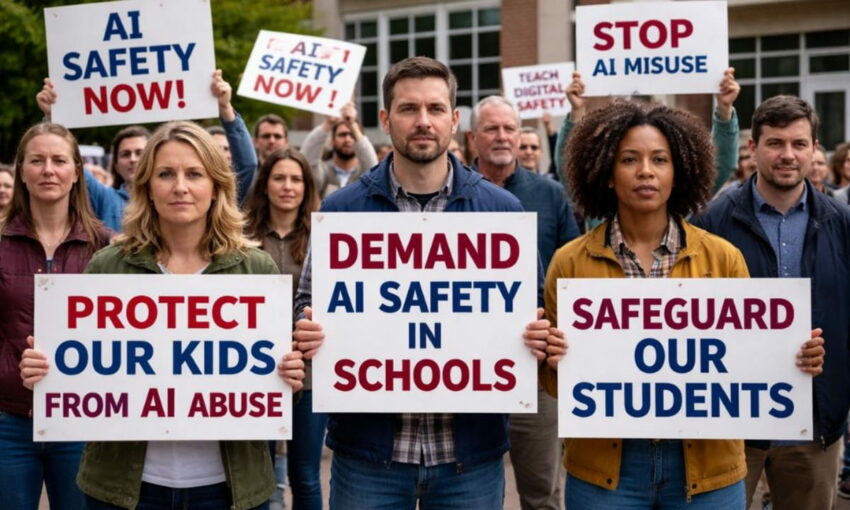
AI safety risk triggers an unprecedented parent uprising this week as families confronted Radnor Township School District leaders over their failure to prevent AI-generated abuse among students.
The Tuesday evening board meeting became a flashpoint for growing national anxiety about how schools handle emerging technology threats. Dozens of parents gathered to protest district policies that they claim left children vulnerable when explicit AI-created images circulated among minors last December.
The incident that sparked the protest involved sophisticated generative AI tools accessible to any student with a smartphone. These applications produced non-consensual images that spread through peer networks, ultimately resulting in harassment charges filed by the Delaware County District Attorney’s Office against several minors.
Parents argue that the school’s inadequate response and outdated policies represent a systemic failure to protect students in the age of artificial intelligence. Their protest demands immediate action before more children suffer harm.
“When school staff learns about these situations, policies must mandate swift intervention,” explained Luciana Librandi, whose child was victimized. “Clear procedures matter. Accountability matters. Prevention matters most of all.”
The technology gap fueling parent frustration about AI safety
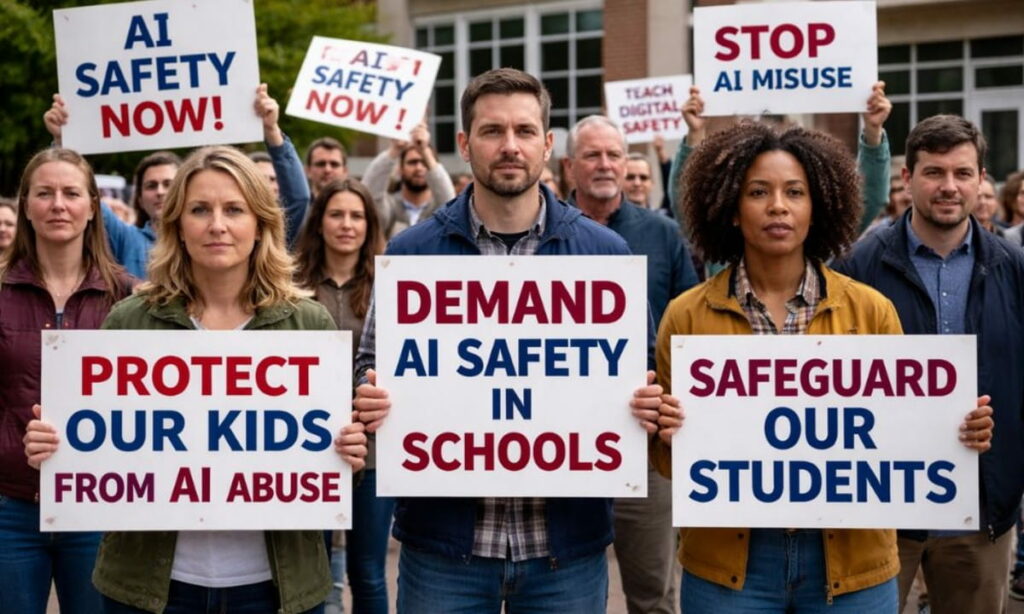
The core of the protest centers on how easily AI tools enable student exploitation. Modern generative AI systems create photorealistic images virtually indistinguishable from authentic photographs. While these platforms offer legitimate creative and educational applications, they transform into instruments of harassment without proper oversight.
This accessibility gap explains why parents feel compelled to protest. Children carry powerful image-manipulation technology in their pockets, yet schools maintain policies written before such capabilities existed. The disconnect between technological reality and institutional preparedness drove families to demand answers.
“Every community faces this challenge, not just Radnor,” stated one parent during the protest. “Young people control these powerful applications. Nobody taught them about real-world consequences.”
The protest gained momentum because harmful content circulated beyond campus boundaries and outside school hours. Parents argue this geographic and temporal reach makes district accountability even more critical, not less.
What protesters want from school leadership

Protest organizers presented specific demands for technology policy reform. Their requests include explicit definitions of prohibited AI-generated content, streamlined reporting procedures for violations, and meaningful consequences for technology misuse.
The protest emphasized that current policies ignore AI safety entirely. Families want language that specifically addresses generative AI tools, deepfake technology, and the creation of synthetic media. Without these explicit provisions, they argue, schools cannot effectively protect students or discipline offenders.
School trustees listened to protest testimony without announcing immediate changes. The leadership is committed to analyzing community demands and consulting legal experts before implementing revised frameworks.
“We recognize the community’s deep investment in this matter,” a board spokesperson acknowledged. “Student safety remains paramount, and we will explore revisions that strengthen protections while supporting learning.”
Officials also recognized protesters’ calls for digital citizenship education that addresses ethical dimensions of artificial intelligence applications.
Why education matters as much as enforcement?
Protesters stressed that policy changes alone prove insufficient. Their demonstration highlighted the need for proactive AI literacy instruction about both opportunities and dangers associated with generative technology.
Multiple speakers described overlooked risks that children consistently underestimate. The protest on AI safety risks framed this educational gap as a preventable failure by district leadership.
“These technologies have a destructive potential,” said Carley Boyd, whose family knows affected students personally. “Students deserve education about capabilities and limitations. Creative expression matters, but without lessons about consent and dignity, innovation becomes exploitation.”
Research confirms that teenagers regularly encounter digital threats before schools implement protective measures. As AI adoption accelerates, the gap between students’ access and institutions’ responses widens—precisely the problem driving this protest.
Progressive districts have introduced digital literacy curricula explaining algorithmic processes, data bias, and how synthetic content impacts real individuals. Protesters advocated for comparable programming to prevent future incidents through knowledge rather than punishment alone.
Legal consequences underscore protest urgency
The Delaware County District Attorney’s criminal charges against minors add weight to protesters’ demands. Harassment prosecutions demonstrate that artificial intelligence misuse carries genuine legal ramifications, not just disciplinary consequences.
Legal experts note that while AI automates content creation, established consent and harassment statutes remain fully applicable. Manufacturing and sharing explicit material without authorization—regardless of generation method—violates existing law.
“Technology evolution outpaces regulatory adaptation,” explained a digital law expert unaffiliated with this case. “Educational institutions must respond urgently. Artificial intelligence integration continues regardless, demanding ethical education alongside victim protection.”
These criminal proceedings validate protesters’ claims that schools underestimated the severity of AI-related misconduct. Parents argue that earlier intervention and clearer AI safety policies might have prevented charges that now burden multiple families.
How the protest reshaped community dialogue
The public demonstration prompted broader conversations about social media exposure, peer pressure, and healthy technology relationships. Some protesting parents reconsidered supervision levels for children’s online activities.
Others emphasized that students distributing images failed to comprehend the emotional damage inflicted upon victims.
“This transcended juvenile mischief,” one parent explained during the protest. “Real harm occurred. That lesson belongs in every household conversation.”
District counselors now provide expanded support services for affected students. Administrators are committed to prioritizing mental health resources alongside the procedural improvements that protesters demanded.
What does the protest mean for other schools?
Education experts suggest this Delaware school protest foreshadows challenges facing districts nationwide. Artificial intelligence adoption in academic environments accelerates while regulatory frameworks lag behind technological capabilities.
States develop AI literacy standards, yet implementation gaps persist. The Radnor protest demonstrates what happens when schools fail to anticipate rather than react to technology threats.
Parents and educators share consensus on one truth: artificial intelligence has permanently altered childhood digital experiences. Without intentional guidance, students face dangers before developing the capacity to recognize ethical or legal boundaries.
“No other families should endure what we experienced,” Librandi emphasized during the protest. “Policies help. Education helps more. Action cannot wait.”
District leadership plans to convene a policy review committee within weeks—a direct result of the protest pressure—to evaluate stakeholder demands and draft spring proposals.
Key reasons behind the Delaware school protest
- Parents protested inadequate AI safety policies after explicit synthetic images circulated among Radnor Township students.
- The protest highlighted gaps between student AI access and school oversight capabilities.
- Delaware County prosecutors charged minors with harassment, validating protesters’ safety concerns.
- Demonstrators demanded precise guidelines, rapid response protocols, and mandatory AI literacy instruction.
- School officials agreed to a policy review following sustained parent pressure.
What are your thoughts on this Delaware school protest and AI safety responsibilities? Please share your perspective in the comments below.