


The conversation about the future of work has reached a fever pitch as artificial intelligence tools penetrate deeper into every industry. Silicon Valley titans like Elon Musk and Bill Gates continue issuing stark warnings that the AI onslaught on jobs is real and that automated systems will eliminate virtually all employment opportunities within the next 20 years. However, Sue Duke, LinkedIn’s managing director for Europe, the Middle East, and Africa, argues that actual workplace data tells a completely different story.
Speaking at the Fortune CEO Forum held at The Shard in London, Duke challenged the apocalyptic predictions dominating headlines.
“That’s not what we’re seeing,” she stated firmly.
Her perspective draws from extensive employment statistics rather than speculation. Current recruitment patterns reveal something unexpected: companies are creating thousands of new roles focused on digital innovation and business expansion.
The gap between dire predictions and ground-level reality continues widening as more organizations embrace intelligent technologies. Does it not point toward the rising AI onslaught?
AI forecasts clash with hiring reality

Musk’s vision suggests employment could become entirely voluntary as machine intelligence handles nearly every conceivable task. Gates has cautioned that even highly trained professionals face an AI onslaught as these systems grow more sophisticated. Sebastian Siemiatkowski, CEO of Klarna, has similarly criticized technology industry leaders for downplaying the dramatic upheaval coming to workplaces worldwide.
Duke presented contrasting evidence based on LinkedIn’s massive dataset.
“What we’re seeing is that organizations that are adopting and integrating this technology they’re actually going out and hiring more people to really take advantage of this technology,” she explained.
This assessment stems from analyzing job postings from countless employers and tracking activity among hundreds of millions of active job seekers on the platform.
Companies investing heavily in automation aren’t cutting headcount as predicted. Instead, they’re simultaneously expanding their teams.
“They’re going out and looking for more business development people, more technologically savvy people, and more salespeople as they realize the business opportunities, the innovation possibilities, and ultimately the growth possibilities of this technology,” Duke noted refuting the AI onslaught fears.
The hiring surge suggests businesses view intelligent systems as force multipliers rather than workforce replacements. Organizations recognize they need human talent to maximize returns on their technology investments.
Demand for AI skills rising

Workers preparing for 2026 and beyond must focus on two distinct skill categories. Technical proficiency with intelligent systems ranks first. Duke described capabilities like AI literacy, prompt engineering, platform expertise, and related technical knowledge as “red, red hot in the labor market.” This demand shows no signs of cooling across diverse sectors.
Manufacturing facilities, marketing departments, financial institutions, and virtually every other industry segment are hunting for these competencies.
“We see a huge demand for those skills across the board, economy-wide, across all sectors, and tons of companies looking for those,” Duke emphasized.
The accelerating integration of automation tools into routine business operations ensures technical training remains valuable for anyone building a career.
Understanding how to leverage AI tools, troubleshoot problems, and optimize workflows has become essential. Workers who can bridge the gap between business needs and technological capabilities will find themselves in high demand.
Human skills take center stage
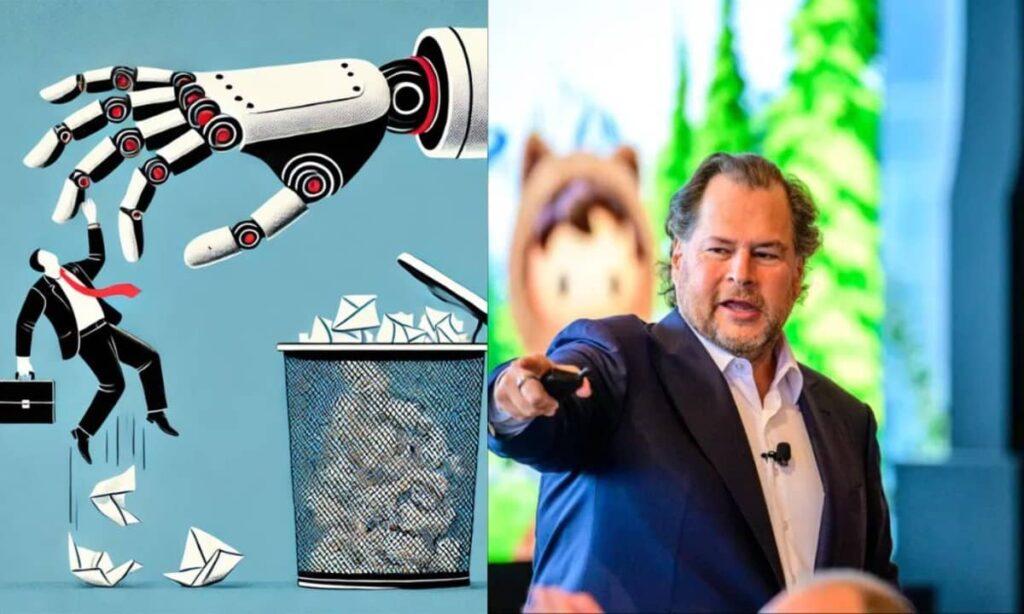
The second critical focus area involves capabilities machines struggle to replicate. Duke highlighted interpersonal communication, collaborative teamwork, creative problem-solving, and strategic decision-making as qualities that consistently attract hiring managers’ attention.
“Those unique human skills,” Duke said, “remain rock solid, constant at the heart of hiring desires and demands out there. They’re not going away either.”
While algorithms can generate written content or analyze vast datasets efficiently, building genuine trust and navigating interpersonal conflicts remain distinctly human responsibilities.
Adaptability emerged as another crucial requirement in Duke’s analysis. Organizations want employees who can navigate perpetual change because the technology landscape evolves faster than organizational structures can follow.
“What employers are really looking for is that growth mindset and understanding that this technology is moving very, very quickly, and we need adaptability,” she said.
“Adaptability is right at the top of those most in-demand skills, so making sure you’re bringing that mindset, bringing that agility with you, that’s going to be hugely important.”
The ability to learn continuously, pivot when circumstances shift, and remain productive amid uncertainty has become non-negotiable. Workers who embrace change rather than resist it position themselves for long-term success despite AI onslaught.
Gen Z could benefit from shifting expectations
Younger professionals entering the workforce often worry that traditional entry-level positions will vanish. Duke’s insights offer a more optimistic roadmap. LinkedIn’s employment data demonstrates that markets adopting digital systems maintain robust hiring activity. Companies actively seek candidates capable of partnering with automation rather than competing against it.
Career-minded individuals can strengthen their prospects by combining technical awareness with strong relationship-building abilities. Those who grasp how AI tools function while bringing creative thinking to collaborative environments will likely distinguish themselves from other candidates.
Duke’s analysis suggests tomorrow’s job market won’t pit humans against machines in a zero-sum competition. Success will instead flow to professionals who master working alongside intelligent systems while cultivating irreplaceable interpersonal skills. The future belongs to those who blend technological fluency with authentically human capabilities.
What’s your take on the AI onslaught fear? Please share your experiences and perspectives in the comments below.