

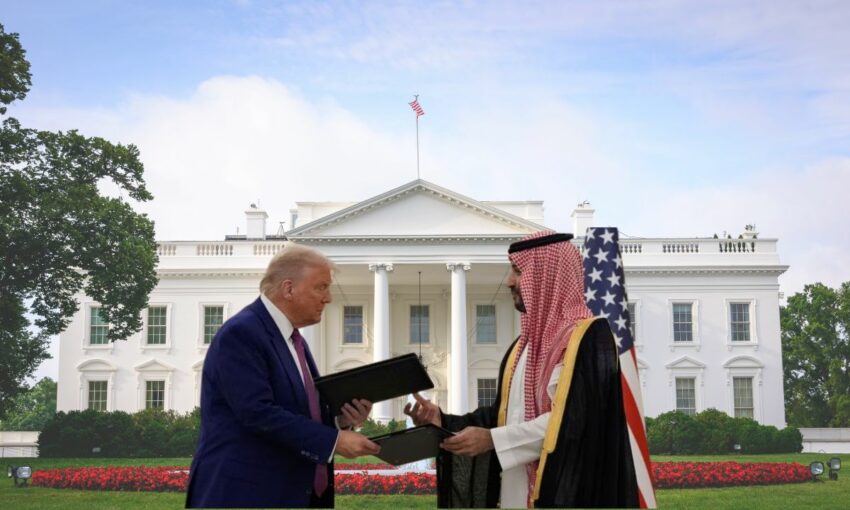
US Trump puts American AI interests at the forefront of his Middle East diplomatic offensive.
President Donald Trump’s diplomatic mission to the Middle East has catalyzed an unprecedented series of artificial intelligence collaborations between American tech powerhouses and Gulf nations. These strategic partnerships position Saudi Arabia and the United Arab Emirates to dramatically enhance their machine-learning capabilities and computational infrastructure.
Nvidia leads major chip deals
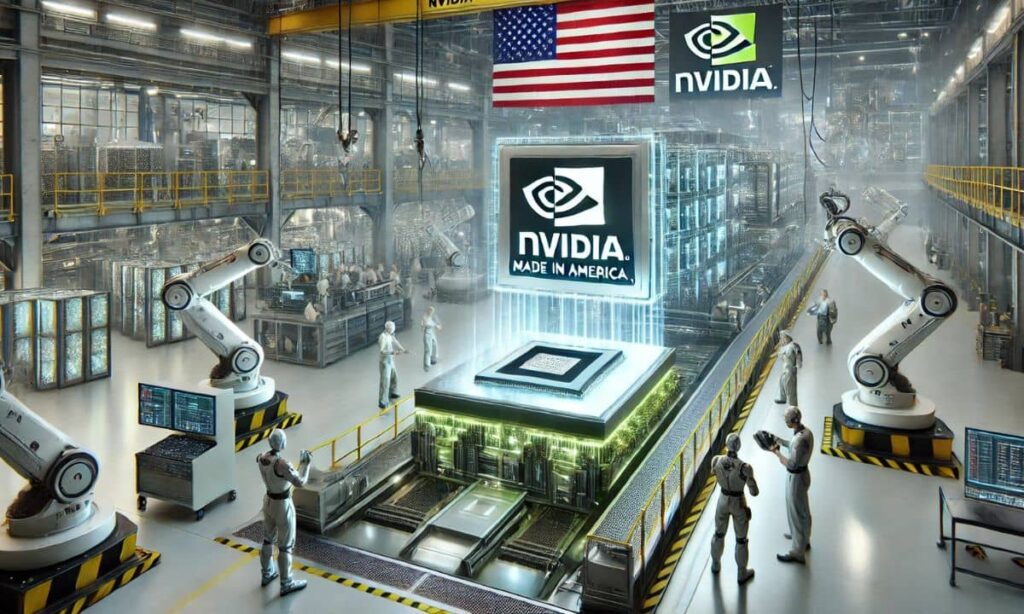
Nvidia, the global leader in AI processing technology, has committed to delivering hundreds of thousands of its cutting-edge “Blackwell” AI processors to Humain, a startup backed by Saudi Arabia’s sovereign wealth fund. The initial phase includes 18,000 GB300 Grace Blackwell processors alongside essential InfiniBand networking components.
Meanwhile, semiconductor giant AMD has finalized a five-year $10 billion agreement with Humain. This comprehensive deal encompasses graphics processing units, central processing units, and specialized management software designed to power an ambitious next-generation cloud computing platform dedicated to artificial intelligence applications.
Mobile technology innovator Qualcomm has entered preliminary discussions via a memorandum of understanding, outlining plans to provide central processors for new AI computing facilities throughout the kingdom.
Massive investment commitments
According to White House officials, Saudi technology firm DataVolt plans to channel $20 billion into American artificial intelligence data centers and supporting energy systems. Simultaneously, major U.S. technology corporations, including Google parent Alphabet, cloud computing specialist Oracle, enterprise software provider Salesforce, chipmaker AMD, and transportation platform Uber, have collectively pledged $80 billion toward advanced technology initiatives spanning American and Middle Eastern territories.
Shift in export policies
These developments coincide with the administration’s efforts to dismantle Biden-era restrictions on exporting sophisticated AI processing technology. Senior officials maintain that previous regulations created unnecessary complexity and hindered American technological advancement.
Parallel diplomatic channels have opened discussions to permit the UAE to import up to 500,000 advanced Nvidia processors annually through 2027, more than doubling previous authorization levels. This potential arrangement has raised concerns regarding secondary distribution to nations, such as China.
Market response and regional strategy
Industry sources indicate OpenAI is exploring potential data center expansion in the UAE. Market response has been overwhelmingly positive, with Nvidia shares surging over 6% following the announcements while AMD stock appreciated approximately 4%, reflecting market confidence in a more permissive export environment.
Under its ambitious Vision 2030 economic diversification blueprint, Saudi Arabia aims to transform itself into a global artificial intelligence hub, reducing its traditional petroleum dependency. Crown Prince Mohammed bin Salman officially unveiled Humain on May 12, establishing a cornerstone entity tasked with accelerating domestic AI model development and infrastructure deployment.
Leadership perspectives
“Building a competitive AI ecosystem requires both foundational technology and robust infrastructure,” Humain CEO Tareq Amin explained during a Riyadh presentation. AMD Chief Executive Lisa Su reinforced this vision, stating: “Our collaboration creates a globally significant artificial intelligence platform delivering unprecedented performance, openness, and reach.”
Strategic implications

These arrangements highlight the critical importance of specialized microprocessors—particularly graphics processing units—in supporting contemporary machine-learning systems. As nations worldwide compete for computing resources, American manufacturers strengthen their technological leadership position.
The rapid succession of agreements signals a significant strategic realignment: the United States is leveraging its semiconductor dominance to reinforce relationships with Gulf partners while countering China’s expanding influence in artificial intelligence development.
President Trump’s itinerary includes UAE meetings on Thursday, where he aims to solidify comprehensive AI export frameworks and establish the region as a pivotal partner in his administration’s technology agenda.
The partnerships established during this diplomatic mission represent a watershed moment for Middle Eastern technological development, computational sovereignty, and the global semiconductor supply chain. As machine learning capabilities become increasingly crucial to national economic strategies, these cross-border collaborations may fundamentally reshape the international AI landscape and redefine traditional power dynamics in emerging technology sectors.
What’s your take on these landmark AI partnerships? Do you see them primarily as technological advancement, economic strategy, or geopolitical maneuvering? Share your insights below.