

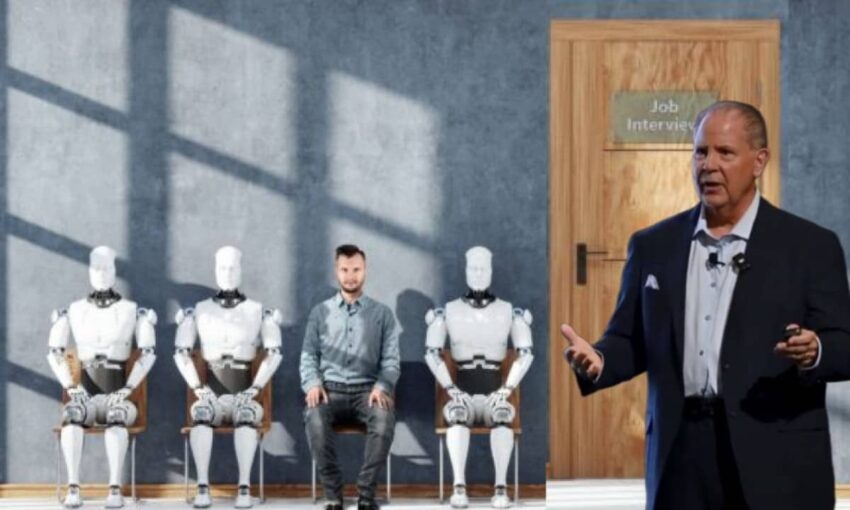
When Eric Vaughan took the helm at IgniteTech in early 2023, he faced a stark reality. The enterprise software company needed to embrace artificial intelligence or risk becoming obsolete. His solution shocked the business world: terminate nearly four-fifths of his employees who couldn’t adapt to AI integration. Today, Vaughan stands by his controversial decision in favor of AI adoption. He describes it as necessary surgery for corporate survival in an increasingly automated business landscape.
AI adoption & complete organizational transformation
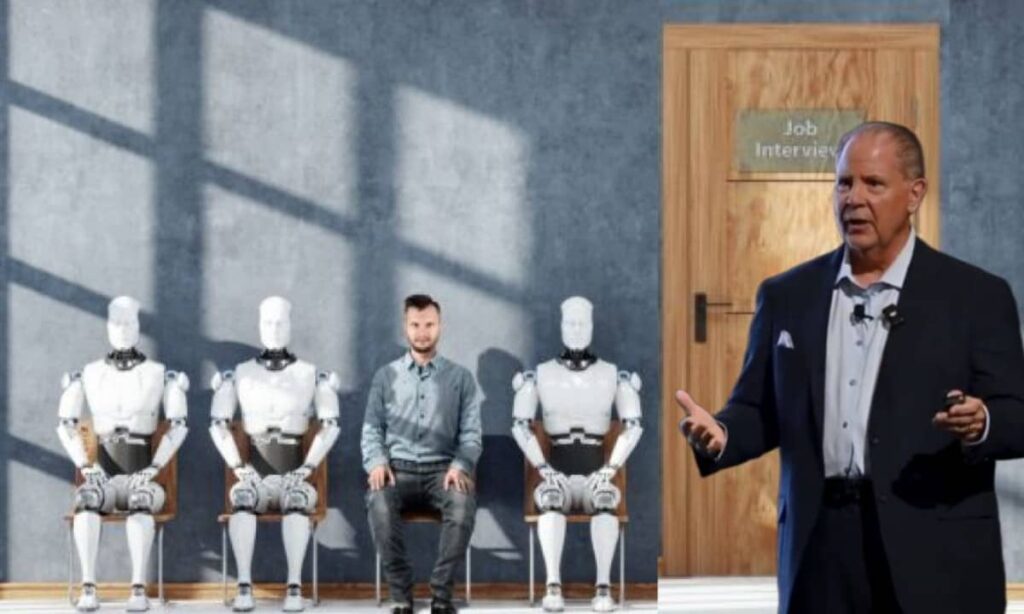
The wake-up call came suddenly for Vaughan and his leadership team. Market pressures and technological advances made AI adoption an urgent priority rather than a future consideration.
“We recognized that every business faces an existential challenge from this technological shift,” Vaughan explained during a recent interview. The company needed complete transformation, not incremental change.
IgniteTech launched an aggressive AI integration initiative across all departments. Marketing, finance, operations, and customer service divisions received mandatory AI training. The company subsidized employee education programs and established “AI Mondays” – weekly sessions where staff abandoned regular duties to focus solely on artificial intelligence projects.
Management allocated 20% of total payroll costs toward workforce retraining efforts. However, employee adoption rates disappointed leadership expectations.
Internal pushback and workforce friction

Technical teams created the strongest opposition to AI implementation initiatives. Engineers and developers questioned AI system reliability and expressed concerns about technology limitations. Sales and marketing departments showed greater enthusiasm for adopting new tools and processes.
Recent industry research validates Vaughan’s experience. A comprehensive 2025 enterprise AI adoption study conducted by WRITER revealed troubling workforce resistance patterns. One-third of surveyed employees admitted to deliberately undermining AI deployment efforts within their organizations.
Younger workers demonstrated even higher rates of AI resistance and sabotage activities. Employee pushback ranged from outright refusal to use new systems to intentionally producing substandard work outputs.
Kevin Chung, WRITER’s Chief Strategy Officer, identified frustration as the primary driver behind these behaviors.
“Workers aren’t necessarily afraid of the technology itself,” Chung observed. “They’re handed tools that don’t function properly, then pressured to deliver impossible results.”
Revolutionary organizational structure
Recognizing that traditional retraining efforts had failed, Vaughan initiated an unprecedented hiring campaign. The company recruited “AI Innovation Specialists” to replace departing employees who were unable to adapt to the new technological requirements.
IgniteTech’s restructuring eliminated conventional departmental boundaries. All business units now report directly to a centralized artificial intelligence team headed by Chief AI Officer Thibault Bridel-Bertomeu.
This organizational model addresses common AI adoption obstacles. Industry surveys indicate that over 70% of executives report employees struggling with AI tools in isolation, creating inefficient learning processes. Centralized knowledge management ensures consistent implementation across all business functions.
The new structure eliminates information silos that traditionally hinder technology adoption efforts.
Measurable business outcomes

IgniteTech’s dramatic workforce transformation produced tangible results. By late 2024, the company had developed two patent-pending AI products, including Eloquens AI, an advanced email automation platform.
Product development cycles accelerated dramatically. Projects that previously required months of development now reach the market within four days of conception.
Financial performance remained robust throughout the transition period. The company maintained nine-figure annual revenues while achieving an impressive 75% EBITDA margin by year-end 2024. IgniteTech also completed a significant acquisition of Khoros, demonstrating continued growth capacity despite internal restructuring challenges.
Industry-wide implementation challenges
Other major corporations face similar AI adoption dilemmas. Swedish payment processor Klarna deployed AI-powered customer service systems that eliminated work equivalent to 700 full-time positions. While Klarna avoided direct layoffs, many affected workers were reassigned by third-party staffing companies.
Joshua Wöhle, CEO of workforce training company Mindstone, contrasts Vaughan’s aggressive replacement strategy with alternative approaches. Swedish furniture giant Ikea focuses on employee reskilling programs, using AI to enhance worker capabilities rather than eliminate positions.
“Workforce augmentation delivers better results than pure automation,” Wöhle argued, warning that companies risk significant backlash when replacing human workers outright.
However, Wöhle acknowledges that rapid technological change leaves limited time for gradual adaptation.
“The transformation pace is so intense that mandatory change becomes the more compassionate approach,” he noted, adding that employees rarely embrace retraining unless required.
Strategic implications for business leaders

Vaughan’s experience highlights a fundamental choice facing modern enterprises: invest in employee retraining or recruit new talent with existing AI capabilities. While companies like Ikea prioritize worker retention, Vaughan argues that cultural transformation cannot be imposed through traditional methods.
“Modifying established mindsets proved more challenging than developing technical skills,” Vaughan reflected.
Industry research supports the importance of comprehensive AI strategies. Companies with clear artificial intelligence roadmaps consistently outperform competitors lacking defined approaches. However, securing employee buy-in and cultural acceptance remains the most difficult challenge.
For Vaughan, the decision required no deliberation. “This represents cultural evolution, not merely technological upgrade,” he emphasized.
Would he repeat this approach? Absolutely. However, he advises other executives to consider less drastic alternatives before implementing wholesale workforce replacement.
“The process was extraordinarily challenging,” Vaughan admitted. “But when team members aren’t aligned toward common objectives, organizational progress becomes impossible.”
Should companies balance AI efficiency with employee job security? Have you experienced AI implementation in your workplace? Please share your thoughts and experiences in the comments below.