

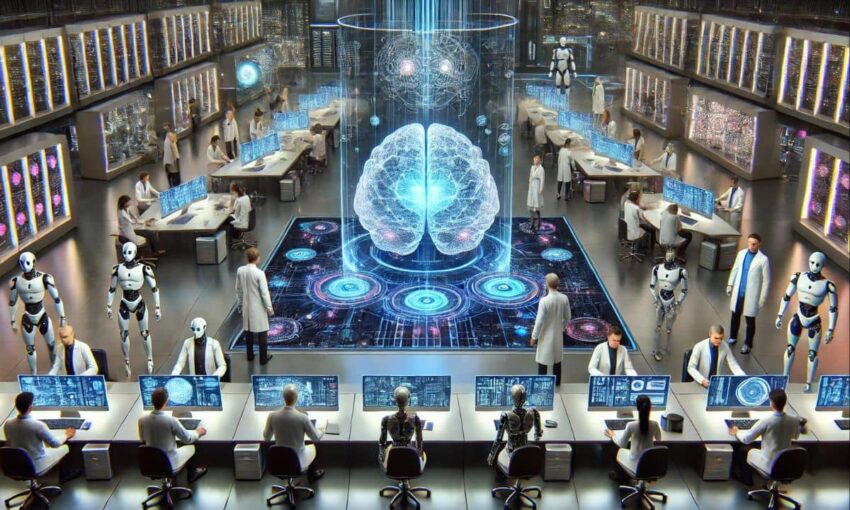
Scientists at Helmholtz Munich have developed Centaur, an innovative artificial intelligence system that replicates human decision-making processes with remarkable precision across diverse scenarios. This technological breakthrough represents a significant advancement in merging psychological understanding with machine learning capabilities.
The AI model demonstrates an unprecedented ability to forecast human behavior while simultaneously providing explanations for the underlying reasoning behind those choices. This dual functionality addresses a long-standing challenge in artificial intelligence research.
Foundation built on massive human behavior database
The foundation of Centaur lies in Psych-101, an extensive behavioral database assembled by research leaders Dr. Marcel Binz and Dr. Eric Schulz. This comprehensive collection contains decision-making data from over 60,000 participants spanning 160 distinct psychological studies.
The dataset encompasses various human behaviors, including risk assessment, learning patterns, moral decision-making, and ethical reasoning processes. This breadth provides Centaur with a robust understanding of human cognitive patterns.
“We’ve developed a system that can forecast human responses across any scenario described through natural language,” explained Binz, the study’s primary investigator.
The virtual laboratory concept extends beyond theoretical applications, demonstrating practical utility in real-world behavioral prediction.
Centaur’s capabilities include environmental adaptation, pattern recognition in decision-making processes, and precise estimation of human response times. These features position the system as a valuable tool for behavioral research and clinical applications.
Unifying prediction and explanation in AI
Historical artificial intelligence systems typically excelled in either behavioral prediction or psychological theory explanation but rarely achieved proficiency in both domains simultaneously. Centaur represents a paradigm shift by successfully integrating these complementary capabilities.
“This system connects two historically separate fields: theoretical understanding and predictive accuracy,” stated Schulz, who directs the Institute for Human-Centered AI at Helmholtz Munich. “We’re witnessing the beginning of tremendous possibilities.”
The model’s generalization capabilities stand out as particularly noteworthy. Centaur maintains high accuracy levels even when confronted with entirely new scenarios, making it suitable for diverse applications, including clinical psychology, behavioral economics, and environmental decision research.
This adaptability stems from the system’s deep learning architecture, which identifies underlying patterns in human decision-making rather than memorizing specific responses to particular situations.
Applications in healthcare and mental health
Medical professionals are exploring Centaur’s potential for clinical applications. The system could model how individuals experiencing anxiety disorders, depression, or other mental health conditions make decisions differently compared to neurotypical individuals.
Such modeling capabilities may support early detection of mental health issues, inform treatment strategies, or enable the development of personalized therapeutic interventions. The precision of behavioral prediction could revolutionize how clinicians approach mental health assessment and treatment planning.
Future developments include incorporating demographic and psychological profiles into the dataset, enabling more sophisticated simulations that account for cultural backgrounds, age factors, and cognitive variations among different populations.
This evolution toward healthcare applications demonstrates artificial intelligence’s potential to address pressing social challenges rather than focusing solely on commercial technology interests.
Commitment to ethical AI development
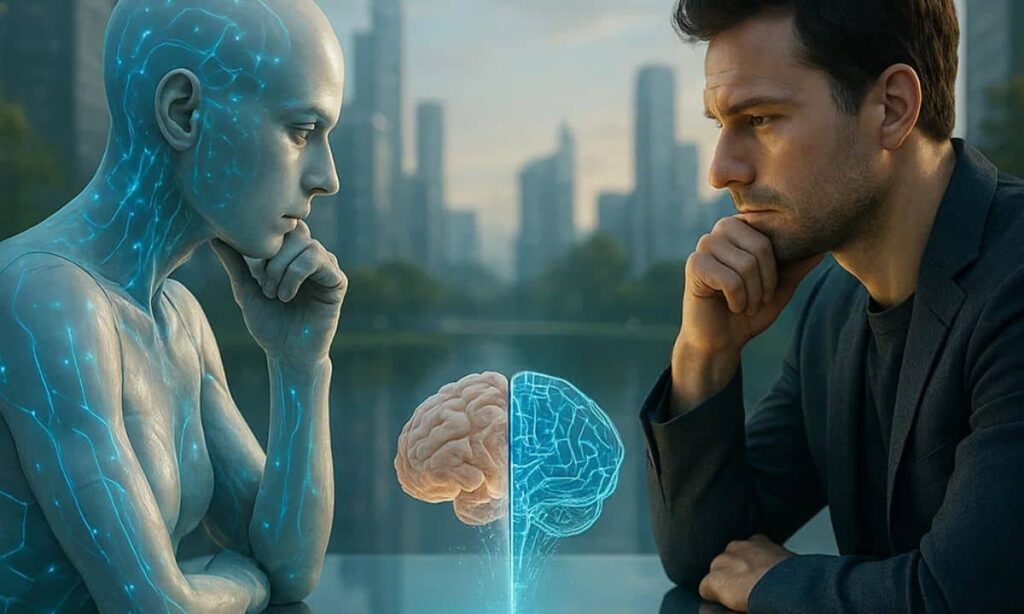
Transparency and accountability remain central priorities for the Centaur research team, particularly given the sensitive nature of behavioral modeling technology. The potential implications for privacy and human autonomy require careful consideration.
“Maintaining transparency and control over such systems is essential,” emphasized Binz. The researchers have chosen open-source development combined with local hosting solutions that prioritize data privacy and user control.
This approach contrasts sharply with data-centralized models employed by major technology corporations, reflecting a commitment to ethical AI development principles.
“This research originates from Helmholtz Munich rather than corporate development facilities for important reasons,” Binz noted. “We integrate artificial intelligence research with psychological theory while maintaining strong ethical foundations.”
The academic research environment enables focus on fundamental cognitive questions that commercial settings might overlook due to short-term profit pressures.
Future research directions
The research team’s next phase involves examining the computational mechanisms underlying Centaur’s performance capabilities. Key questions include identifying which AI processes correspond to specific human cognitive strategies and whether decision-making differences between healthy individuals and those with mental health conditions can be directly mapped.
Answering these questions could yield profound insights across multiple disciplines, including psychology, neuroscience, education, economics, and artificial intelligence research.
“These models possess the potential to significantly advance our understanding of human cognition when used responsibly,” concluded Schulz.
Cognitive-centered AI evolution

Centaur’s development reflects broader trends in artificial intelligence moving beyond simple task automation toward systems that engage deeply with human thinking patterns, choice mechanisms, and behavioral processes.
By anchoring this innovation in scientific rigor, open access principles, and ethical design practices, the Helmholtz Munich team is establishing foundations for a future where artificial intelligence serves as a collaborative partner in understanding human psychology rather than merely predicting outcomes.
As Centaur continues evolving, it may herald a new era of AI-enhanced psychological research where machine learning systems don’t just process data but engage in collaborative thinking with human researchers.
What are your thoughts on AI systems that can predict human behavior? Please share your views below on the potential benefits and concerns of this technology. How do you envision such systems being used responsibly in healthcare and research?