


A leading computer science expert is sounding alarm bells about artificial intelligence potentially triggering a massive population collapse. Professor Subhash Kak from Oklahoma State University predicts Earth’s population could plummet from the present 8 billion to 100 million by 2300.
The dramatic forecast comes from the author of “The Age of Artificial Intelligence,” who warns that widespread job automation will discourage families from having children. Unlike science fiction scenarios involving robot wars, Kak’s prediction centers on economic uncertainty driving down birth rates.
“It’s going to be devastating for society and world society. I think people really don’t have a clue,” Kak explained. “Computers or robots will never be conscious, but they will be doing literally all that we do because most of what we do in our lives can be replaced.”
Fertility crisis already emerging globally
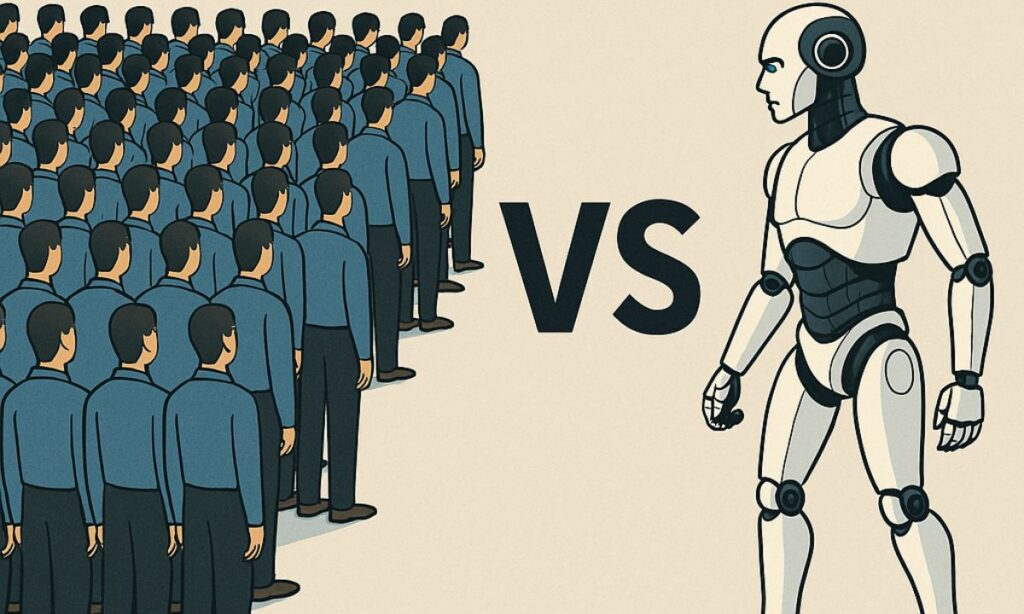
Current demographic trends support Kak’s concerns about declining birth rates worldwide. South Korea leads this troubling pattern with a total fertility rate of just 0.72 births per woman, among the lowest globally. Similar demographic challenges plague Japan, China, and numerous European nations.
China’s population dropped by 1.4 million people in 2024 as deaths exceeded births. Kak argues that AI-driven automation across industries will amplify these existing trends, making parents question whether children have viable economic futures.
Global fertility patterns have shifted dramatically over recent decades. Average births per woman fell from five children in the 1960s to approximately 2.3 today. Recent research projects the world population peaking at 11.1 billion in 2100, then declining to 10.4 billion by 2200 and 7.5 billion by 2300.
However, conventional projections don’t account for AI’s potential acceleration of demographic decline. Even if fertility rates stabilize around 1.8 to 2.0 children per woman, Kak believes most humans will choose not to have children once AI dominates economic roles.
“There are demographers who are suggesting that as a consequence, the world population will collapse, and it could go down to as low as just 100 million people on the entire planet Earth in 2300 or 2380,” Kak stated.
Regional patterns signal global trends
Europe’s fertility rate hovers near 1.5 births per woman, while Japan maintains rates below 1.3. South Korea’s record-low fertility persists despite government incentives promoting childbirth. China experienced 2 million more deaths than births in 2024, highlighting the severity of population contraction.
These regional examples demonstrate how quickly population dynamics can shift, supporting Kak’s warnings about potential global implications for labor markets, pension systems, and economic growth prospects.
Space colonization as population insurance

Kak’s demographic predictions align with concerns expressed by business leaders like Elon Musk. The tech entrepreneur advocates for space colonization partly as insurance against Earth-based population collapse.
“That’s why Musk is saying maybe humans should go to space, maybe build colonies elsewhere, so that should such a tragedy hit Earth, then it could be reseeded,” Kak observed. Musk repeatedly emphasizes that demographic decline threatens civilization, arguing that expanding to Mars could preserve humanity if global population collapses.
Alternative viewpoints and technological adaptation
Some experts challenge Kak’s catastrophic timeline. The United Nations projects global population peaking around 10.3 billion in the mid-2080s, then gradually declining to 10.2 billion by 2100. However, these projections don’t incorporate potential AI disruptions.
Demographer Nicholas Eberstadt from the American Enterprise Institute acknowledges AI’s employment impact while questioning population collapse scenarios.
“Historically, societies adapt to technological change. New industries often emerge,” Eberstadt noted. “But if AI displaces white-collar and service-sector jobs at scale, the social calculus of parenthood could shift dramatically.”
Multiple factors beyond AI contribute to declining birth rates. Rising living costs and increasing urbanization significantly influence family planning decisions. Global urbanization reached 56 percent in 2020 and may hit 68 percent by 2050. Urban families typically have fewer children due to limited living space and higher expenses.
Ghost cities and social collapse
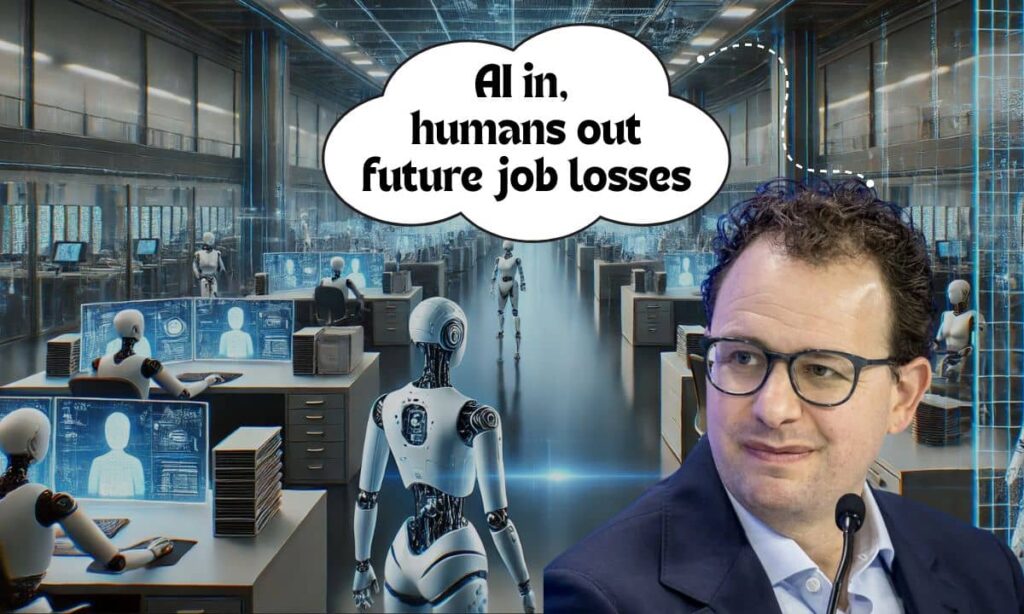
Kak envisions major metropolitan areas becoming abandoned landscapes if population decline continues unchecked. Cities like New York, London, and Tokyo could transform into desert landscapes with only 100 million people globally.
“People have children for a variety of reasons. One is, of course, social. In the back of your mind, you have a sense of what the future is going to be like,” Kak explained.
Policy responses and solutions
Some governments explore universal basic income to separate survival from employment. Pilot programs in Finland and Canada showed modest birth rate increases among recipients. Japan introduced paid parental leave and expanded childcare subsidies in 2022, slightly improving its fertility rate to 1.36.
European countries like France and Sweden offer generous family benefits, maintaining fertility above 1.7 births per woman. However, no developed nation has returned to replacement-level fertility without significant immigration or cultural transformation.
Kak maintains that demographic collapse is already visible.
“What is absolutely certain is that there is a population collapse occurring right before our eyes,” he emphasized.
As artificial intelligence continues to advance, society faces critical decisions about balancing technological progress with demographic sustainability. The relationship between automation and human reproduction represents one of the 21st century’s most significant challenges.
Do you think AI will lead to demographic collapse, or will society adapt with new solutions? Share your thoughts on balancing technological progress with stable population growth in the comments below.